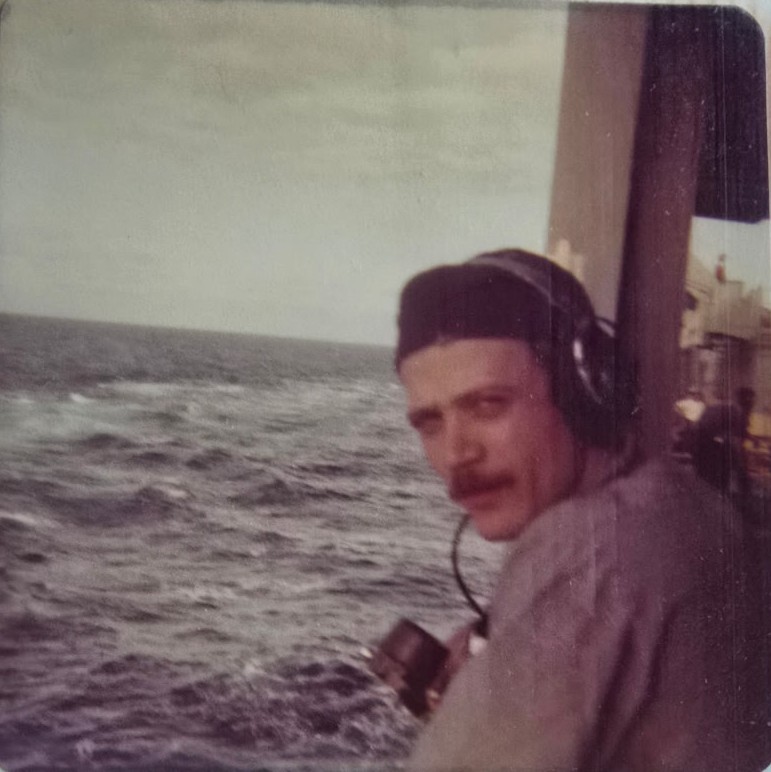
Michael Walko aboard ship during his years of service in the U.S. Navy.
From the engine rooms of the U.S. Navy to the power plants of Northern California, retired PG&E Meter Crew Foreman Michael Walko reflects on a lifetime shaped by military service, union solidarity, workplace challenges, and the importance of standing together.
For some Veterans, military service is a chapter in their lives. For others, it becomes the foundation upon which everything that follows is built.
For retired PG&E Meter Crew Foreman and IBEW Local 1245 member Michael Patrick Walko, four years in the United States Navy helped shape not only his career, but his understanding of teamwork, discipline, solidarity, and service to others.
His journey would take him across the Pacific Ocean, into California’s power plants, through some of the utility industry’s most consequential changes, and eventually into a nonunion workplace that would forever change his appreciation for the protections of organized labor.
Through it all, one lesson remained constant: the people standing beside you matter, and having someone willing to stand up for you can make all the difference.
A Family Tradition of Service
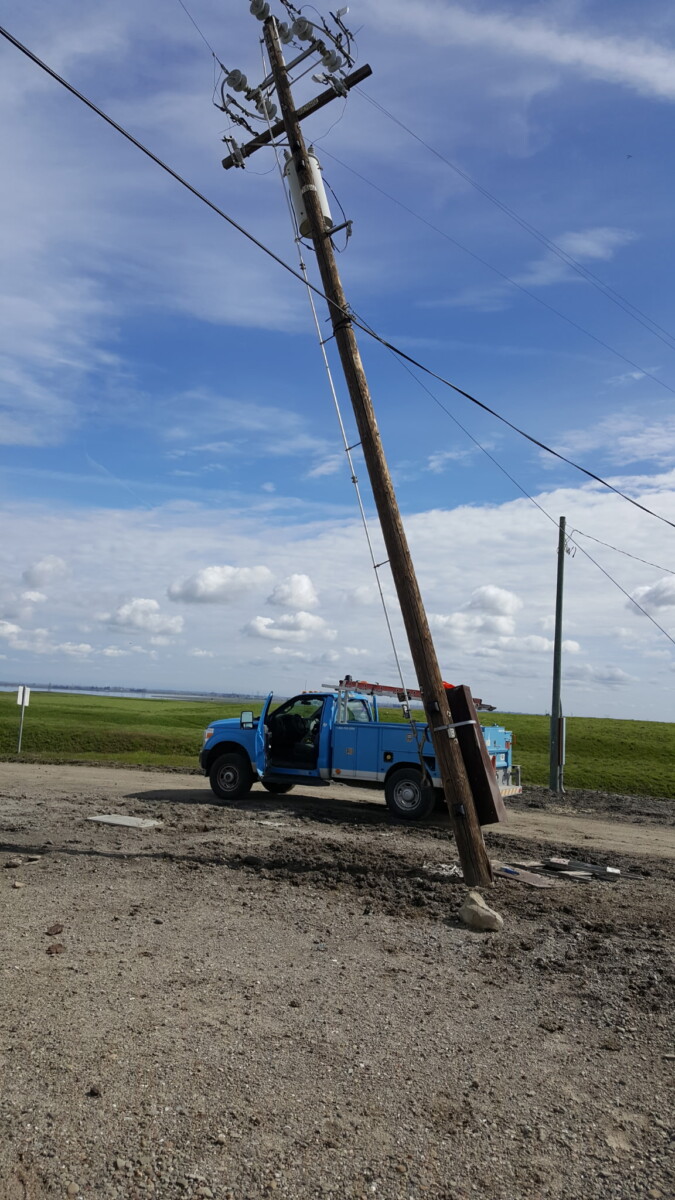
A photo from one of the many jobs Michael Walko worked during his long career at PG&E, where he retired as a Meter Crew Foreman.
Walko enlisted in the Navy on November 7th, 1974, following a family tradition of military service. His father and two uncles had served in the Navy or Naval Reserve, and he grew up surrounded by their influence.
The Navy also offered something that appealed to a young man eager to learn and see the world: technical training and the opportunity to travel.
Assigned as a Machinist’s Mate, Walko served in the engineering departments aboard Navy vessels, working with the complex machinery that keeps ships operational. Machinist’s Mates are responsible for equipment ranging from propulsion systems and electrical generation to refrigeration, air conditioning, hydraulics, and fuel systems.
Over his four years of service, Walko served aboard three ships, including the USS Wichita, where he worked in the cargo fuel section of the replenishment oiler.
His service took him across the Pacific Ocean three times, with deployments and visits to Hawaii, the Philippines, Japan, Korea, Singapore, Thailand, and the Indian Ocean. He also traveled south of the equator and made numerous trips along the West Coast.
But one of the most consequential stops of his military career happened much closer to home.
An Unexpected Meeting in Sacramento
During a visit to Sacramento, a local United Service Organizations (USO) chapter organized a dance in honor of Armed Forces Day.
It was there that Walko met the woman who would become his wife.
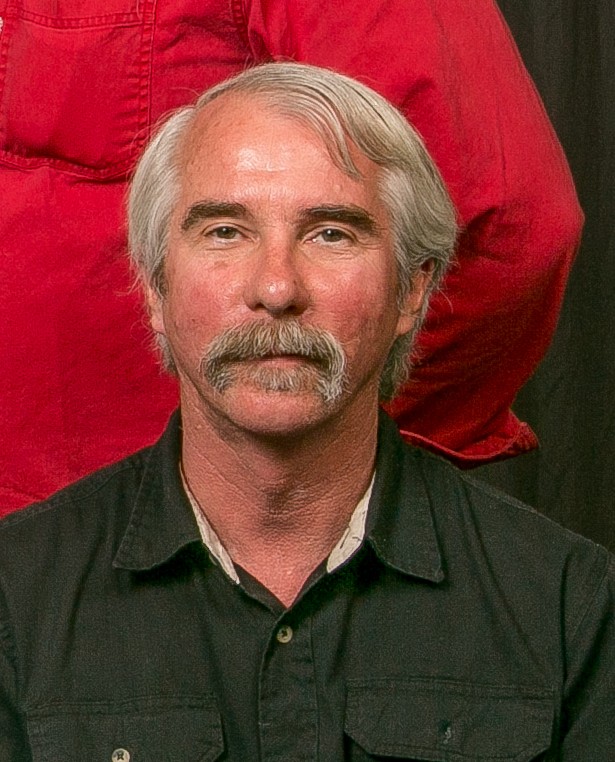
Walko at the IBEW 1245 East Bay Pin Dinner in Concord, Calif., on April 25, 2014, where he was recognized for 35 years of union membership.
Among the countless experiences and memories accumulated during his Navy service, that chance encounter would have a lasting impact on his life.
When asked to identify one particularly meaningful experience from his military career, Walko struggled to narrow it down.
“There were way too many experiences, accomplishments, and memories to begin to list,” he explained. “They all combine for a total life altering, and building event.”
The people he served alongside also left lasting impressions. Across three ships in four years, Walko encountered shipmates from whom he learned valuable lessons, both positive and negative.
Above all, he carried forward the importance of organization, teamwork, discipline, and learning from mistakes.
Those lessons would prove invaluable when he traded his Navy uniform for a career in California’s utility industry.
From the Navy to PG&E – in Just Two Weeks
Walko’s transition from military service to civilian employment began before he even left the Navy.
During his final months aboard the USS Wichita, several fellow engineering crew members participated in a tour of PG&E’s Pittsburg Power Plant.
Walko was on duty and unable to attend, but his shipmates returned with stories about the career opportunities available at the utility.
After his discharge on November 6th, 1978, he decided to pursue one of those opportunities.
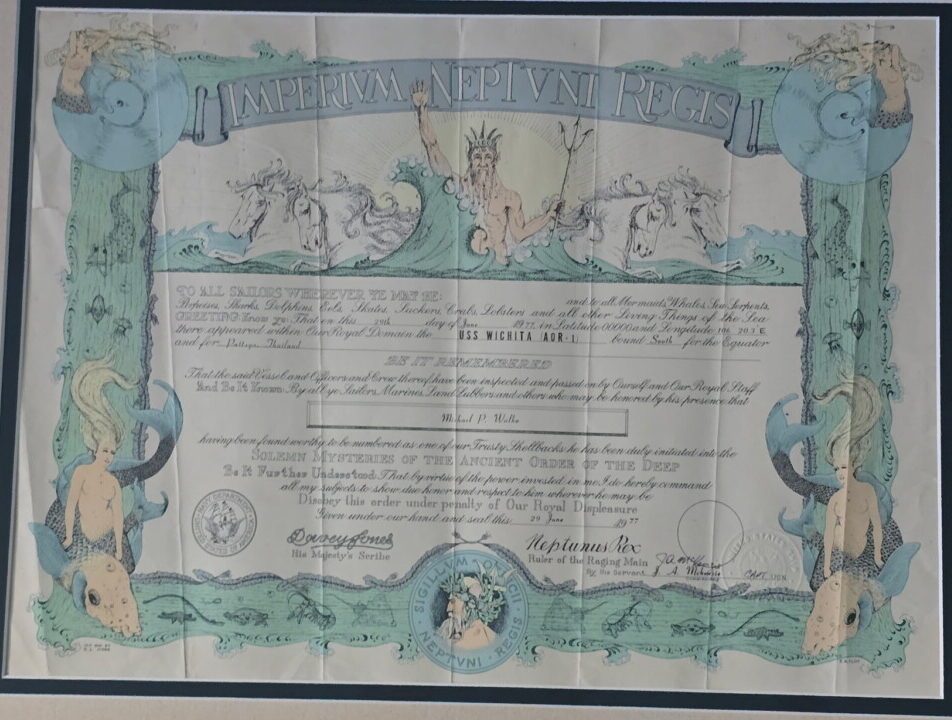
Michael Walko’s commemorative certificate marking his crossing of the equator aboard the USS Wichita in 1977, a longstanding U.S. Navy tradition.
His first attempt to submit an application at PG&E’s Concord office was unsuccessful. Instead, he was given the telephone number for the personnel office at the Pittsburg Power Plant.
When he called, the head of personnel asked about his Navy rating.
Upon learning that Walko had been a Machinist’s Mate, the personnel representative offered him an unexpected opportunity.
“We’re giving a test in a half hour,” Walko recalled being told. “If you can make it in by then you can take it.”
Walko made it.
He completed the examination at Pittsburg, interviewed at the Contra Costa Power Plant in Antioch that same day, and began working for PG&E just days later.
He had been out of the Navy for exactly two weeks.
An Early Lesson in Union Representation
Walko’s introduction to the importance of organized labor came sooner, and under more extraordinary circumstances, than he could have imagined.
In April 1979, only months into his PG&E career, Walko was working when a catastrophic incident destroyed a 113-megawatt generator and caused several major fires.
 Walko recalls that the incident was among the most significant accidents in the company’s history.
The aftermath included disciplinary action against two management employees and two union-represented employees. Walko recalls that PG&E considered terminating all 13 employees working the shift that night.
But the union intervened.
The proposed mass terminations did not occur, and the two union employees who received discipline eventually recovered pay for their time away from work.
At the time, newly hired employees were required to complete six months of service before becoming eligible for union membership. Walko had not yet reached that milestone.
Nevertheless, he witnessed firsthand the importance of having a collective voice in the workplace.
He would later be initiated into IBEW Local 1245, beginning a union membership that would continue throughout his career and into retirement.
It would not be the last time he witnessed the difference union representation could make.
An Industry in Transition
By 1995, the electric utility industry was preparing for sweeping changes associated with deregulation.
According to Walko, PG&E announced plans to eliminate the Electrician and Instrument Repairman classifications in its power plants, while also anticipating significant reductions in gas and electric construction.
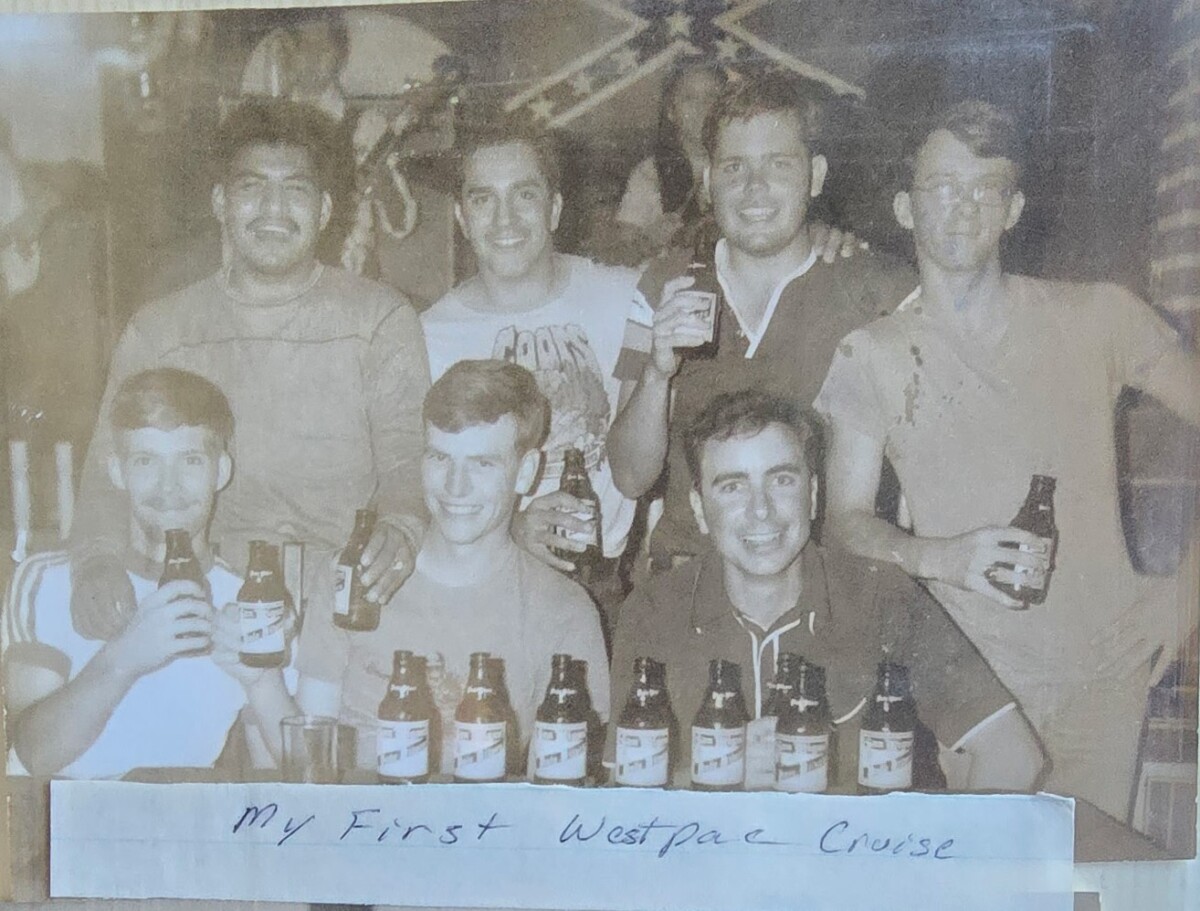
Michael Walko and fellow sailors enjoying some downtime during his first Western Pacific (WestPac) cruise with the U.S. Navy.
For affected employees, the future suddenly became uncertain.
Walko recalls that one of the few opportunities to remain employed in the power plants was to compete for a limited number of Apprentice Control Technician positions.
Historically, the classification required employees to have completed a journeyman-level apprenticeship as an Electrician or Instrument Repairman, pass an entrance examination, and complete additional apprenticeship training.
But Walko says the company replaced the existing entrance examination after determining it had been compromised.
The new examination proved extraordinarily difficult. To Walko, the examination seemed less like an opportunity for employees to demonstrate their qualifications and more like another obstacle standing between longtime workers and continued employment.
Walko recalls a failure rate of approximately 95 percent. Employees eligible for an early retirement offer faced particularly difficult decisions, as they had only one opportunity to take the examination before deciding whether to retire.
The Union filed a Business Manager’s grievance challenging the situation, but Walko recalls that the dispute initially produced little progress.
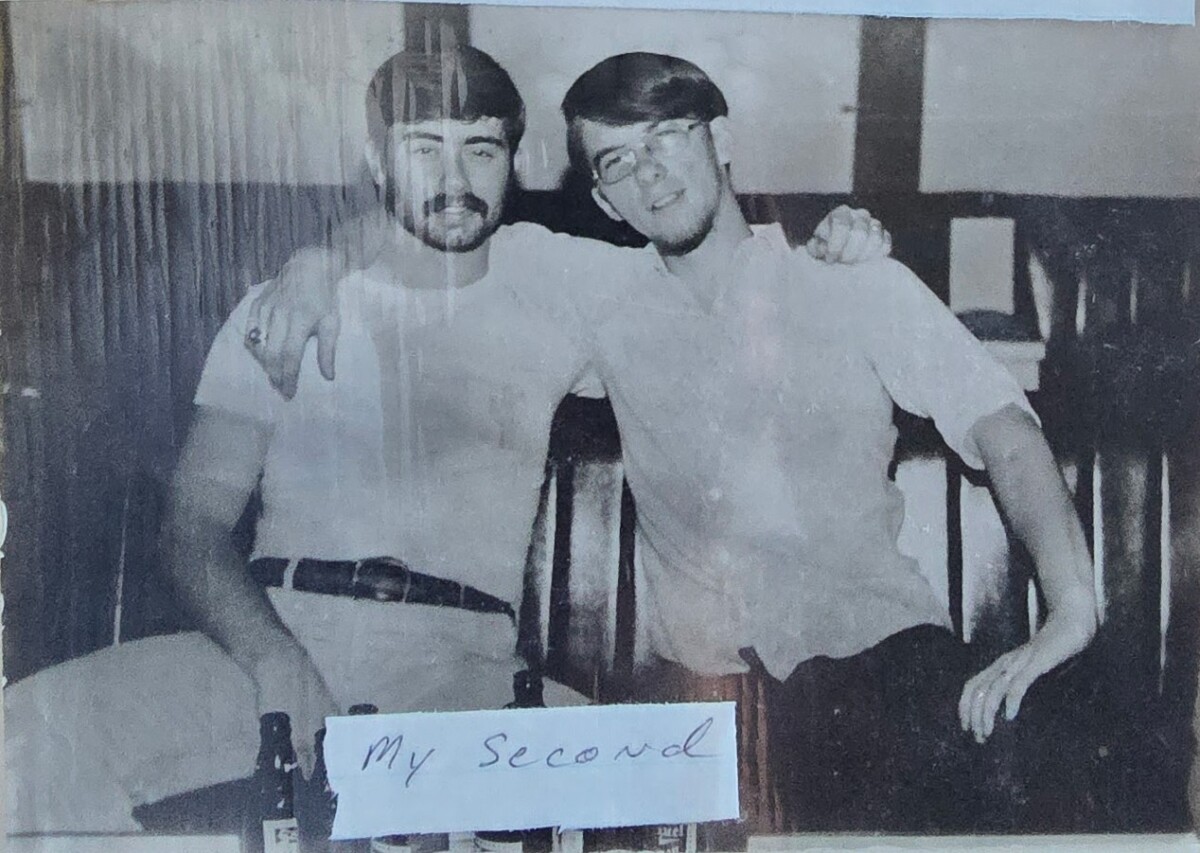
Michael Walko during his first Western Pacific (WestPac) cruise with the U.S. Navy.
For Walko, the consequences were personal.
Still completing the final portion of his electrical apprenticeship, he was informed that he would not be eligible to bid on the Apprentice Control Technician positions.
With his future at PG&E uncertain, he began searching for employment elsewhere.
That search would eventually take him back to his home state of Florida, where he accepted a position as a Power Plant Electrician with Fort Pierce Utilities.
The work was familiar.
The working conditions were not.
A Different World Without A Union
Although Walko’s new position involved work similar to what he had performed at PG&E, Fort Pierce Utilities was a nonunion workplace.
He quickly discovered how much difference that distinction could make.
One of the first things he noticed was the treatment of overtime.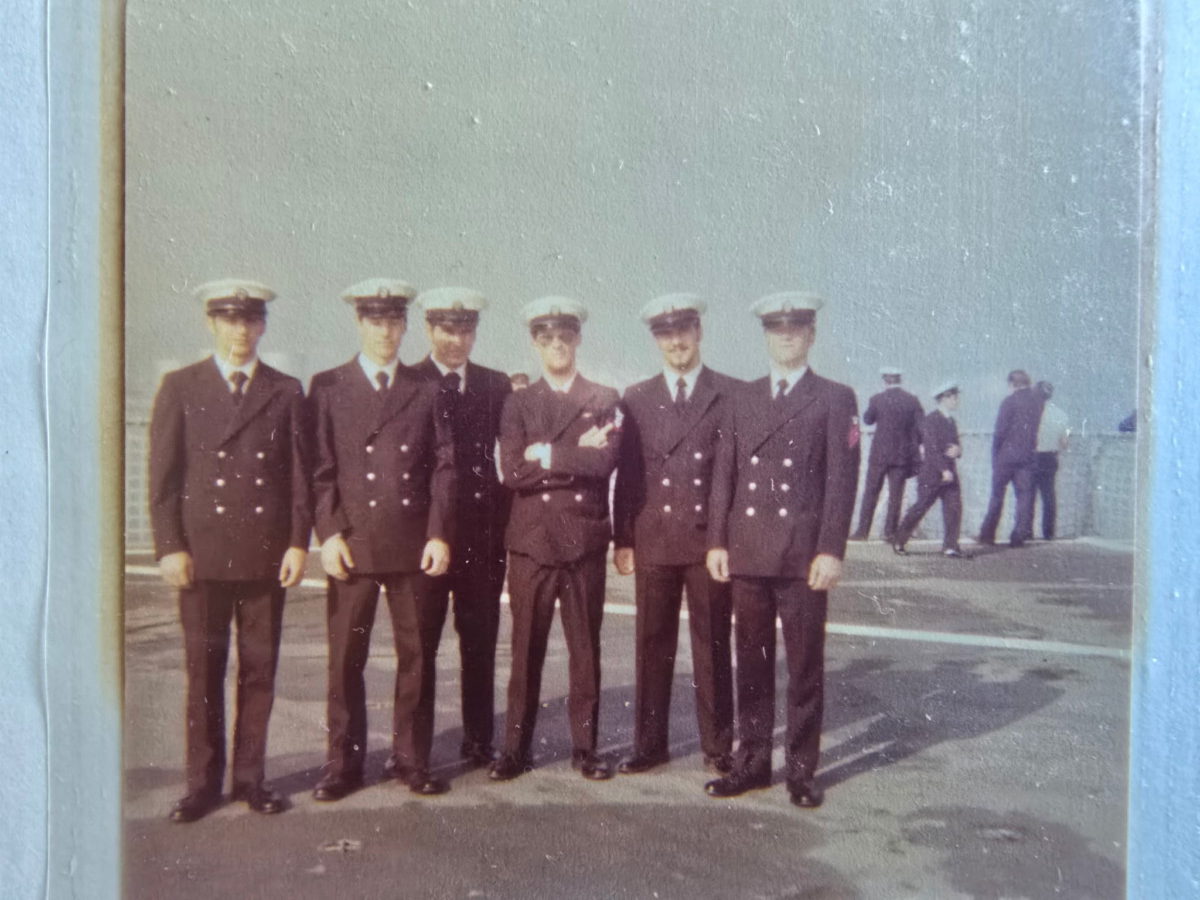
Walko recalls that management would rearrange employees’ schedules to avoid paying overtime premiums.
If weekend repairs were anticipated, for example, employees might be told on Wednesday afternoon to stay home Thursday and Friday, then report to work Saturday and Sunday.
Walko even recalls being called into work on Christmas Day, only to receive time off elsewhere in the week so his total hours would remain at 40, rather than receiving overtime compensation.
But for Walko, the greatest difference wasn’t compensation.
It was safety.
When Safety Becomes an Afterthought
As a Navy-trained Machinist’s Mate and experienced utility worker, Walko understood the hazards associated with electrical generation and industrial equipment.
What he encountered at Fort Pierce Utilities deeply concerned him.
He recalls that when he arrived, workers relied on ordinary automotive jumper cables for grounding applications involving electrical systems up to 69kV.
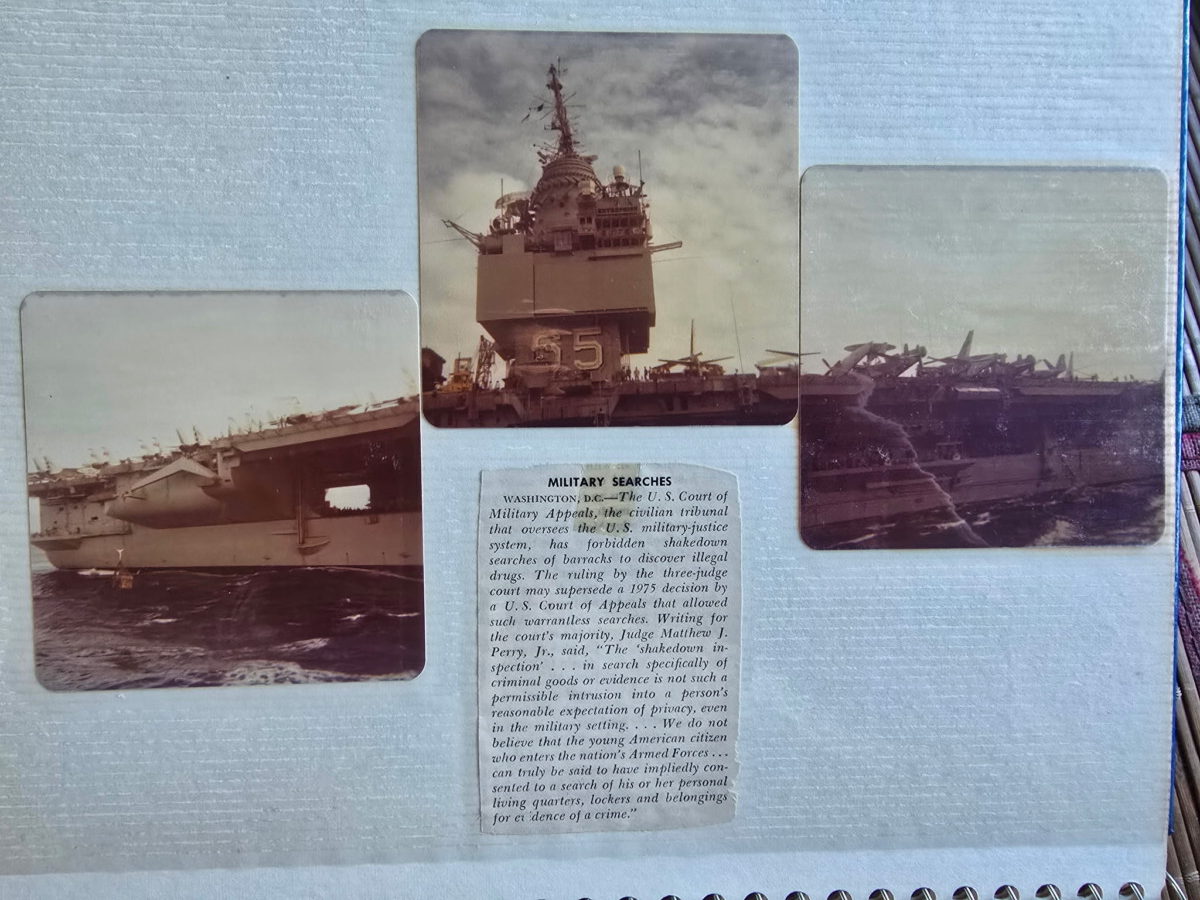
A collection of U.S. Navy aircraft carrier photos and a newspaper clipping preserved in Michael Walko’s scrapbook from his years of military service.
The only hot-stick-like testing equipment he remembers seeing was a noncontact voltage tester attached to a broomstick.
He also recalls an absence of appropriate switching protective equipment.
After several months, Walko was assigned additional responsibilities as a safety director while continuing his regular electrical work.
The position brought him into contact with safety representatives from other municipal utilities and gave him an opportunity to observe how workplace safety decisions were being made.
What troubled him most was an attitude toward accidents that he believed treated injuries as inevitable rather than preventable.
He recalls one safety official expressing the belief that accidents were simply going to happen because they were God’s will.
Walko also remembers an incident in which a welder slipped on an oily surface and was injured.
According to Walko, management responded by drug testing seven employees who had been working in the area.
All seven tested negative.
Walko says the subsequent investigation uncovered that the injured welder lacked a high school diploma, a qualification that had reportedly been waived when he was hired because of his welding abilities.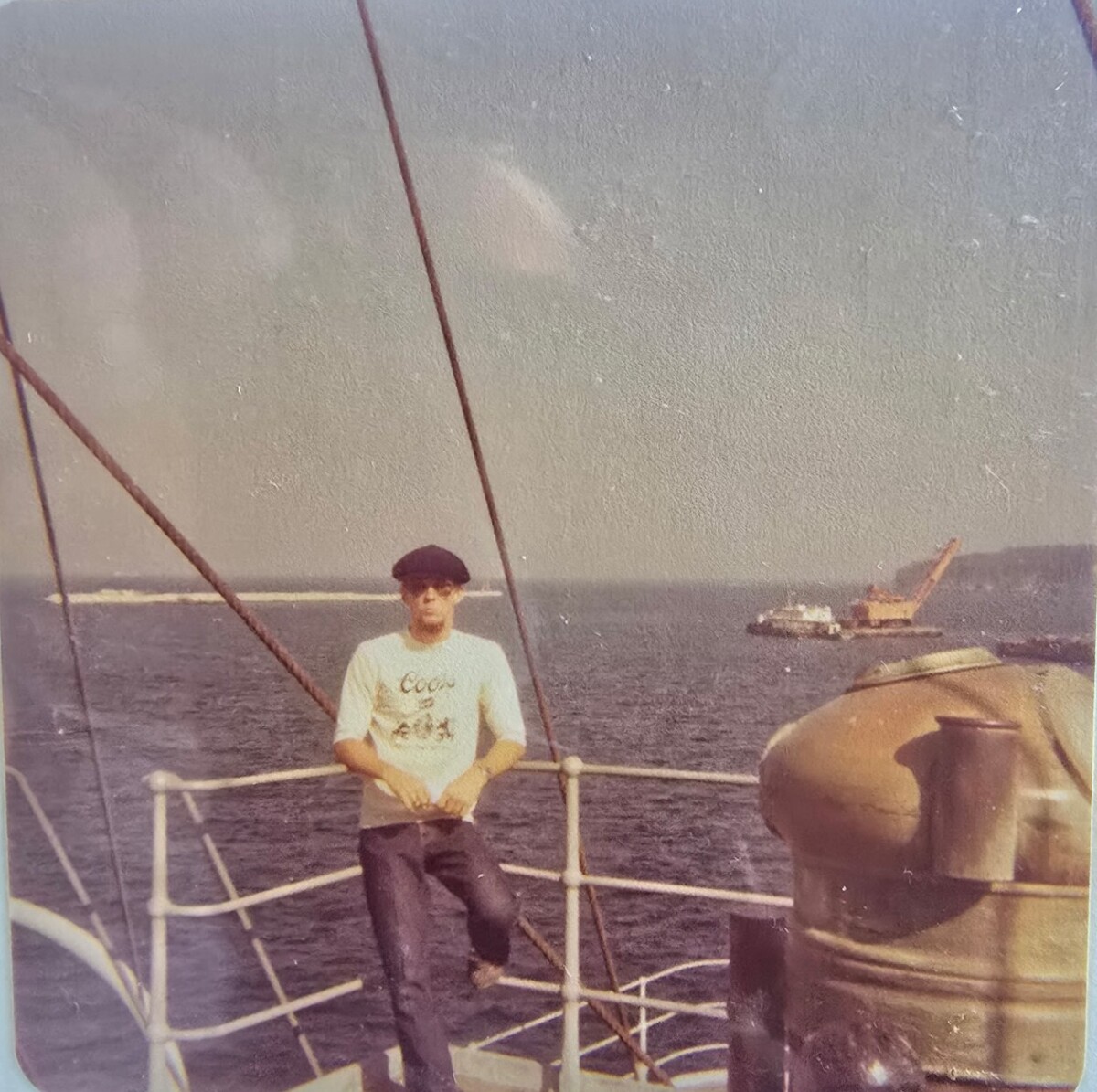
The employee was terminated.
Another incident left an equally lasting impression.
A boiler waterwall tube failure caused an explosion powerful enough to damage the side of the power plant building. The incident attracted local newspaper coverage because of the plant’s downtown location.
At a subsequent safety meeting, employees proposed improvements intended to prevent future accidents.
Walko recalls management responding with a message that stunned him:
“This is a dangerous place, if you can’t handle it go flip hamburgers.”
For a worker whose military training and union experience had emphasized responsibility, preparation, and teamwork, the contrast was difficult to ignore.
The technical work might have been nearly identical to what he had performed at PG&E.
But the workplace culture was profoundly different. For Walko, the experience reinforced something that can be easy to take for granted in a union workplace: safety protections are not simply rules written in a manual. They depend on employees having the training, equipment, and collective strength to raise concerns and demand accountability without fearing for their livelihoods.
Understanding What Union Solidarity Means
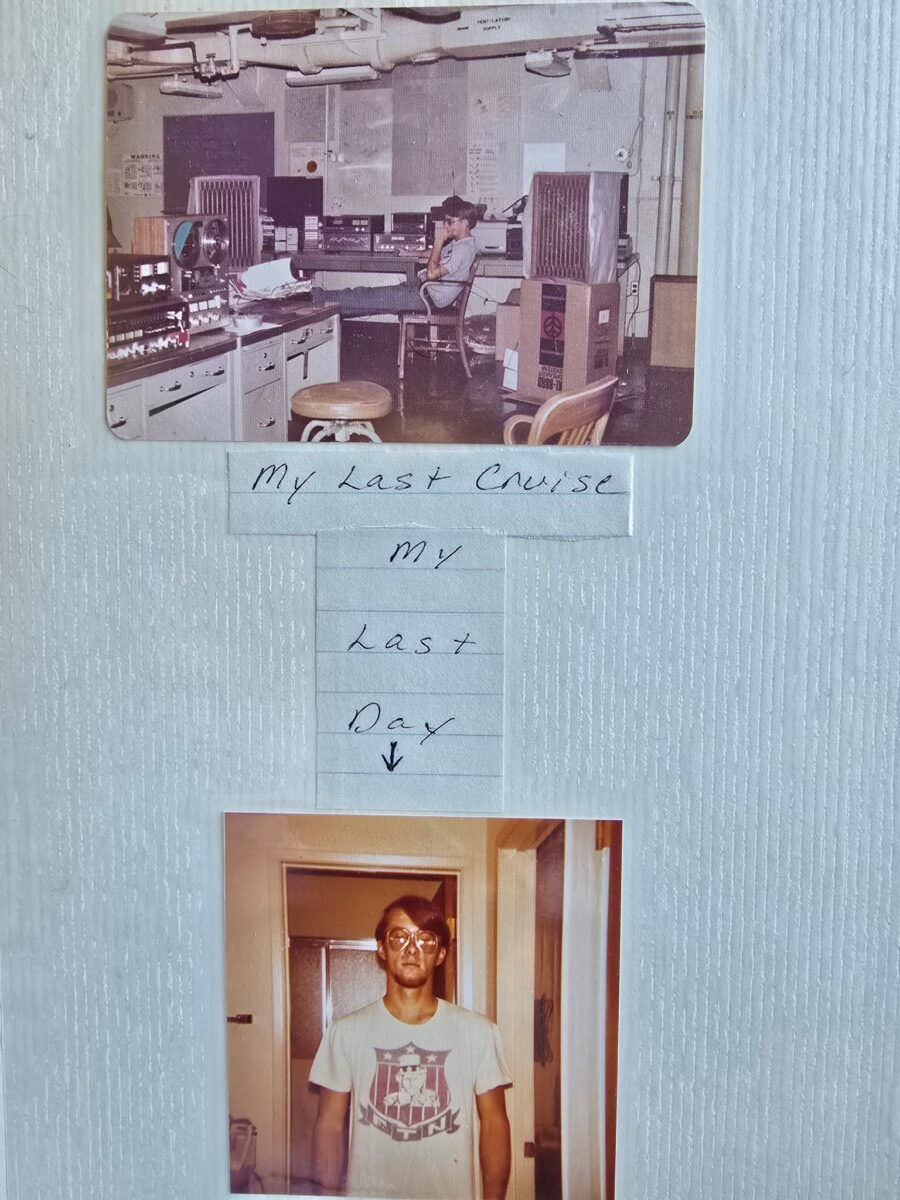
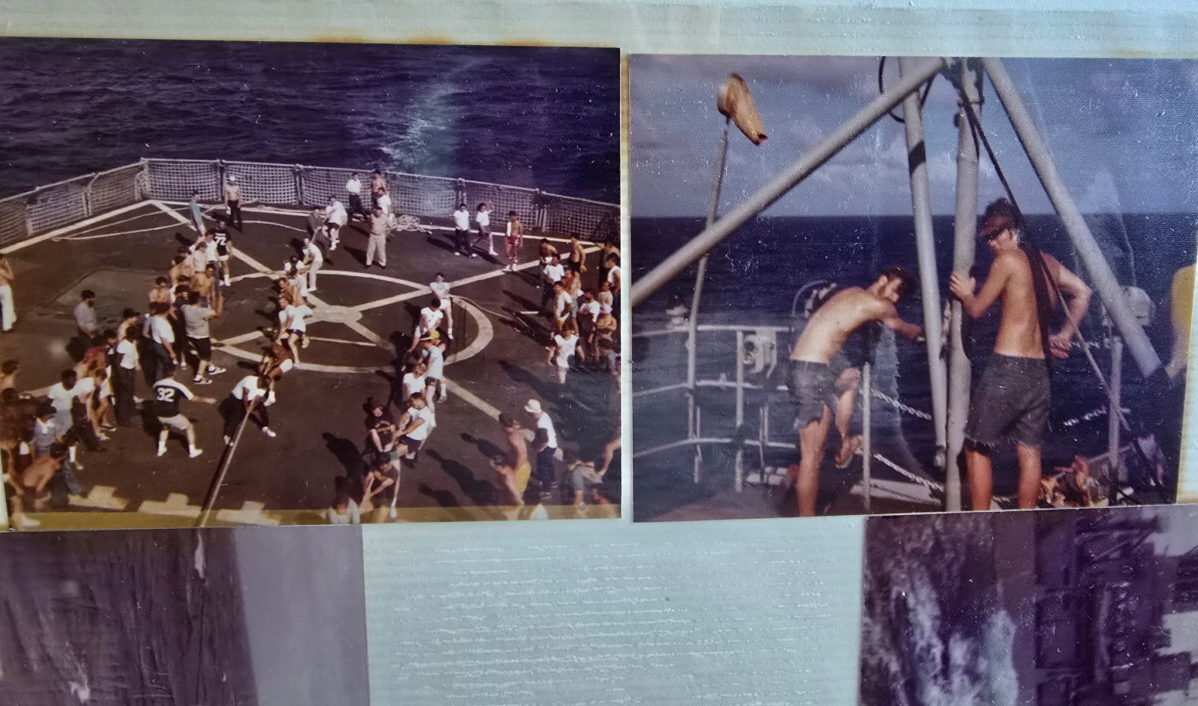
From his final Navy cruise to his last day of service, Michael Walko preserves the memories in his personal scrapbook.
Walko’s experience in Florida gave him a perspective on organized labor that few workers have the opportunity to develop so directly.
He had experienced a union workplace during periods of uncertainty, restructuring, and conflict.
He knew that union representation did not guarantee that every employee would keep their preferred position or that every dispute would be resolved immediately.
But he had also witnessed a union intervene when employees faced termination, negotiate contractual protections, and provide a collective voice in workplace matters.
In Florida, he saw what could happen when workers lacked that same organized representation.
For Walko, the difference was not simply a matter of wages or benefits.
It was about whether employees had a meaningful voice in decisions affecting their livelihoods and their safety.
Eventually, PG&E contacted Walko with an offer to return to the company as a General Construction Apprentice Lineman.
He accepted.
The experience left him with a renewed appreciation for the protections and solidarity of IBEW membership.
His career would ultimately lead him to retirement as a PG&E Meter Crew Foreman, but the lessons from those years remained with him.
Brotherhood Beyond the Uniform
For Walko, the similarities between military service and Union membership were unmistakable.
Both depended on teamwork, trust, and the understanding that individuals are stronger when they stand together.
When asked about the challenges of transitioning from military service into civilian employment, Walko pointed to something that many Veterans understand.
“Probably the biggest challenge was losing the shipboard camaraderie we had in the Navy,” he recalled.
Although the work at PG&E was familiar, the close bonds formed aboard ship were difficult to replace.
Over time, however, he found another form of camaraderie through his union membership.
And even in retirement, Walko remains attentive to the issues affecting his fellow members.
He has expressed particular concern about the treatment of retiree benefits during contract negotiations, a reminder that the decisions made at the bargaining table can affect workers long after their active careers have ended.
For Walko, solidarity is not something that should disappear when an employee retires.
Remembering Those Who Served
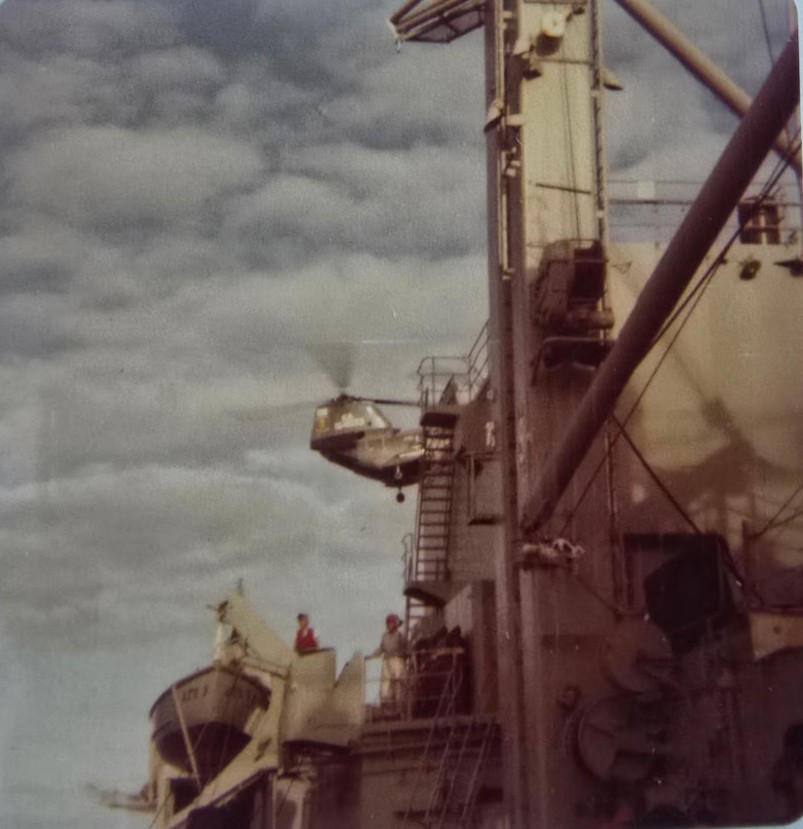
A helicopter approaches a U.S. Navy ship during Michael Walko’s years of service.
For Walko, Veterans Day holds a deeply personal significance.
“Veterans Day is almost like a personal holiday to me that I like to share with my fellow Vets,” he explained, adding that he prefers not to draw attention to himself.
His reflections on military service are also shaped by an understanding that not every Veteran’s experience is the same.
Walko considers himself fortunate. Although his Navy service involved extensive deployments and demanding work, he never experienced combat.
He also remembers a fellow union brother, a Marine Corps Veteran whom he helped find employment at PG&E.
That Veteran struggled with the lasting effects of his military experiences and died by suicide.
The loss remains a powerful reminder to Walko of the unseen burdens some Veterans carry.
While he recognizes the good intentions behind thanking Veterans for their service, he also believes there are aspects of military life that can be difficult to fully understand without having experienced them firsthand.
His perspective reinforces an important part of the IBEW 1245 Veterans Committee’s mission: recognizing that Veterans’ experiences are diverse, their challenges are not always visible, and the bonds of brotherhood and sisterhood remain important long after military service ends.
Continuing to Serve His Community
Retirement from PG&E has not meant retirement from service.
Walko continues to contribute to his community as a member of the Knightsen Town Council and as a trustee of the Byron-Brentwood-Knightsen Union Cemetery District.
His commitment to public service reflects the same values he developed during his Navy years: responsibility, teamwork, and contributing to something larger than himself.
And when it comes to advising the next generation of Veterans, Walko remains enthusiastic about the opportunities available through the utility industry and organized labor.
“PG&E, and IBEW is still a path I would recommend to any fellow Vet, or any young person, even if they’re not a Vet,” he said.
His own journey demonstrates why.
A young sailor who joined the Navy in search of technical training and adventure ultimately found a lifelong career, the protection and camaraderie of a union, and opportunities to serve his community in new ways.
Along the way, he found something else that would change his life forever: his future wife, at a USO dance in Sacramento.
Nearly five decades after his Navy service began, the lessons of those four years remain part of who he is.
Organization. Discipline. Teamwork. Brotherhood.
And perhaps most importantly, the understanding that service to others does not end when the uniform comes off.
For Michael Walko, that commitment has carried him from the decks of Navy ships to the power plants of California, through the challenges of a changing industry, and into a lifetime of Union membership and community service.
His story reminds us that solidarity is more than a word.
It is the willingness to stand beside one another, to speak up when something is wrong, and to ensure that no one has to face life’s challenges alone.
The IBEW Local 1245 Veterans Committee is proud to recognize Brother Michael Patrick Walko for his service to our country, his contributions to our union, and his continued commitment to his community.
This article is part of the IBEW 1245 Veterans Spotlight series, recognizing the diverse experiences, sacrifices, and contributions of Veterans throughout our Membership.
Leave No Veteran Behind.