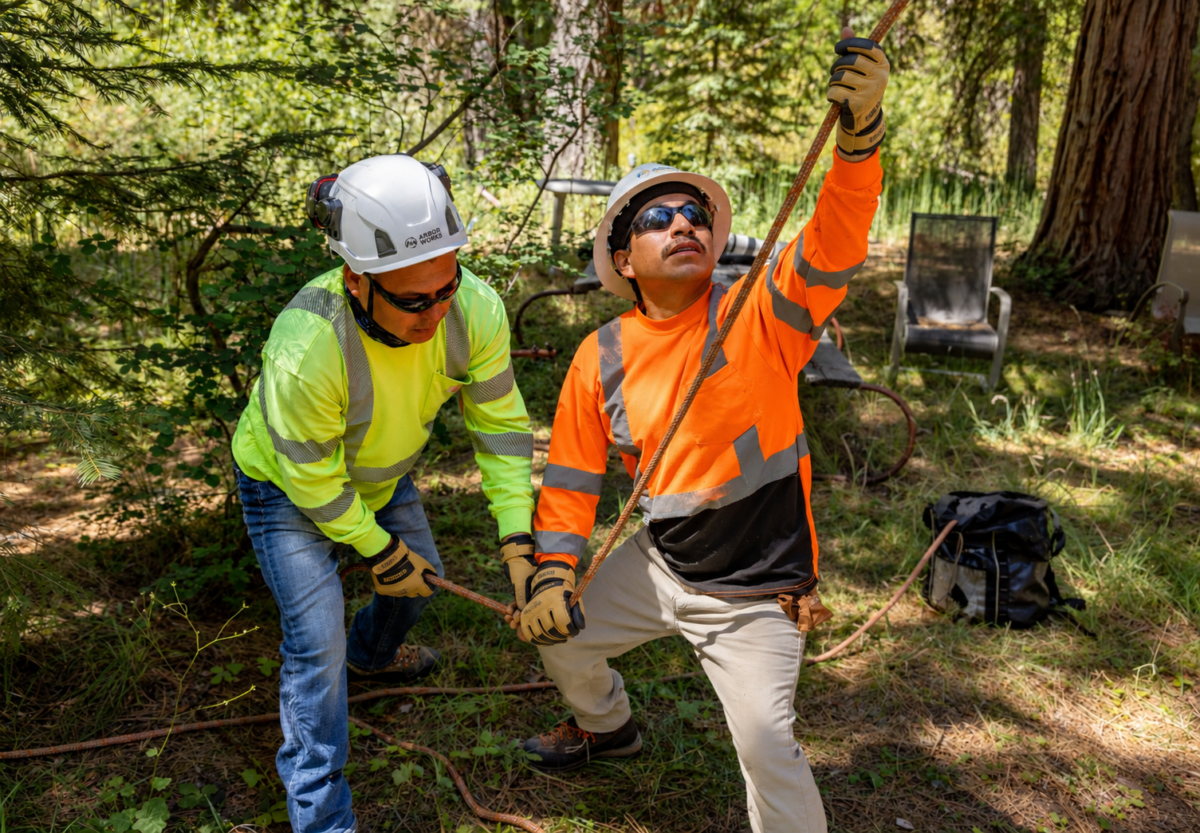
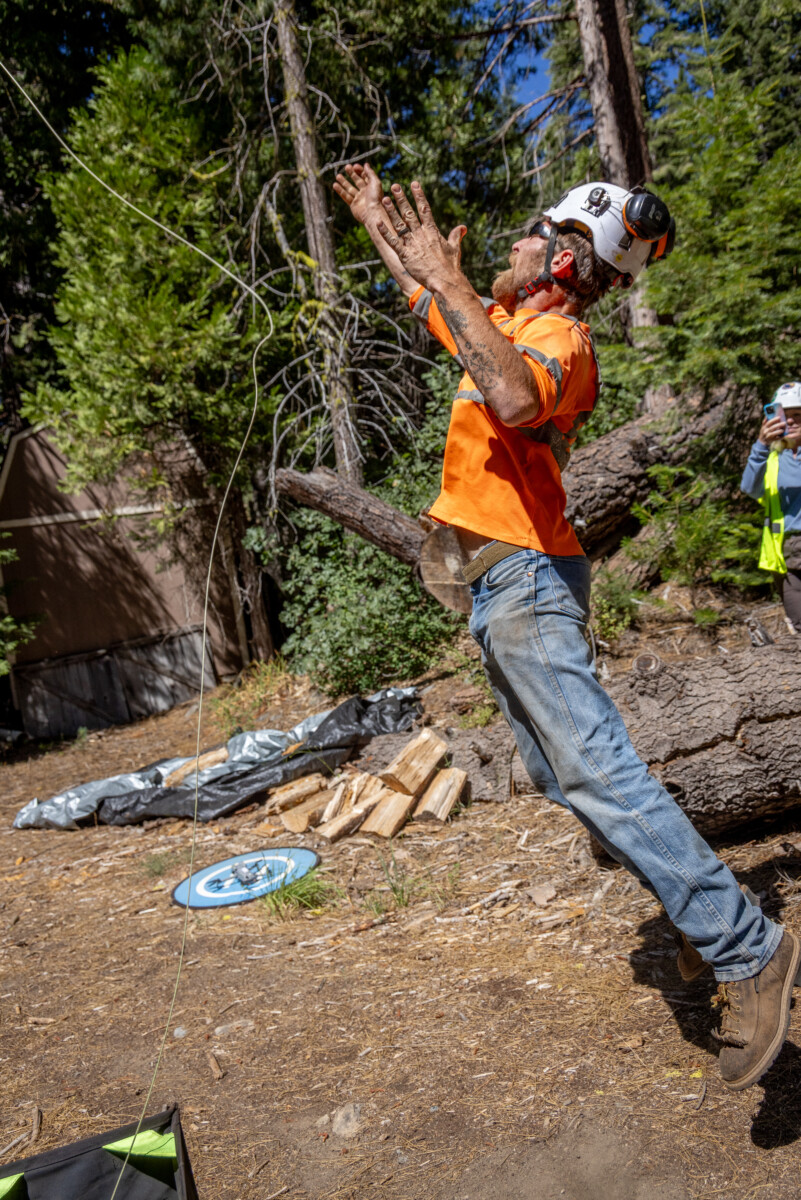
An aging tree, historic ruins and difficult terrain put the crew’s skills, planning and teamwork to the test.
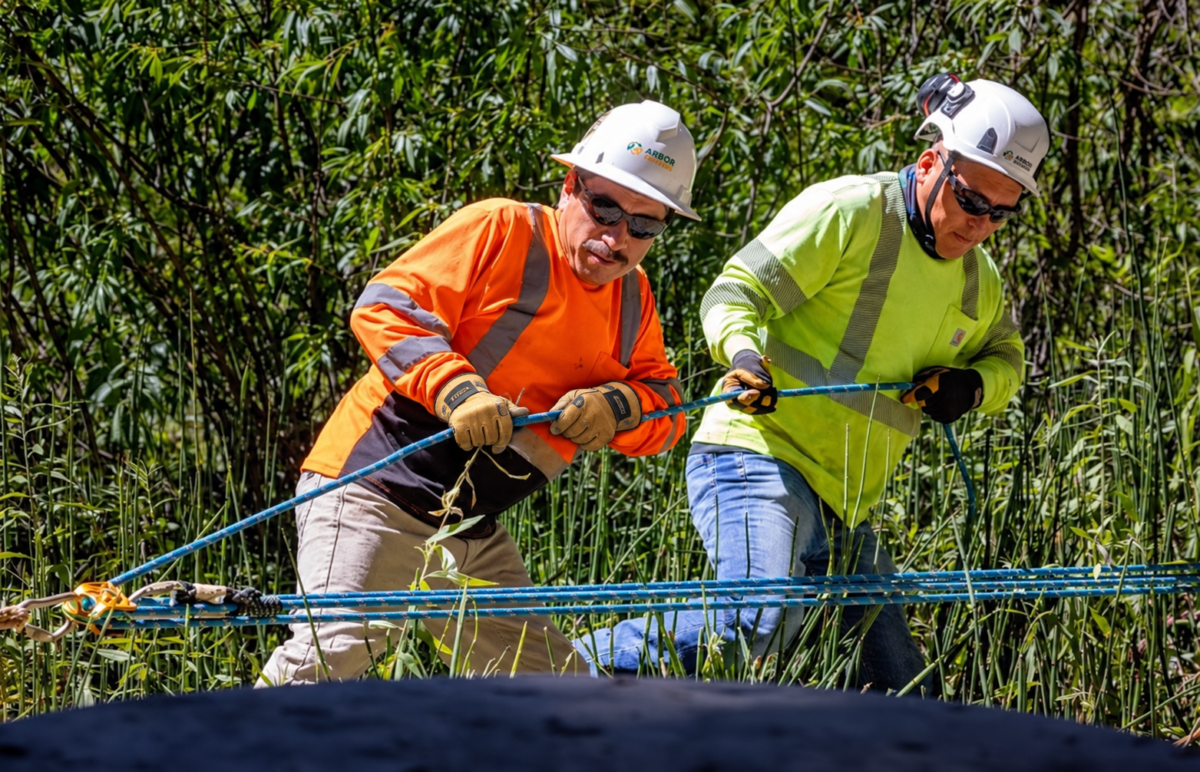
IBEW 1245 members Alejandro Sanchez and Martin Pastenes of Arbor Works use ropes to guide a falling tree, ensuring it comes down safely in a designated location.
Deep in the Sierra Nevada, outside the small mountain community of Fish Camp, an IBEW 1245 tree crew with Arbor Works faced the kind of challenging job that comes with the territory in utility vegetation management.
The assignment: remove a massive white fir, estimated to be between 180 and 200 years old, that had become a hazard to nearby electrical infrastructure.
Getting to the tree was a challenge in itself.
The remote job site was accessible by an old wooden bridge, and the crew initially had to carry their equipment in by hand. Beneath the towering fir sat the remnants of the area’s logging history, including a massive stone fireplace and the remains of old cabins.
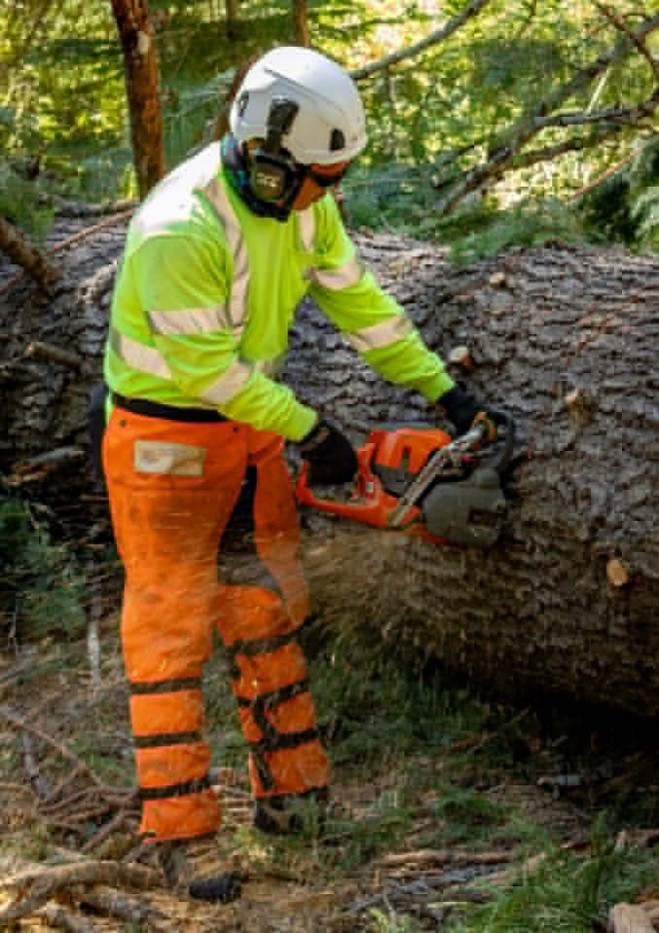
Martin Pastenes of Arbor Works uses a chainsaw to complete the job in a tree-trimming operation outside of Oakhurst, CA.
With historic ruins below, electrical facilities nearby and dead limbs high overhead, the crew had little room for error.
For IBEW 1245 member John Michael Jones, a foreman with Arbor Works, the first order of business was figuring out how to bring the tree down safely.
“This is one of those trees that you really have to learn to respect,” said Jones, who has worked for Arbor Works for 10 years. “It’s a pretty large piece of wood there, and it keeps you on your toes. And if you don’t respect the tree, it can cause some serious damage to you and the people around you.”
Planning the Work
Before the first cut, the crew carefully assesses the tree, the surrounding terrain and the equipment they would need.
The white fir measured approximately 50 inches in diameter and had significant dead wood in its upper canopy. Those weakened limbs posed a particular danger to anyone working below.
“Some of the challenges for this job would be the size of the tree itself, and then the amount of dead wood that’s in this tree,” Jones explained. “It can break and come out at any time when they pull that rope, and I’ll be right under it.”
The crew considered completing the job without a bucket truck, given the difficult access to the site. Jones described a plan to climb a smaller neighboring tree, transfer into the fir, secure himself and make the cuts needed to remove the top.
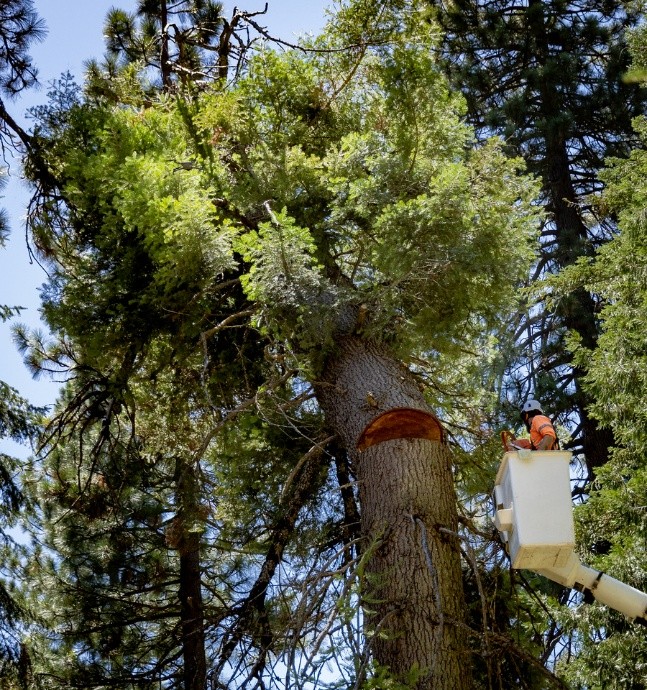
IBEW 1245 member John Michael Jones, a foreman with Arbor Works, works from a bucket truck to carefully take down a 200-year-old fir tree near Oakhurst, California.
But as the crew continued assessing the hazards, they determined that a bucket truck was necessary to complete the work safely.
It was a reminder that some of the most important decisions on a job happen before the cutting even begins and the crew needed to balance access, equipment limitations, the condition of the tree and the obstacles below.
Dangerous Work, Skilled Hands
Vegetation management is an essential part of maintaining a safe and reliable electrical system, particularly in California’s wildfire-prone regions.
Arbor Works is a signatory contractor performing vegetation management for PG&E, trimming and removing trees that threaten electrical lines, poles and other equipment.
As trees grow, decay or become damaged, they can pose increasingly serious risks to the electrical system and surrounding communities.
“Trees get rot, they get decay, they grow, and as they get closer to their facilities, it becomes a hazard,” explained Arbor Works Field Foreman Chris Marcus. “We have to prune or remove that hazard away from their facilities.”
The work is physically demanding and inherently dangerous. Crews routinely operate at significant heights, handle heavy equipment and work around unstable trees and limbs.
“It’s very dangerous. It’s probably one of the most dangerous jobs that’s out there,” Marcus said.
That’s why training, experience and following established safety protocols are so important.
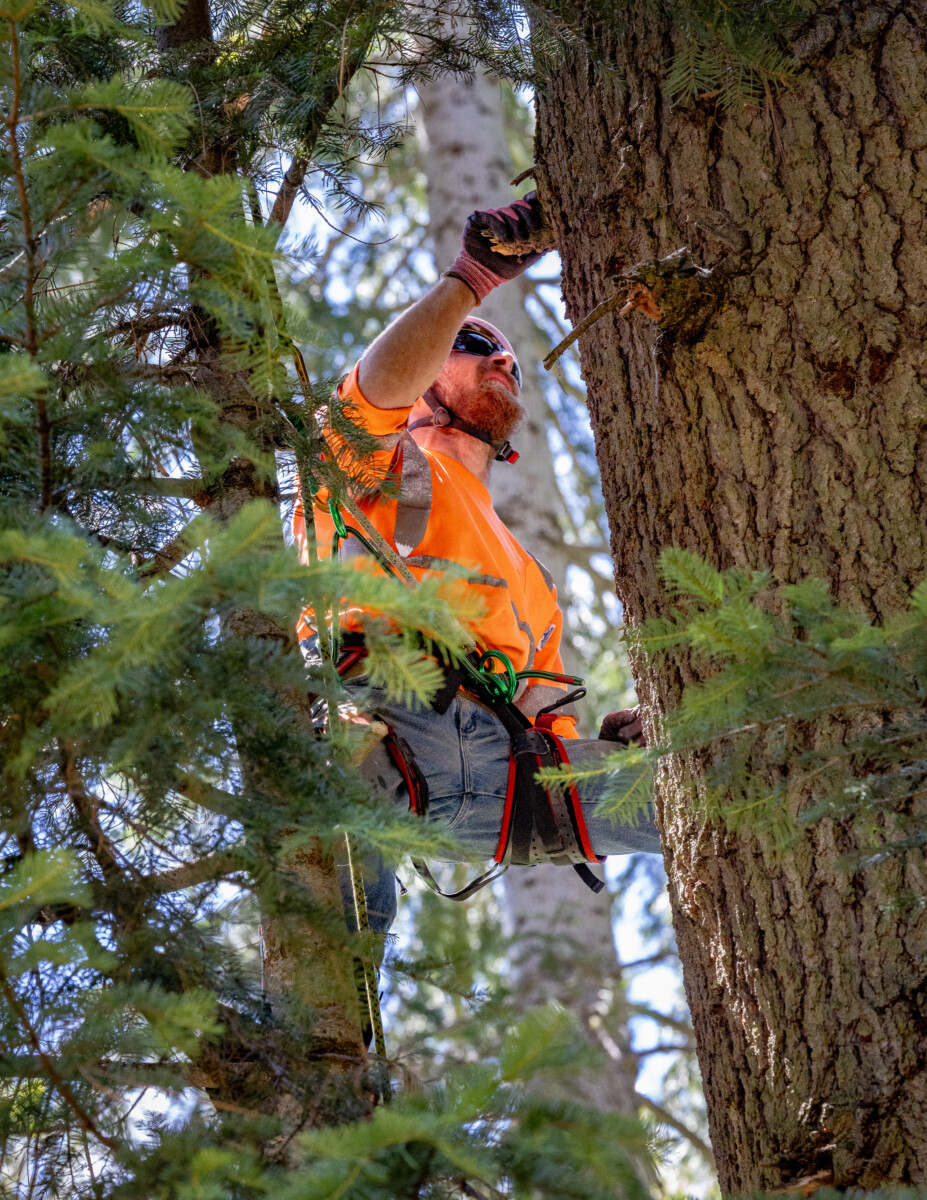
IBEW 1245 member John Michael Jones, a foreman with Arbor Works.
Marcus, who has spent nearly a decade with Arbor Works, worked his way into a field foreman position, where he now helps oversee crews and ensure the work is performed safely.
His advice to anyone considering the trade is, “Take it slow, pay close attention, observe a lot,” he said. “Paying attention, listening, and watching what other people are doing is how you would approach this industry.”
Communication Is Everything
As the crew worked to bring down the massive fir, communication became especially critical.
With the crew positioned in different locations and heavy sections of wood being lowered or pulled into place, everyone needed to know exactly what was happening and when.
“We have three-way communications all the time,” said Alejandro Sanchez, an Arbor Works foreman and IBEW 1245 member. “Even if we don’t see the other guys, we communicate with signs.”
That communication, he said, is essential to preventing accidents.
“It’s 100% important, especially doing this type of work, because we can prevent any little mistake or a big mistake by communicating.”
Timber!
After careful preparation, assessment and cutting, the towering fir that has stood in the Sierra Nevada for nearly two centuries, finally came down.
For Sanchez, watching the tree fall exactly as the crew had planned brought a sense of relief.
“It feels good because it came down the way that we wanted, the way that we planned it,” he said. “You just release the stress once the piece is down.”
Even with years of experience, a tree like this demands constant attention and respect. It’s tough work, often in remote areas and difficult conditions, but it’s what IBEW 1245 tree crews do every day to keep communities safe and the lights on.