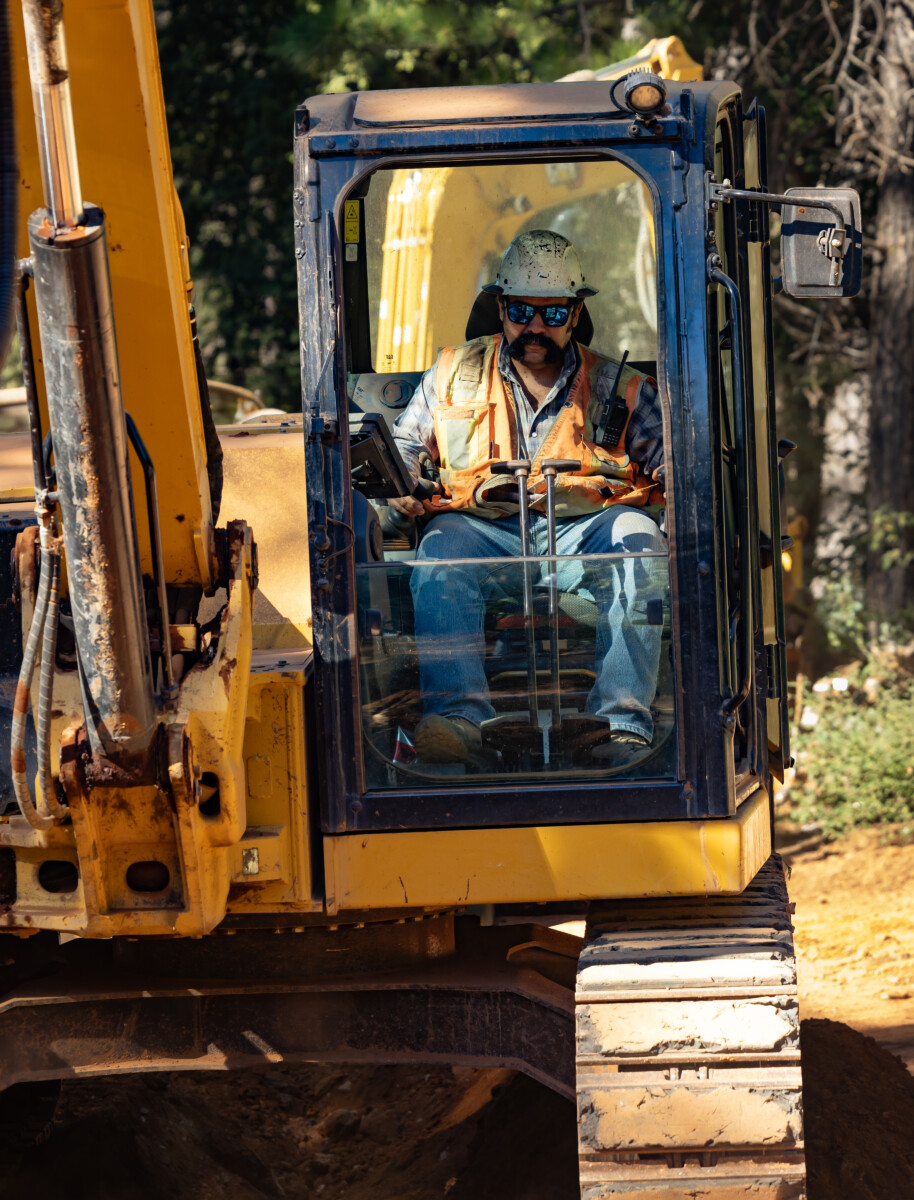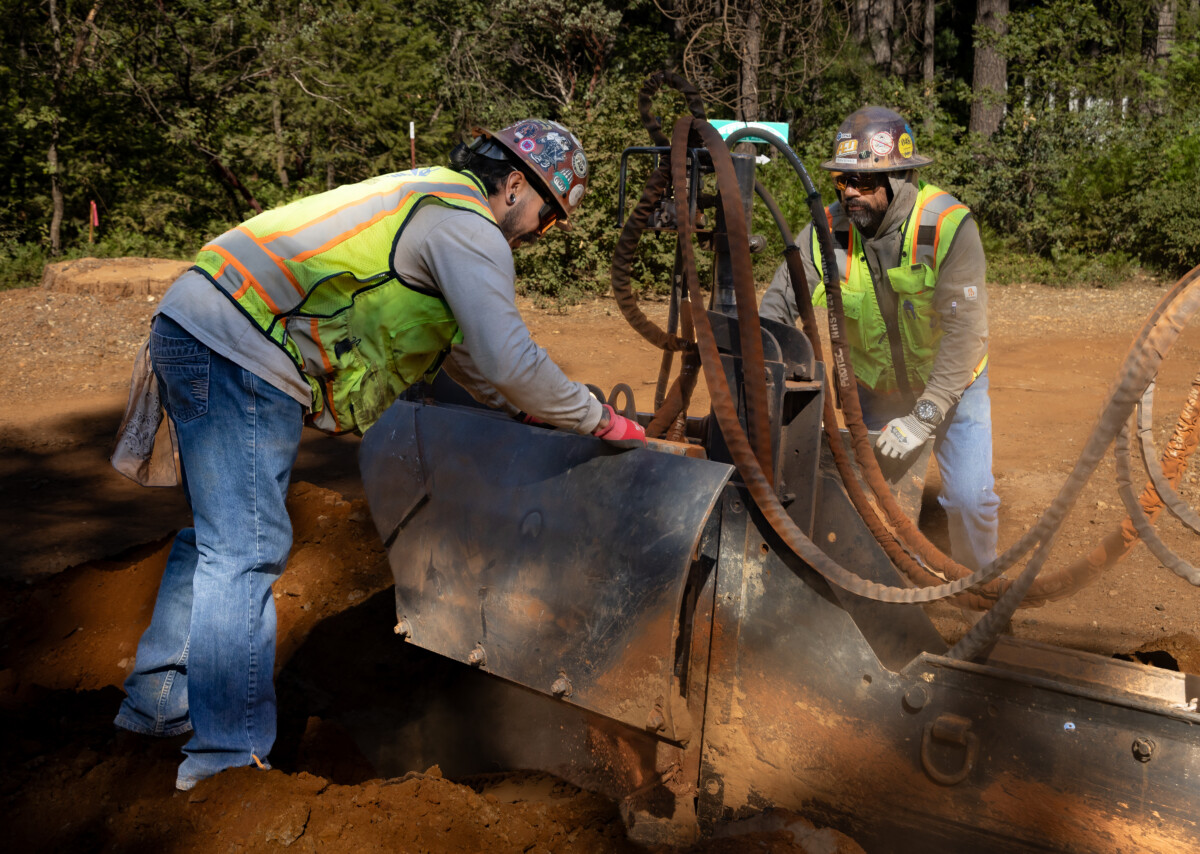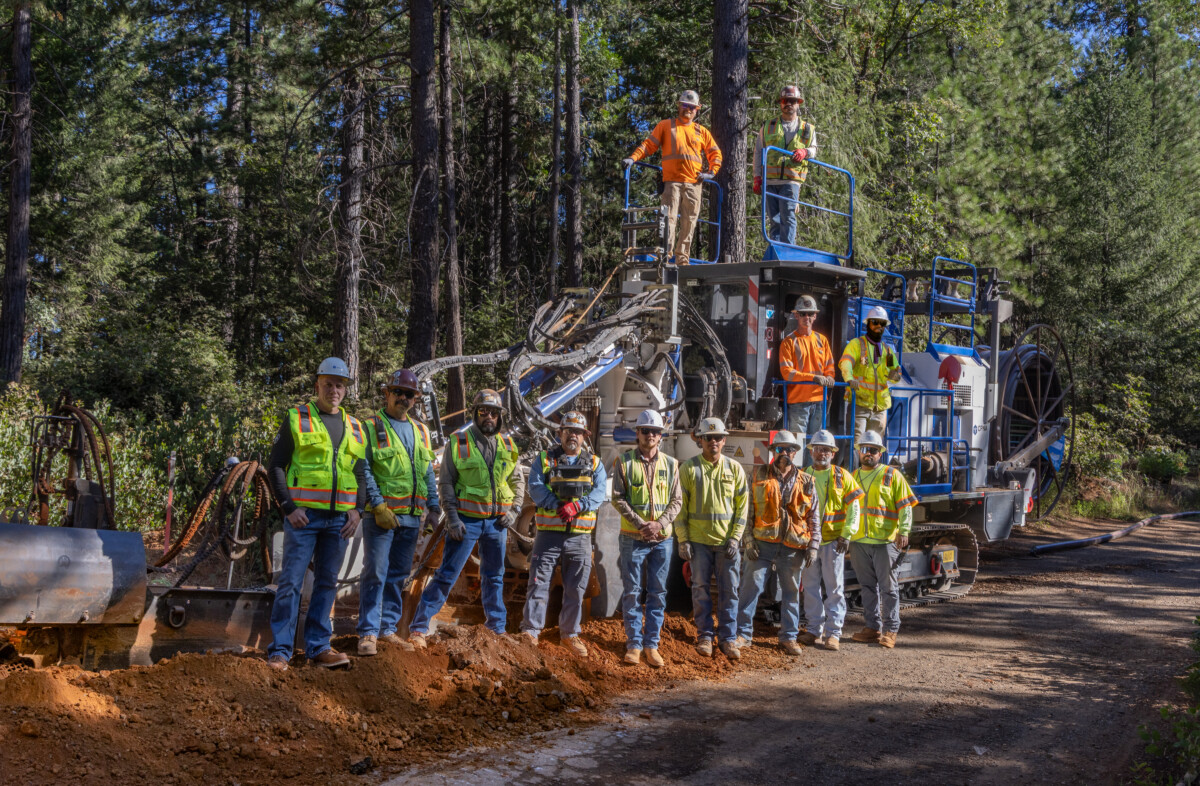
IBEW 1245 members from Cable Protect Underground America and KW Emerson underground conduit for PG&E lines in Alta, Calif.
Above Auburn, in Alta California, a massive trencher slowly makes its way along a rural road, cutting through the earth and laying conduit underground as it moves.
But there’s no operator sitting behind the wheel.
Instead, IBEW 1245 member Miguel Marin stands nearby, controlling the machine remotely from a unit strapped across his chest. Around him, crews from Cable Protect and K.W. Emerson work in a carefully coordinated operation to keep the machine, and the undergrounding work ahead of them, moving.
The two IBEW signatory contractors are working on PG&E’s ongoing effort to move power lines underground in some of California’s highest wildfire-risk areas. PG&E plans to complete more than 1,900 miles of undergrounding by the end of 2027. Undergrounding reduces wildfire risk from those lines by approximately 98 percent while also improving reliability and reducing future vegetation management and maintenance needs.
Getting those miles underground takes skilled IBEW workers — along with some impressive equipment.
One Pass
Signatory contractor Cable Protect North America is using a Marais ST2, a single-pass trencher, on the work near Alta. The machine cuts a narrow trench while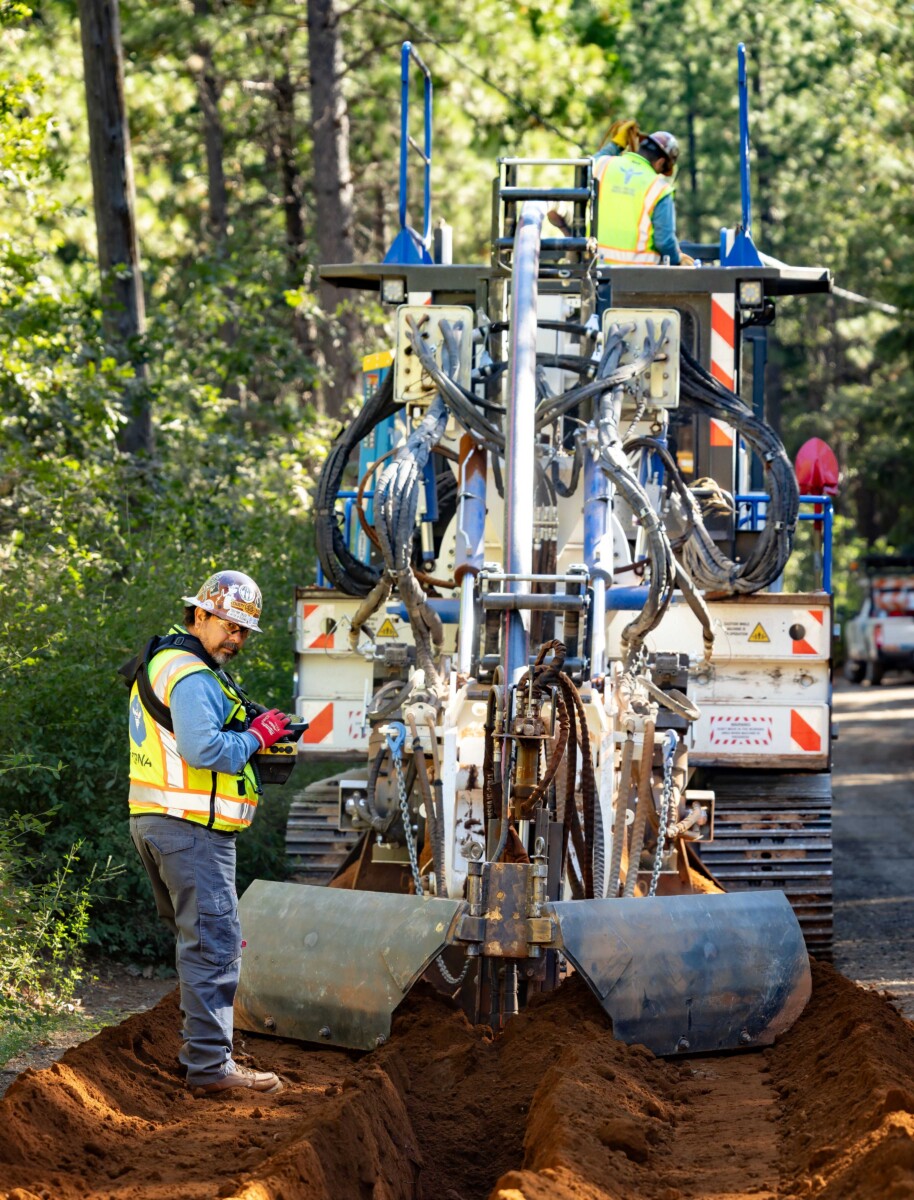 simultaneously feeding HDPE conduit into the ground. Crews following behind complete the backfill, install warning tape and compact the ground.
“It’s a parade,” said K.W. Emerson Crew Lead Robert Moncada, describing the train of workers and equipment moving together down the road. “It’s a lot of moving parts, a lot of people.”
Born and raised in Angels Camp, Moncada got his start working for his father’s small excavation company, a subcontractor for K.W. Emerson. After serving in the military and spending seven years as a police officer, he returned to construction.
“It’s better for my soul,” Moncada said, adding with a laugh that the stress is “just a little different.”
The work moves fast. Cable Protect crews are installing roughly 1,200 to 1,600 feet per day. Company President and CEO Jim O’Connor said comparable work using conventional methods had previously reached about 600 feet on a good day.
The increased production can bring down the cost per mile and allow more undergrounding to be completed.
“More miles — they can hit their target miles, which is good for all of us,” O’Connor said.
Skilled Workers Behind the Technology
Cable Protect Vice President and COO Jon O’Donnell said the technology is only as good as the people operating it.
“These are very select guys, and they are very talented,” O’Donnell said. “They make or break what we do and how we look and how successful we are on a day-to-day basis.”
Operator Wyatt Watts is one of them.
Watts operates a skid steer behind the trencher, backfilling the trench after the conduit is installed. He has spent years traveling for undergrounding work around California, including working in the Paradise area.
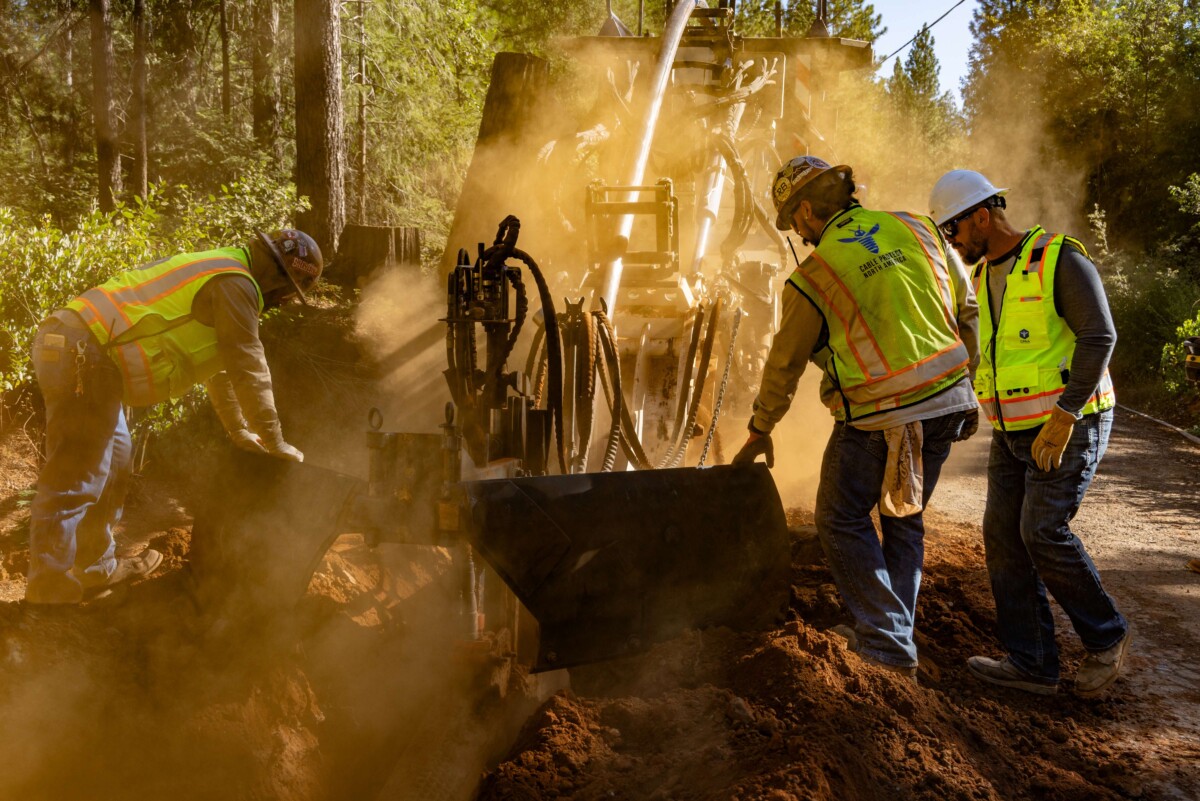 “I just love operating,” Watts said. “It’s cool, it’s fun, and you get to be a part of something great. We’re building infrastructure, putting everything underground and making something awesome.”
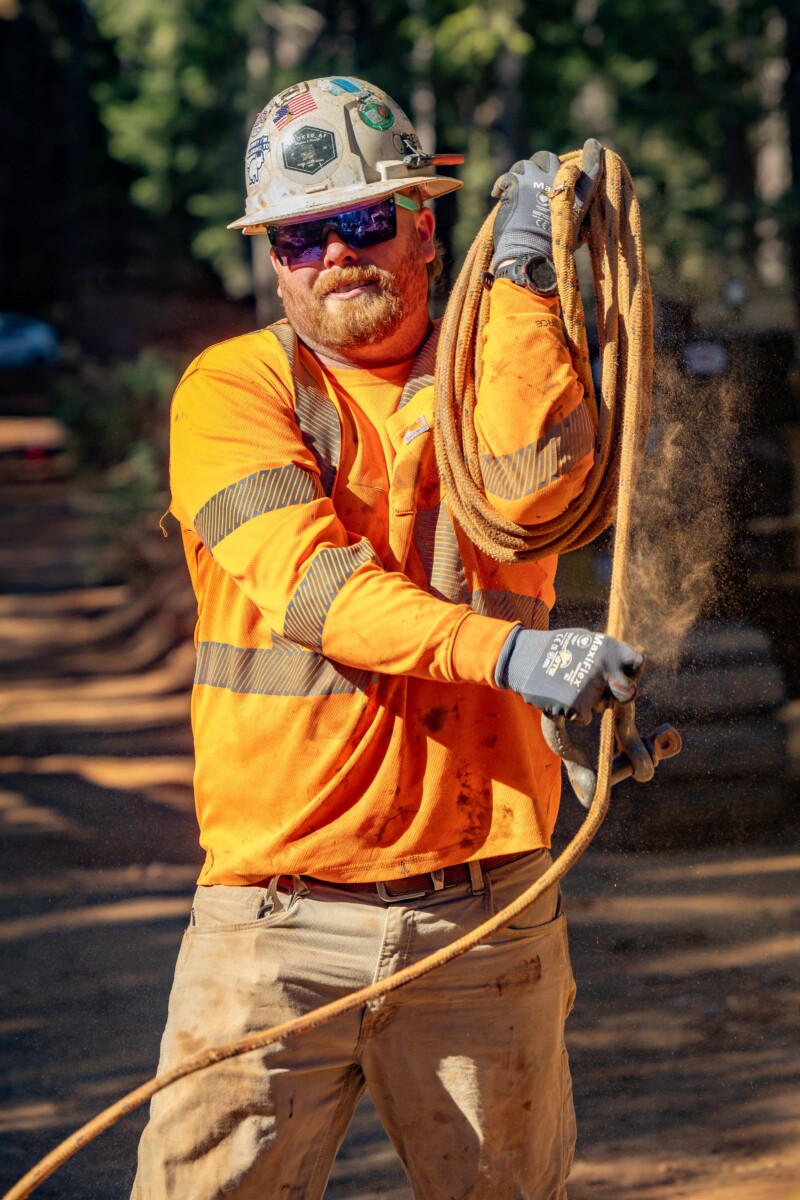
Equipment Line Operator Adrian Marin works ahead of the trencher, making sure enough pipe is fused and laid out to keep the operation moving.
When conditions are right, Marin said, the machine can work through a 750-foot reel of pipe in roughly 45 minutes to an hour.
“We always try to stay about one reel ahead,” Marin said. “That way, in the morning, they can just go.”
Adrian works alongside his father, Miguel, and his uncle, Freddy Marin, Cable Protect’s General Superintendent.
Miguel operates the single-pass trencher and said running the machine has become second nature. The bigger challenge is what crews encounter along the way, including changing terrain, weather and private utilities that may not appear on utility markings.
“We just can’t assume, and we just don’t go blind,” Miguel said. “We try to get as much information and keep in contact with the community.”
During IBEW 1245’s visit, the crew was coordinating with a nearby resident about a private water line they would encounter the following day.
Working Safely in Fire Country
The irony of wildfire-hardening work is that crews are often working in the same hot, dry conditions that make these communities vulnerable to fire in the first place.
The crew in Alta was working under R5 fire conditions that day. Justin Gardner, who was handling traffic control and fire watch, stood ready with a water hose, watching for sparks and dry vegetation, while a water wagon followed the operation.
Gardner was also responsible for helping residents safely navigate around the work zone. If someone needed to get through, the crew had to coordinate moving equipment and roadblocks without compromising safety.
“Our main goal is for everyone to be safe,” Gardner said.
That means keeping the crew and residents safe while the work is underway. But the work itself has a much larger purpose. Every foot of power line moved underground helps protect entire communities from wildfire for decades to come.
For the IBEW 1245 members doing the work, it’s about keeping people safe today and making our regions safer for the future.