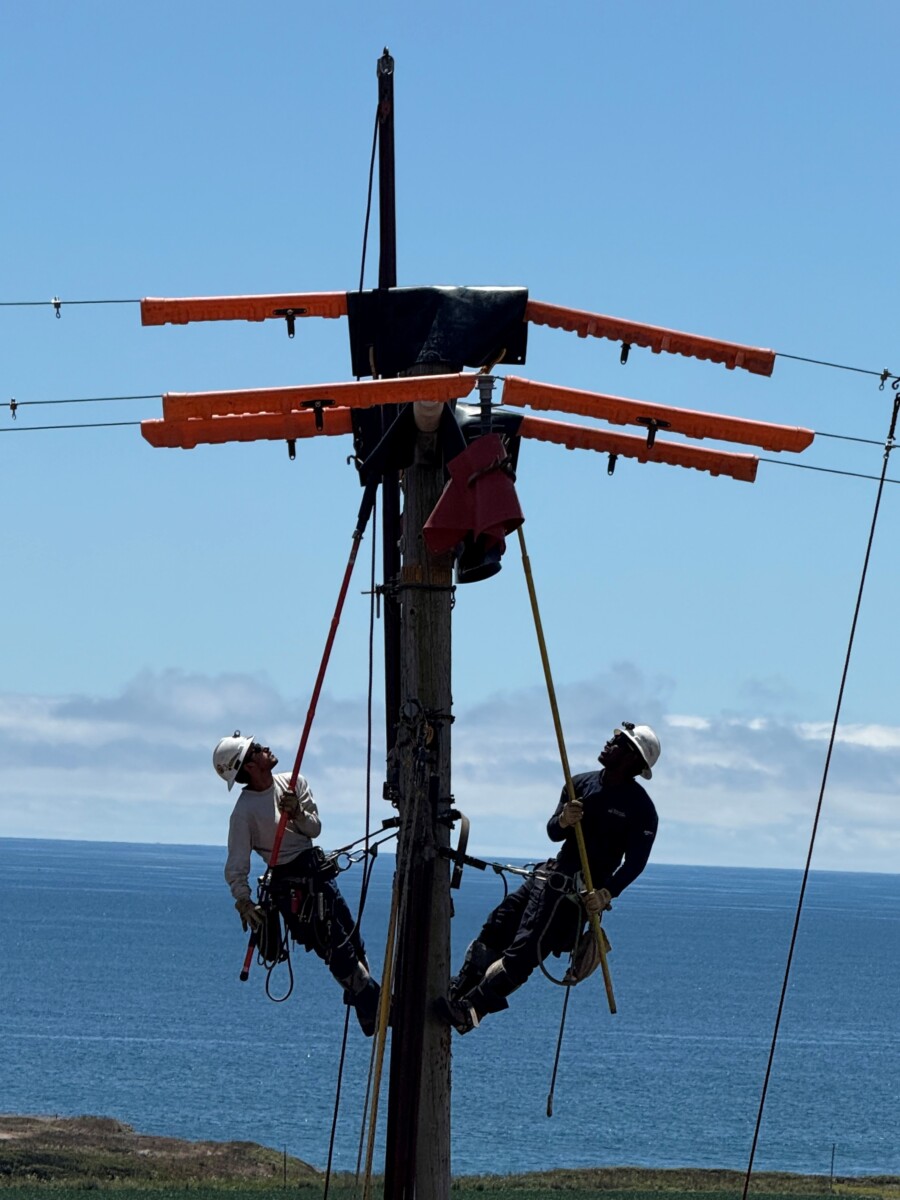
Malik Floyd performs overhead distribution work alongside a fellow lineman along the California coast.
Becoming a Journeyman Lineman takes years of training, testing and learning on the job. But getting that first opportunity can be a challenge of its own. Line school can cost thousands of dollars, and simply knowing how to break into the trade often requires guidance from someone who knows the way.
Five years ago, Malik Floyd and Mateo Castro were looking for that opportunity.
Both got their start through a joint IBEW 1245-PG&E initiative launched in 2020 to open doors to qualified candidates who historically may have faced barriers to entering the trade.
Their paths into the program were very different. But both took the opportunity and ran with it. What followed were years of learning the trade, long days on the job and working to get better along the way.
A Career He Didn’t Know Existed
At 22, Floyd was working in a restaurant and knew virtually nothing about the utility industry when his mother told him about an opportunity she had heard about through an IBEW 1245 flyer.
He applied, interviewed and was selected for a hiring hall position at PG&E. Floyd understood from the beginning that getting the opportunity was only the first step.
“They were going to give me my step in, but like anything, it’s up to you to put in the work,” he said.
Floyd arrived at PG&E’s Auburn yard in December 2020 as an Electric Line Assistant with no previous experience in the trade.
When he arrived, Floyd said the crews knew exactly where he was starting from and took the time to teach him. “Everyone was very receiving and willing to teach,” he said.
He also quickly learned that one of the most important things he could do was admit what he didn’t know.
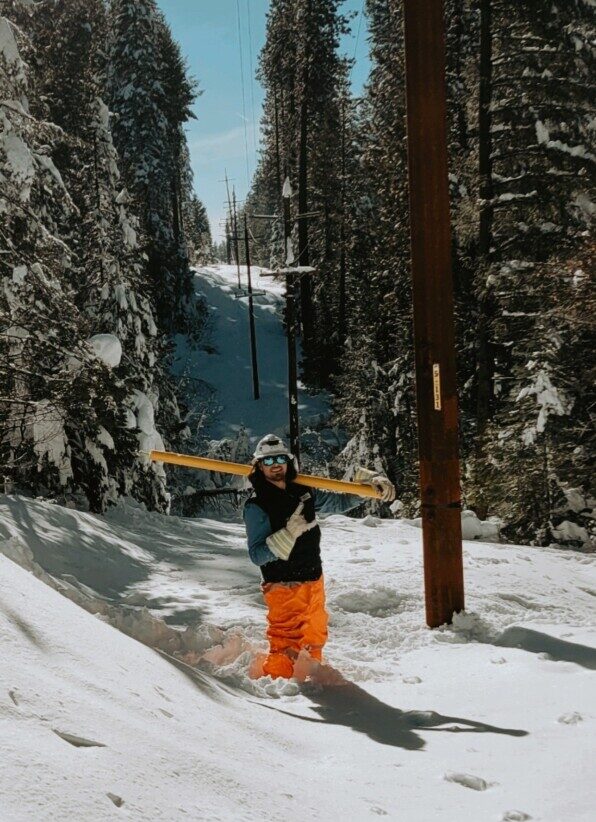
Mateo Castro carries equipment through deep snow during storm work. Castro topped out as a Journeyman Lineman in July 2026 after completing his apprenticeship at PG&E’s Auburn yard.
“I was very open,” Floyd said. “If they asked, ‘Do you understand what you need to do?’ If I didn’t, I would tell them, ‘No, I don’t. Can you show me?’”
That approach made an impression.
“You can’t be afraid to ask questions, and you’ve got to retain the information,” he said. “You’ve got to put in the work to actually try to improve every day.”
Floyd spent about a year as a hiring hall ELA before becoming a permanent employee. After nearly another year as a permanent ELA, he entered PG&E’s apprenticeship program.
Today, he is approaching the finish line. Floyd is in the final stages of the apprenticeship and expects to top out as a Journeyman Lineman in April 2027.
A Chance Encounter
Castro’s road to the trade began shortly after high school. At his father’s suggestion, he enrolled at Northwest Lineman College in Oroville just two months after graduating.
But finishing line school didn’t mean a job was waiting. COVID hit, and Castro took communications and other construction jobs while trying to find a way into the trade.
“When you’re 18 and you have no work experience, nobody really wants to hire you,” Castro recalled.
Eventually, he found himself working at his mother’s smoothie shop. Then, one day, a customer walked in wearing an IBEW 1245 shirt.
“I was sitting there making a smoothie, and I was like, ‘Who’s this guy?’” It was IBEW 1245 Senior Assistant Business Manager Bob Gerstle.
For Castro, it was a chance encounter with someone who knew the path he was trying to find. Before joining the IBEW 1245 staff, Gerstle spent more than three decades at PG&E, working in the line trade and ultimately as an Electric Crew Foreman. Since coming on staff in 2012, Gerstle has represented members in the Sierra Division and become a mentor and teacher to countless members coming up through the trade.
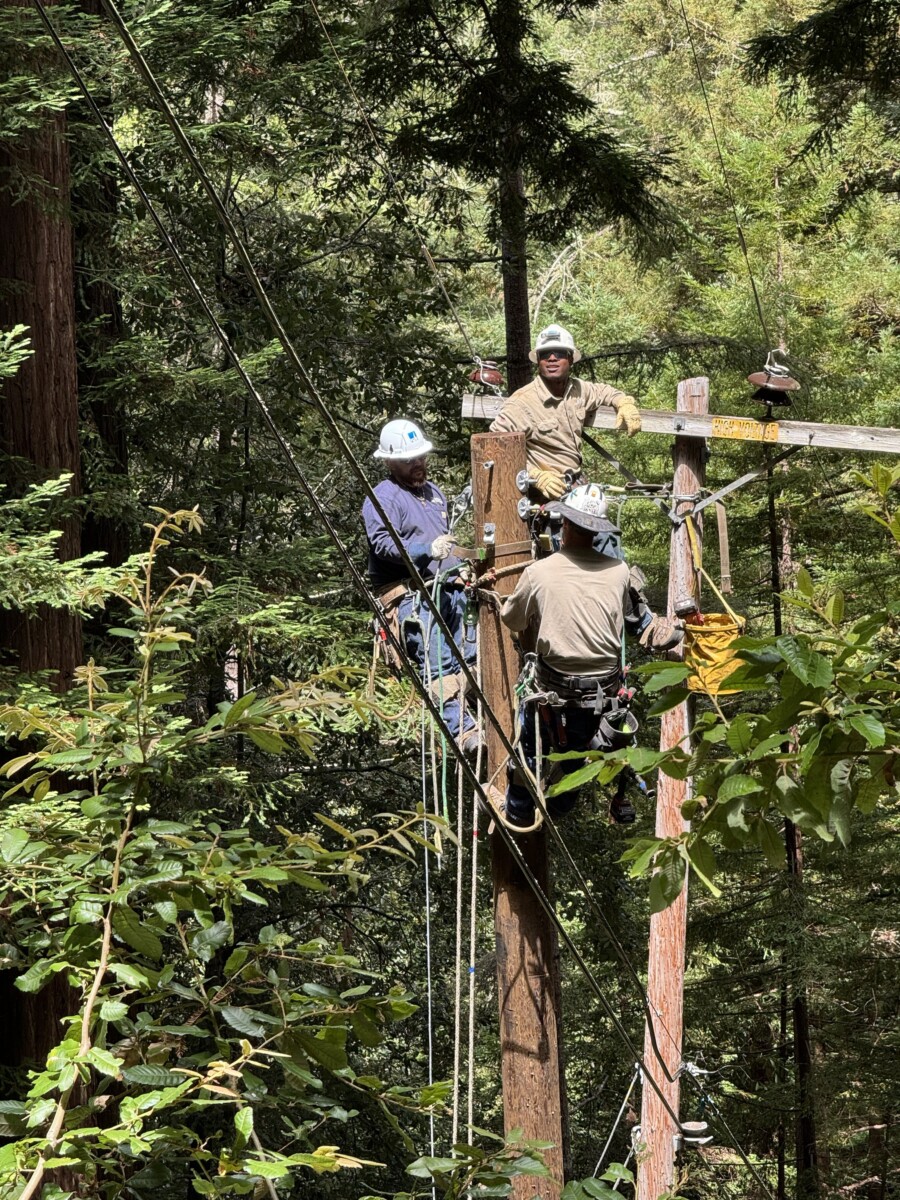
Malik Floyd, top, works alongside his crew.
Castro told Gerstle he had been to line school and was looking for work. Gerstle told him about interviews IBEW 1245 was conducting through the new initiative.
Castro interviewed at the union hall and landed a hiring hall utility worker position in PG&E transmission. He spent nearly two years there before getting an apprenticeship in Auburn.
But distribution was a whole new learning curve. “I came in pretty much not knowing a dang thing,” Castro said.
He leaned on the other apprentices around him. They traded information, helped one another find specifications and prepared each other for unfamiliar jobs.
The apprenticeship also meant returning to school about every six months for training and testing.
“My money and my job were relying on these tests,” Castro said. “I couldn’t let myself mess up.”
On July 8, 2026, Castro topped out as a Journeyman Lineman. “It was awesome,” he said. “The biggest relief off your shoulders is like, ‘Ah, I finished.’”
And when asked who had made the biggest difference in the long journey from a teenager looking for a way into the trade to becoming a Journeyman Lineman, Castro didn’t hesitate. “Bob,” he said. “He gave me my shot. If it wasn’t for him, I don’t know where I’d be today, to be honest with you.”
Starting Together
While their paths into the trade were different, Floyd and Castro started the program together.
“We were at the same class when it all first started,” Castro recalled. “They were showing us how to make up tap guard and down guys and how to use a chainsaw and all that good stuff.”
Years later, they found themselves together again at the Auburn yard. Now, Castro is a Journeyman Lineman and Floyd is just months away from topping out.
Both point to storm work as some of their most memorable time in the trade. “It’s a lot of work,” Floyd said. “It’s tiring. It beats you up, but it’s really rewarding.”
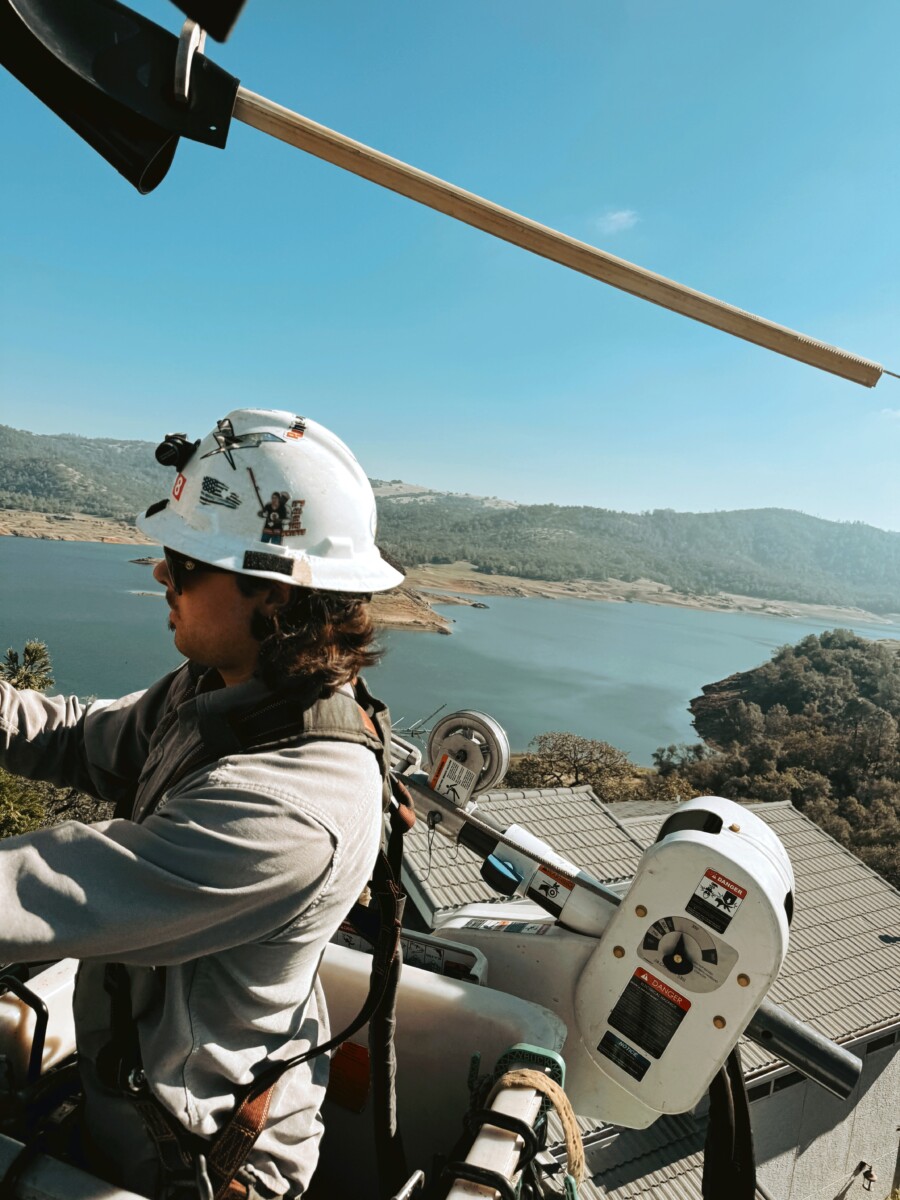
Mateo Castro works from a bucket.
Castro remembers hiking through snow, setting poles in freezing temperatures and working alongside crews through difficult conditions.
“A lot of the funny stories that everybody always tells, it’s like, ‘Oh, we were on storm doing this,’” Castro said.
The opportunity has had an impact on Floyd’s life well beyond the job. He was 22 when he entered the trade. Today, he has a fiancée and children and a union career that has given him the stability to build a life and provide for his family.
“It’ll be pretty life-changing,” Floyd said of reaching journeyman status. “The stability and the idea of having a career, something that I can pass down, and it helped me take care of my family.”
“Getting someone in the door is really just the beginning,” said Senior Assistant Business Manager Bob Gerstle. “What happens after that is what builds a career, and I don’t think you could ask for a better place to learn this trade than the Auburn yard. There are some really great linemen there who take pride and take the time to teach the apprentices coming up behind them. I’m proud of Mateo and Malik for taking advantage of every opportunity they were given to learn, and I salute the linemen who taught them.”
IBEW 1245 helped open the door, but Floyd and Castro put in the years of training, learning and hard work it took to build careers on the other side of it.
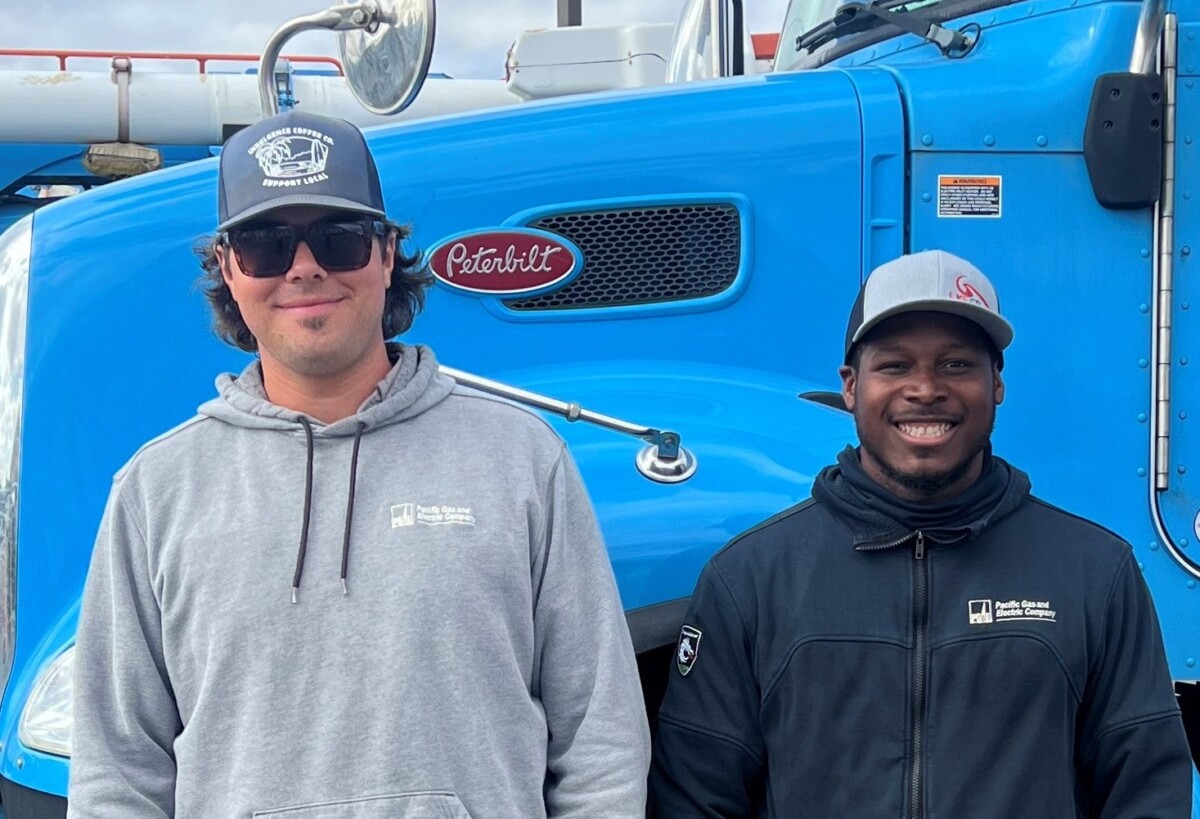
Mateo Castro, left, and Malik Floyd started their journey into the line trade together five years ago. Both took the opportunity they were given and put in the hard work to build careers in the trade.
Five years after they started together, Castro is a Journeyman Lineman and Floyd is almost there.
Applications are now open for the IBEW 1245 Jarius Ayeta Line School Scholarship, which helps aspiring lineworkers take the first step toward a career in the trade by covering tuition, fees, lodging and meals to attend line school.
Applications are open Oct. 1–31, 2026. [Learn more and apply here.]