IBEW 1245 members protect, maintain and operate SMUD’s hydroelectric system in one of California’s most wildfire-prone regions.
The smoke was already settling into the canyons when Elect Tech Foreman Joe Klein and Hydro Operator Foreman Butch Santos drove into the fire’s path in the middle of the night. It was September 2014, and the King Fire was racing across El Dorado County. Their mission was to protect and operate SMUD’s Upper American River hydroelectric system, even as the wildfire was spreading.
By then, power system operators had already isolated the upcountry hydro system from California’s electric grid by de-energizing the transmission lines. As firefighters battled the blaze, ionized smoke created the potential for electrical flashovers, making it unsafe to keep the transmission system energized.
But that left another problem. Without electricity, several mountain powerhouses were at risk of flooding.
Unlike Pelton turbines, which run above the water, the Francis turbines at several of SMUD’s mountain powerhouses sit below the tailrace water level. Water constantly seeps into those powerhouses, and electric drain pumps keep them dry. Without power, those pumps stop and the powerhouses begin to flood.
That’s why Klein and Santos were racing into the path of the fire that night. They needed to restore electricity in order to save the hydro system.
Their first attempt was to black-start Jones Fork Powerhouse. When they found the main transformer had locked out because of a fire-related fault, they had to change plans on the fly. They successfully black-started Robbs Powerhouse instead, using it to restore power throughout the rest of the upcountry hydro system.
After working through the night, they found Highway 50 closed by the fire and were forced onto a long, treacherous route through smoke-filled back roads.
For Klein, it was one of those days that stays with you. The hydroelectric facilities scattered throughout El Dorado County sit in one of California’s most wildfire-prone landscapes. Since the King Fire, the region has endured other destructive wildfires, including the Caldor Fire in 2021 and the Mosquito Fire in 2022.
Each of these fires have reinforced the importance of stronger system protections, more cautious operating procedures and the highly skilled IBEW 1245 members whose work is essential to do it all.
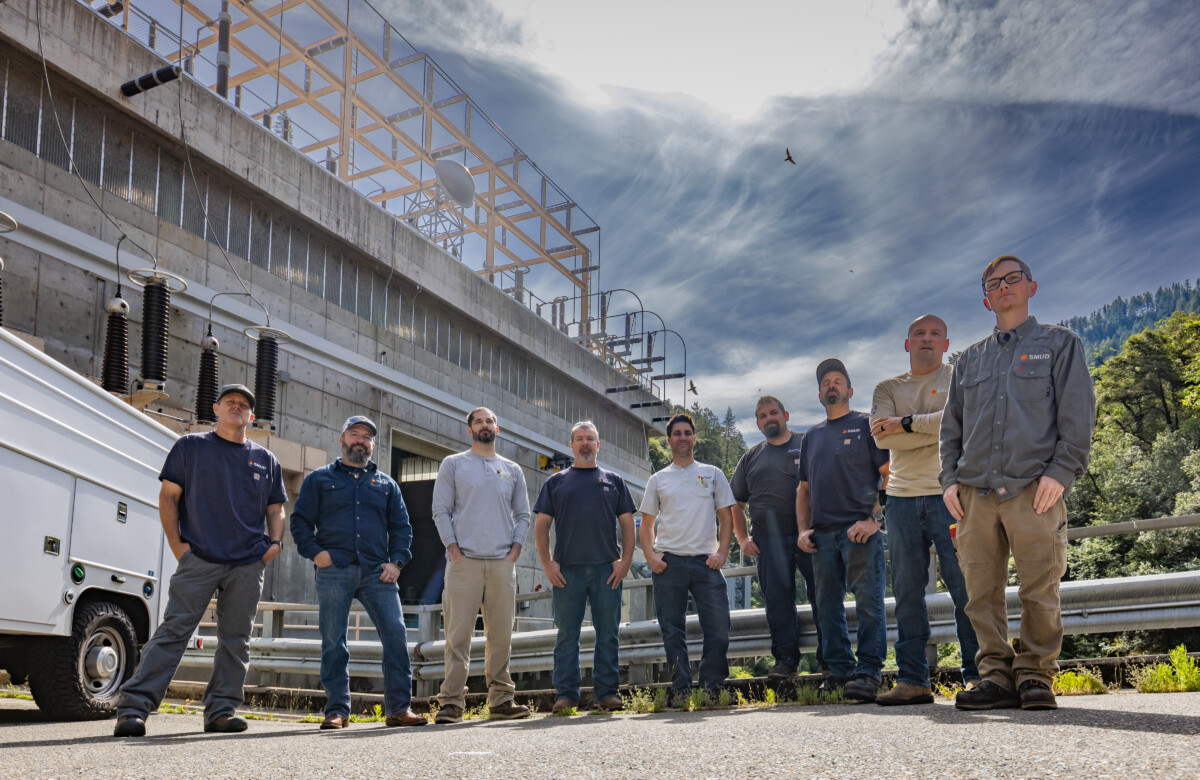
Once a each year, SMUD’s hydroelectric facilities are taken offline for scheduled maintenance. The Utility Reporter was at a recent outage at the Camino and White Rock powerhouses in the Placerville area where 1245 members were replacing aging protection systems, inspecting turbines, upgrading control equipment and modernizing electrical infrastructure that, in some cases, has faithfully generated electricity since the 1960s.
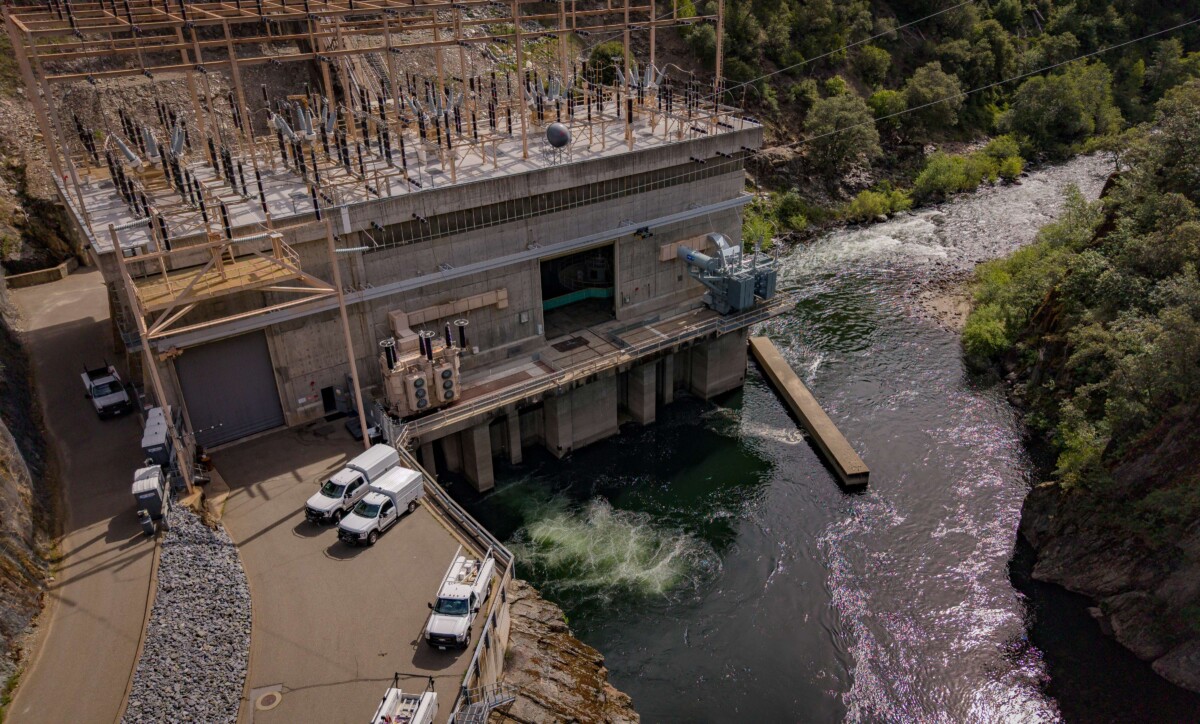 That modernization effort reaches nearly every corner of the powerhouse.
Standing inside Camino Powerhouse, Klein pointed toward a row of newly installed protection panels and explained how they are built to protect entire sections of the electric grid.
“If a line falls on the ground, this is what trips it,” Klein said, gesturing toward the new protection panels. “That’s what helps keep it from starting a forest fire.”
The new protection system not only disconnects equipment during a fault, it also pinpoints where the problem occurred. This allows line crews to inspect a specific stretch of transmission line instead of patrolling miles of mountainous terrain.
“It’s designed to isolate the fault so the minimum amount of the grid is affected,” Klein said.
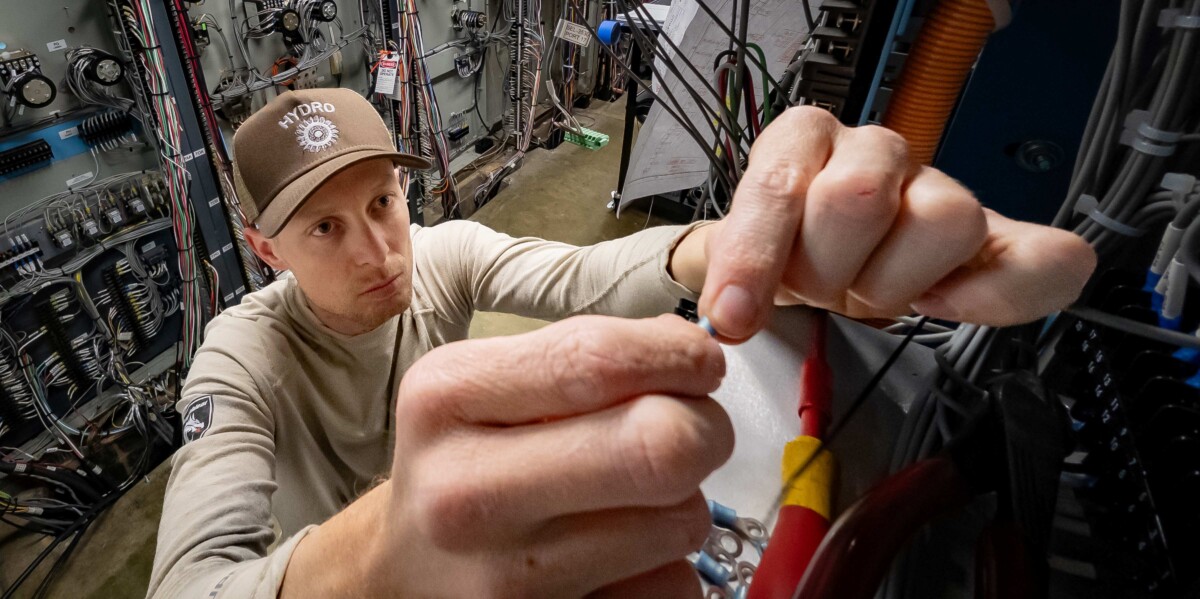
Hydropower plant electrician Sean Farrell has spent months helping replace relay systems and completely rewire portions of the control boards.
“A lot of this is from the ’60s,” Farrell said as he worked inside one of the powerhouse’s relay cabinets, tracing wires against a set of electrical drawings.
“We’re trying to clean up decades of old wiring, relabel things, make it look good, and also have the modern protection that’s necessary nowadays,” he said.
For this project, 1245 members have removed thousands of wires before rebuilding the system connection by connection.
“It’s been a couple of months now,” Farrell said. “We’ve got a couple more weeks left of wiring, and then the techs will come in, verify everything and turn it on.”
While electricians modernize the control systems, mechanics focus on the massive equipment that converts falling water into electricity.
Power Plant Mechanic Dave Leal spends the outage inspecting the turbine runner for cavitation, wear, and other signs of aging. His meticulous work, and that of his fellow mechanics, help catch problems before they become failures and will help ensure the powerhouse will continue producing reliable electricity for years to come.
Keeping an outage of this size on schedule requires careful coordination among every craft.
Senior Hydro Operator Pete Winter serves as the outage’s clearance coordinator, isolating equipment so mechanics, electricians and technicians can safely perform their work before operating generators through a series of startup and troubleshooting tests.
“It’s kind of a holistic view,” Winter said. “We narrow problems down so the other crafts can come in.”
Each morning begins with a tailboard where every crew reviews the day’s work, identifies hazards and coordinates tasks so dozens of people can work safely inside the powerhouse at the same time.
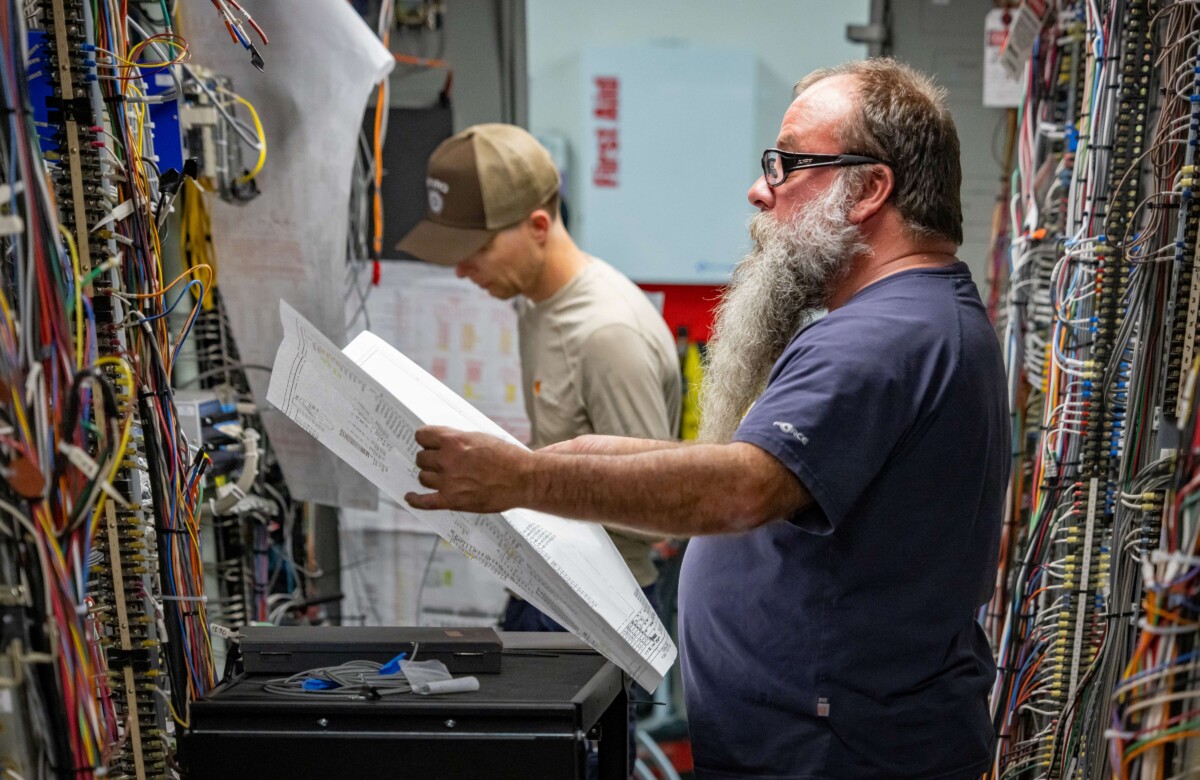
For Electrical Technician Justin Smith, the work often comes down to solving puzzles.
Thousands of wires, hundreds of engineering drawings and countless revisions must all line up before a protection system can be energized.
“These jobs are very complex,” Smith said. “There’s thousands of wires here.”
Not everyone inside the powerhouse followed the same path. High-voltage electrician apprentice Josh Carroll spent years designing lighting and staging for large concerts before the COVID-19 pandemic shut down the live entertainment industry. He pivoted into electrical work with a contractor, discovered high-voltage construction, and eventually landed in SMUD’s hydro division, drawn by the challenging work, strong benefits, and union career.
“I enjoy knowing what I’m wiring and seeing the big picture of how it all works,” Carroll said. “We don’t just follow a print and land a wire where it tells us. We have to understand how it all works together.”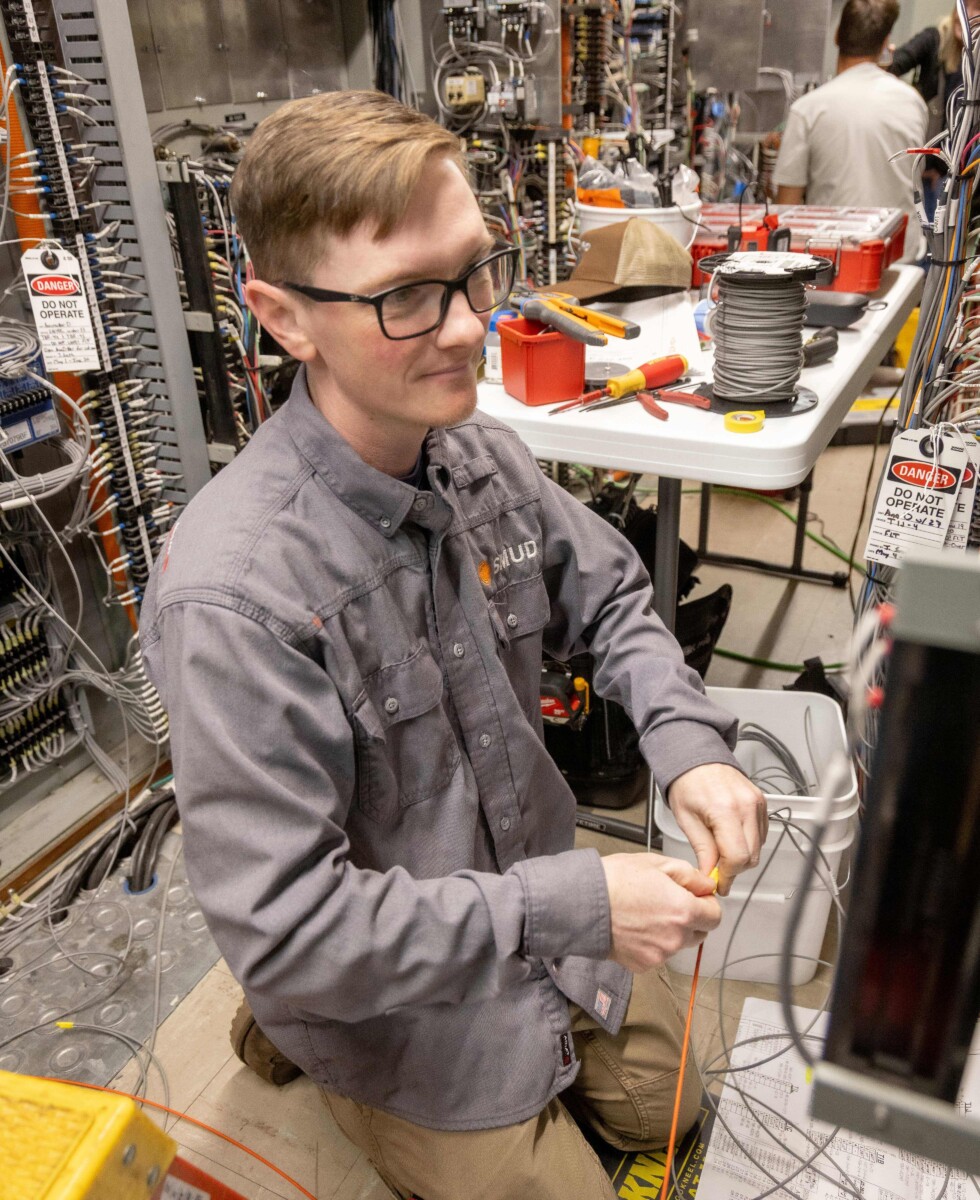
While crews modernized the protection system inside the powerhouse, other work continued throughout the plant. At White Rock, IBEW 1245 members were upgrading the powerhouse’s 240-ton overhead crane.
High Voltage Electrician Light Foreman Ty Gutierrez and his crew stripped the crane down to its essentials before rebuilding it with new controls, motors, and wiring. Rated to lift the powerhouse’s massive generator rotor, the upgraded crane can now be operated remotely from the powerhouse floor instead of from the cab.
“We’ve put a lot of band-aids on this one over the years,” Gutierrez said. “It was due.”
More than a decade has passed since Joe Klein and Butch Santos raced into the mountains as the King Fire closed in around them. Today, the relay systems, wiring, controls, and equipment being rebuilt during scheduled outages help operators make safer, better-informed decisions when wildfire threatens.
But walking through Camino and White Rock, one thing becomes clear: hydroelectric generation depends on far more than water flowing downhill. And these powerhouses don’t keep running simply because they were well built.
They keep running because of the people who know these facilities inside and out. Generation after generation of IBEW 1245 members have learned every relay, every turbine, every transformer, and every valve inside them, spending careers mastering the craft of keeping them running.
By Shannan Velayas
Photos by John Storey