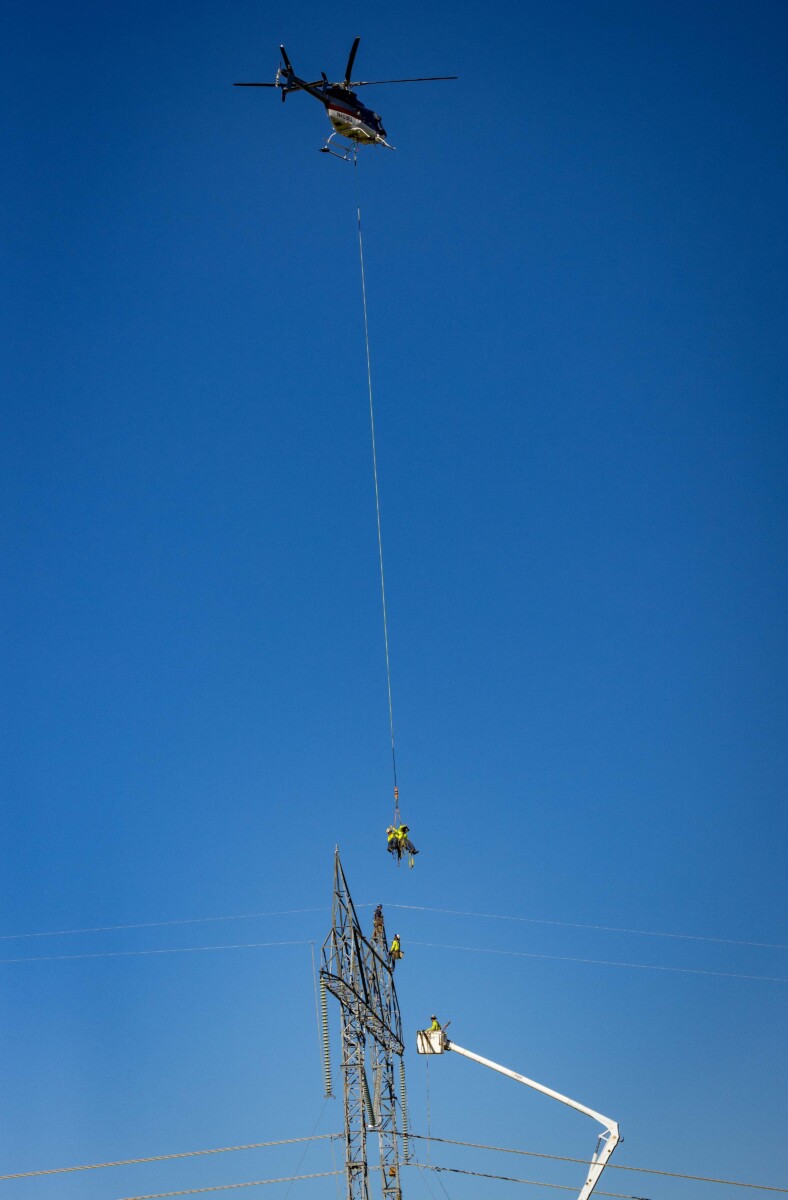
1245 linecrews are lowered onto a transmission tower by helicopter during repairs to a 500kV line.
At 150 feet in the air, Hunter Hatch and Renee Alcaraz hang from a helicopter line. They reach for the steel of a damaged transmission tower outside Tracy. They grab hold, secure themselves, and unclip from the line. Then the helicopter lifts away.
No, this isn’t a stunt from a movie set. For Hatch, a lineworker and Alcaraz, a crew leader A, both from the Merced GC, this is the kind of highly skilled work their jobs demand.
Both were in the Altamont Pass on a clear spring day when the area looks like it almost always does with its rolling hills, blue skies, and wind turbines stretching across the horizon. But today, hundreds of IBEW 1245 crew members from across the system dotted the rolling hills, responding to a major event.
A third-party crane installing wind turbines had collapsed and snagged a 500 kV transmission line. While the crane didn’t strike a tower, it caught the conductor and set off a chain reaction. As the line was pulled, the force traveled down the line, knocking structures out of alignment and damaging multiple towers. In total, 18 towers were affected. Arms broke, bridges twisted, and at least one tower was damaged beyond repair.
When the line came down, the electrical force surged through the crane, searching for a path to ground, blowing out the tires and leaving burn marks along the rims where the energy discharged. At 500 kV, that energy can jump gaps and force its way through metal, leaving visible flash marks where the current exited. Those marks remained at the site and were a reminder of the force that travels through these lines.
This stretch of grid sits on the Tesla-Metcalf line—part of what some affectionately call the “Big Nickel,” a nickname of 500kV lines. It’s a major transmission corridor built in the 1960s to move hydropower from the Pacific Northwest into California, as well as wind and solar generation to other states, without the need for new power plants. In the winter, power flows north as heating demand rises; in the summer, it moves south to meet air conditioning demand. When something goes wrong here, it takes a full system response.
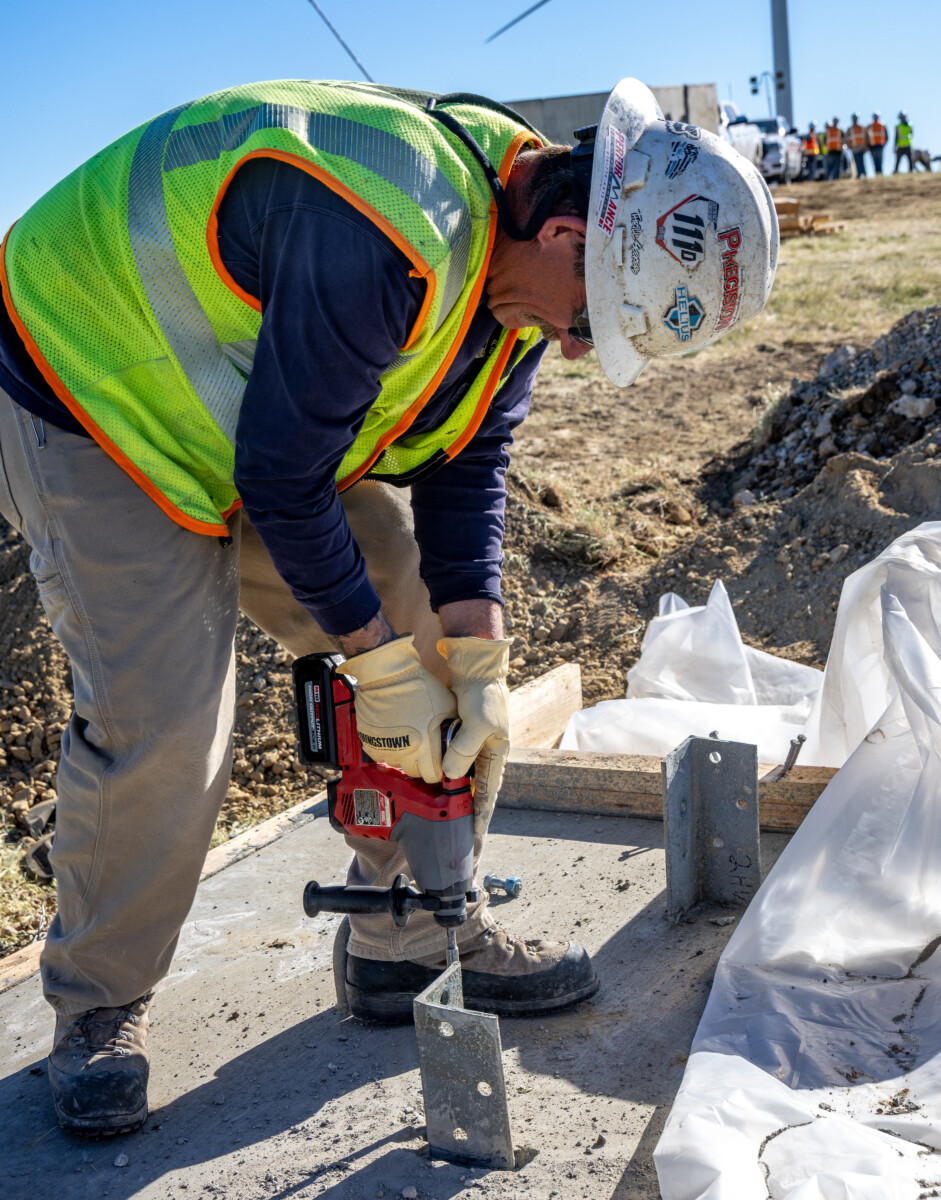
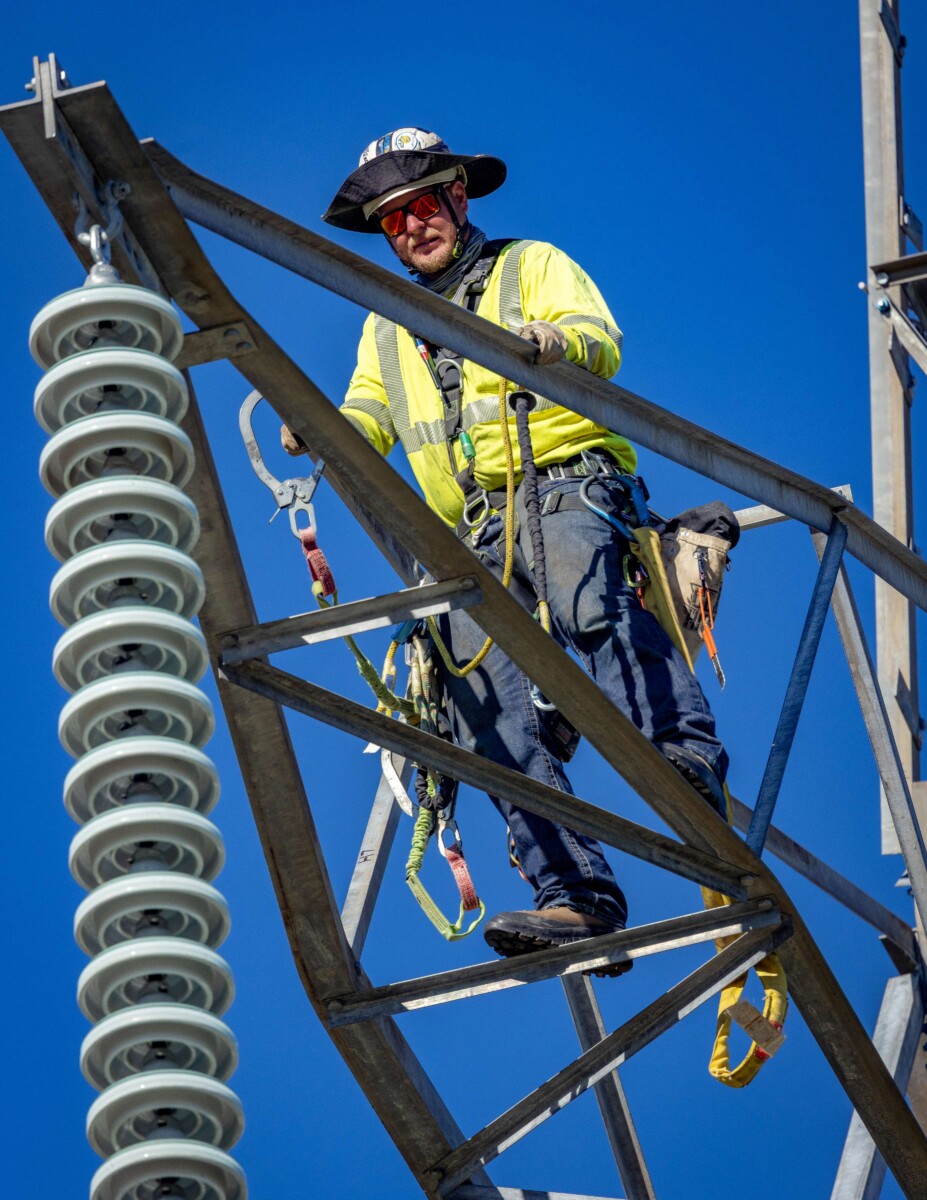
Tower Department crew member works to anchor steel back into place as crews rebuild part of the “Big Nickel” transmission corridor in Altamont Pass.
Several days after the incident, the Utility Reporter arrived as crews from PG&E’s Tower Department were already deep into the work. Joseph Cortese, a GC Tower crew leader out of the Victor Tower Department, was among the 40 to 50 tower workers called in, arriving the day after the incident.
“We build it by hand,” Cortese said, describing the work of the Tower Department, which specializes in building and repairing large steel transmission towers. “We take it down in sections with a crane, lay it out, cut it up, and then build it right back up piece by piece. We drilled the foundations on Sunday and poured them yesterday. We’re hoping to get through our part today so they can string it tomorrow.”
Meanwhile, line and tower crews were spread across multiple towers at once. As one crew worked a structure, another staged nearby in the rolling hills, preparing a helicopter to set a lineman onto a 150-foot tower.
As for Hatch and Alcaraz, their work is precise and methodical, but at 150 feet in the air, it’s never dull. Both echoed the same experience: once the work starts, the focus takes over, and you don’t think about the height anymore. “At first it’s nerve-wracking, but you get used to it,” Alcaraz said. “Once you’re focused on the work, it’s not too bad.”
Both also talked about the trust the job demands and how critical it is to watch out for each other, knowing how much depends on every move. With the line de-energized, they install protective grounds which are heavy cables designed to carry any unexpected energy safely to ground to add layers of protection before anyone goes to work on the structure.
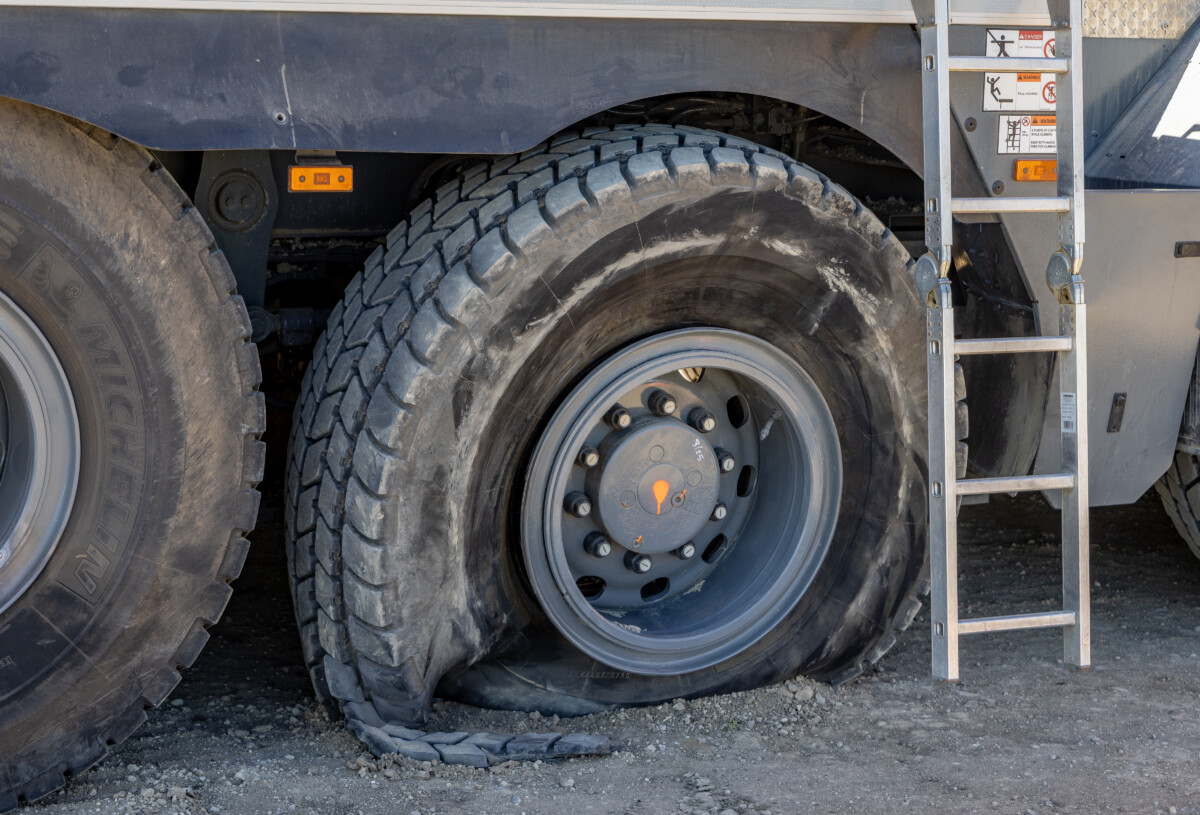
The tire that blew out when 500,000 volts traveled through the crane searching for a path to ground.
“A lot of it is just taking your time, making sure everything’s dead and you’ve got your grounds on,” Hatch said. “People don’t always understand why it takes time. You can’t just go out there and get the wire up. There are a lot of steps to doing it right,” he added.
Only then do line crews start the work of moving the conductor clear of the structure into temporary positions, giving the Tower Department the access needed to work.
Just days later, the work was done. The towers stood back in place and power was flowing through the transmission lines. Crews pulled in from across California, from Fresno and Madera to Pismo and Oakdale, returned to their home yards. And thanks to the highly coordinated and skilled IBEW 1245 crews on the ground and in the air, the disruption went unnoticed by customers.
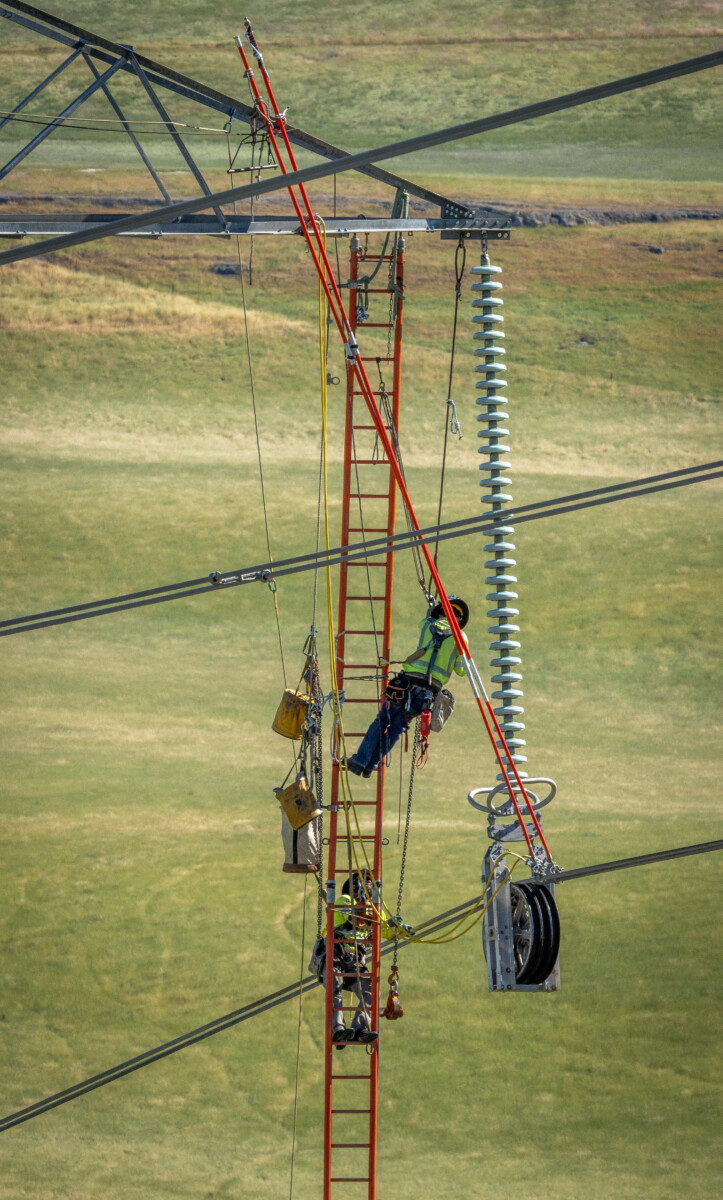

IBEW-PG&E Emergency Tramission Line Repair
IBEW 1245 Tower Department crews at PG&E work to rebuild damaged sections of a 500kV transmission corridor in Altamont Pass.
IBEW-PG&E Emergency Tramission Line Repair
IBEW-PG&E Emergency Tramission Line Repair
IBEW-PG&E Emergency Tramission Line Repair
Hunter Hatch of the Merced GC prepares for helicopter work on the damaged 500kV transmission line in Altamont Pass.
Renee Alcaraz of the Merced GC prepares for helicopter work during repairs to the damaged 500kV transmission line in Altamont Pass.
Joseph Cortese, an IBEW 1245 GC Tower crew leader out of PG&E’s Victor Tower Department, during repairs to the damaged 500kV transmission corridor in Altamont Pass.