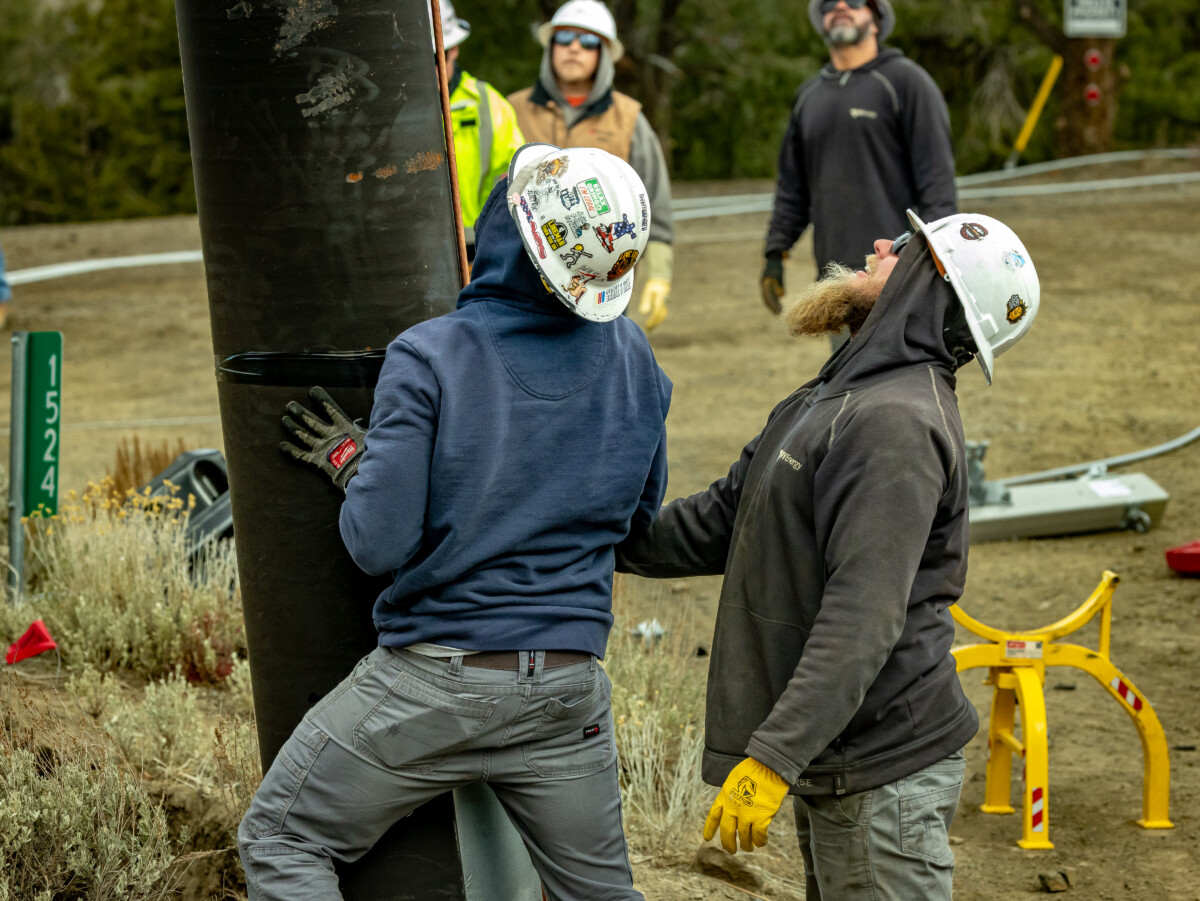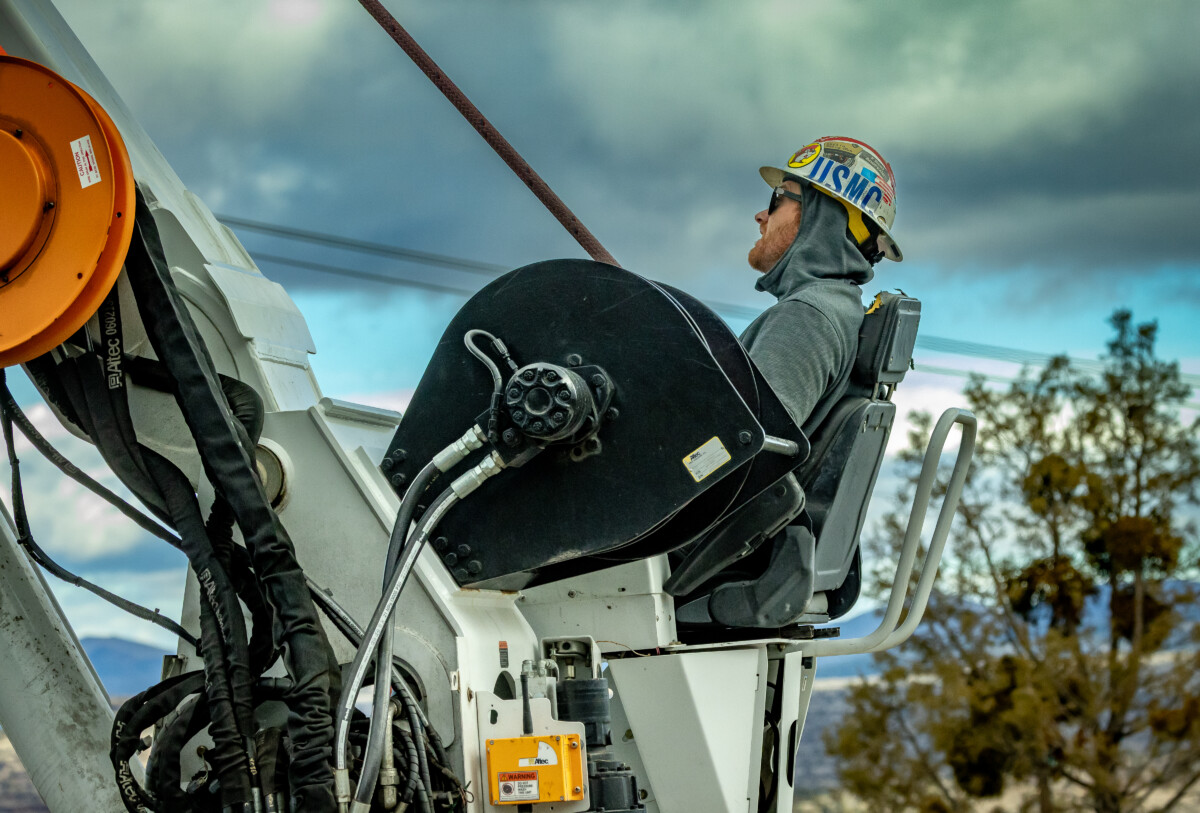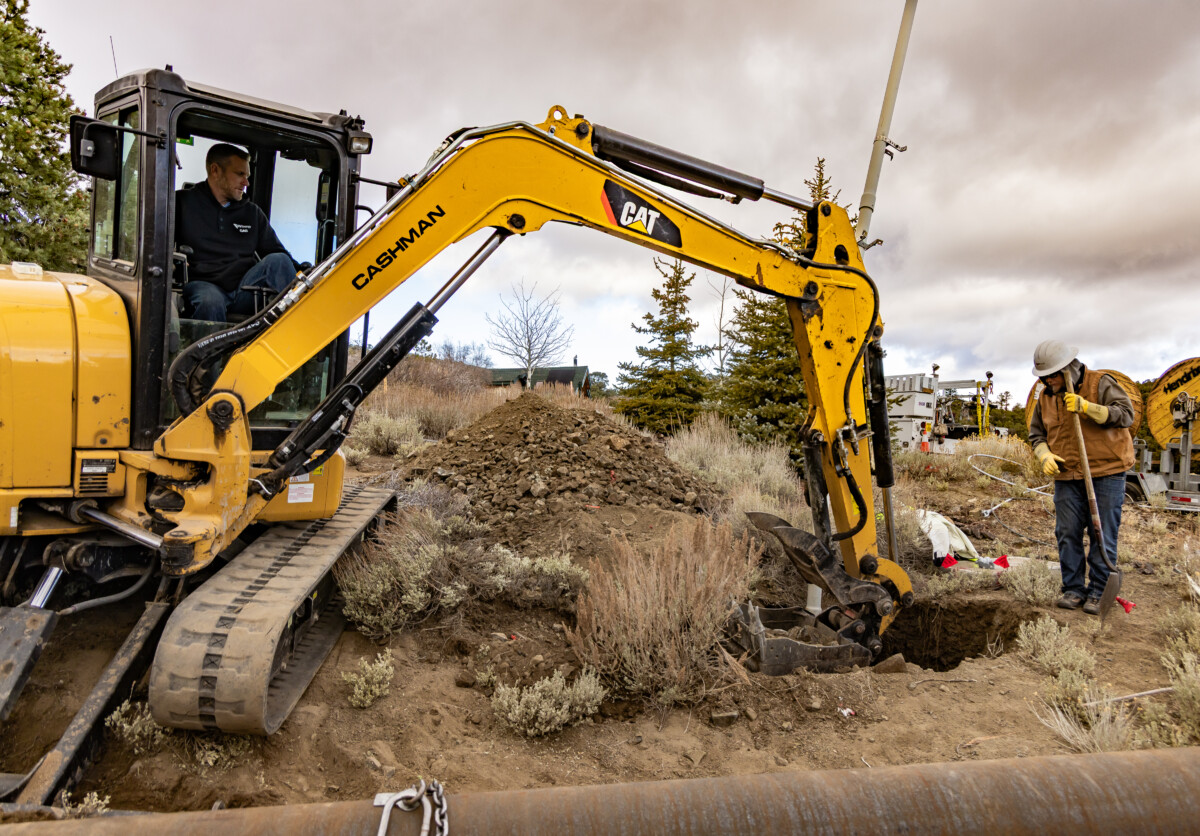
IBEW 1245 member Clayton Hawkins works the bucket into rocky soil, inch by inch. The terrain is fighting back.
Hawkins is part of an NV Energy gas crew digging deep in the Virginia City Highlands above Reno, setting the foundation for poles built to withstand wind, wildfire, and other extreme conditions.
His crew is working alongside two-line crews led by Foremen Larry Brook and Frank Ortega. Together, in rugged high-desert terrain thick with sagebrush and timber, they’re building a stronger, more resilient system.
When the Utility Reporter caught up with them, the crews were setting 14 of a 15-pole job—with just one left to go.
To set the new poles, crews dig about six and a half feet for 45-foot poles and roughly seven feet for 50-foot poles. Anchors go even deeper—around 10 feet—and are angled back toward the line to provide stability. Each anchor is fitted with a plate at the base to hold firm in the rocky soil and resist movement under tension.
The work includes replacing aging infrastructure and installing insulated “tree wire” as part of a major fire mitigation effort. Crews are also upgrading sections from single-phase to three-phase power, improving reliability and distributing electrical load more evenly.
“There’s real concern about wildfire risk in this region, so we’re upgrading the system by setting steel, ductile iron poles and building it stronger than what was here before,” said Brook.
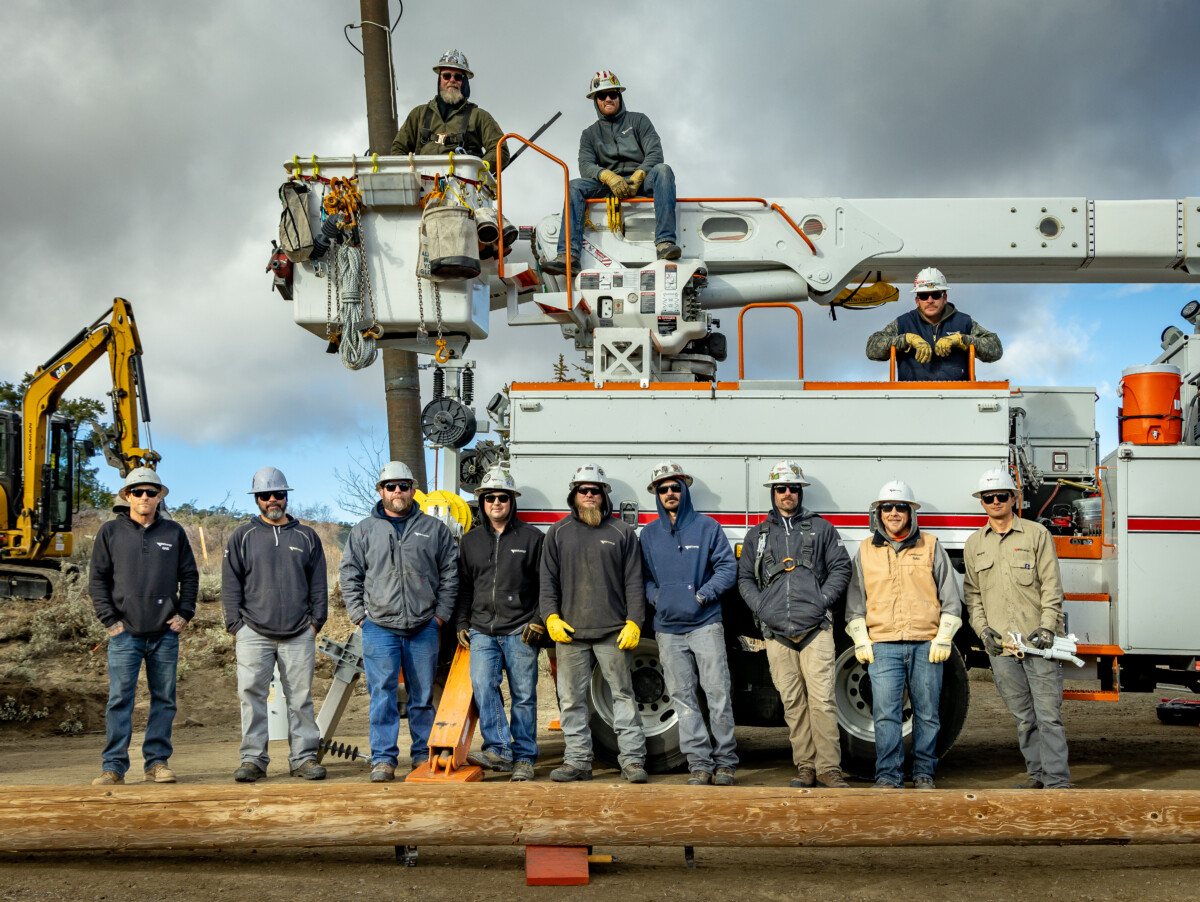
The effort is part of broader grid hardening work to reinforce infrastructure to withstand increasing pressure from wildfire, extreme weather, and rising energy demand.
While the Utility Reporter was on site, crews used a magnetic drill mounted directly to the steel pole to bore precise holes for hardware installation. Work moved seamlessly across crafts—from line workers in the air to gas operators on the ground. Each step built on the last.
Despite the challenging terrain, progress has been steady, driven by the coordination and skill of IBEW 1245 members.
“We’ve got two crews out here working together, and it’s going pretty quick,” said David Diaz, a journeyman lineman with NV Energy. “It’s all about making the community safer and making sure fires don’t spread. The gas department really helped us move things along—they handled a lot of the digging, which let us get the poles set and the wire up faster.”
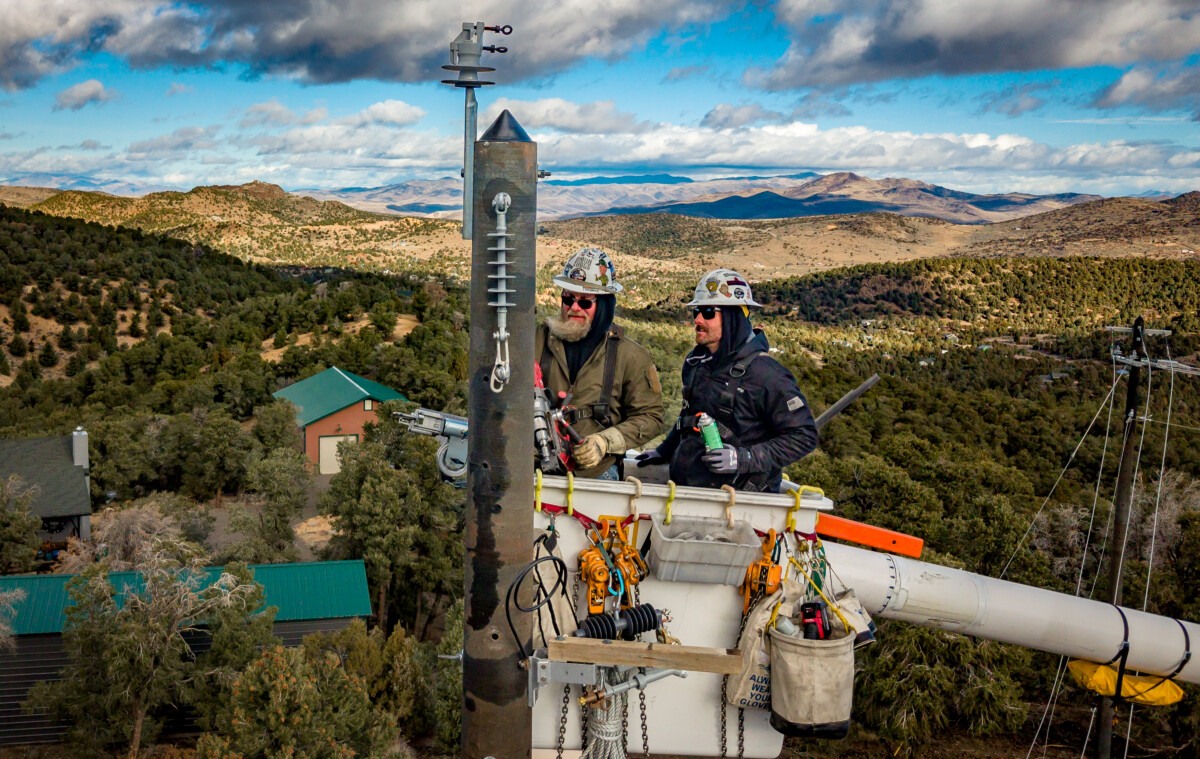
That collaboration has been key. Gas department members supported the effort by operating heavy equipment to dig pole holes and set anchors in the rocky soil.
“It takes the right equipment and everyone working together,” said David Reynolds of the gas department. “That’s been the biggest thing…communication. Everybody is working together and it’s gone really smooth.”
Reynolds, who recently joined IBEW 1245 after a decade with the Operating Engineers, said the value of union representation is clear in the field.
“Out here, you’re focused on the job,” he said. “Having people behind you making sure you’re getting fair wages and being taken care of is huge.”
That support matters because the work IBEW 1245 members do is essential—now more than ever. Across the West, extreme weather, aging infrastructure, and rising demand are pushing the grid beyond what it was originally designed to handle. Strengthening is critical to keeping communities safe and the lights on.
In the Virginia City Highlands, IBEW 1245 members are doing that work—building a stronger system and a safer community. For many on the job, that purpose and the work itself is part of the reward.
“I love being out here,” said Brook. “Out of the city, getting the work done.”