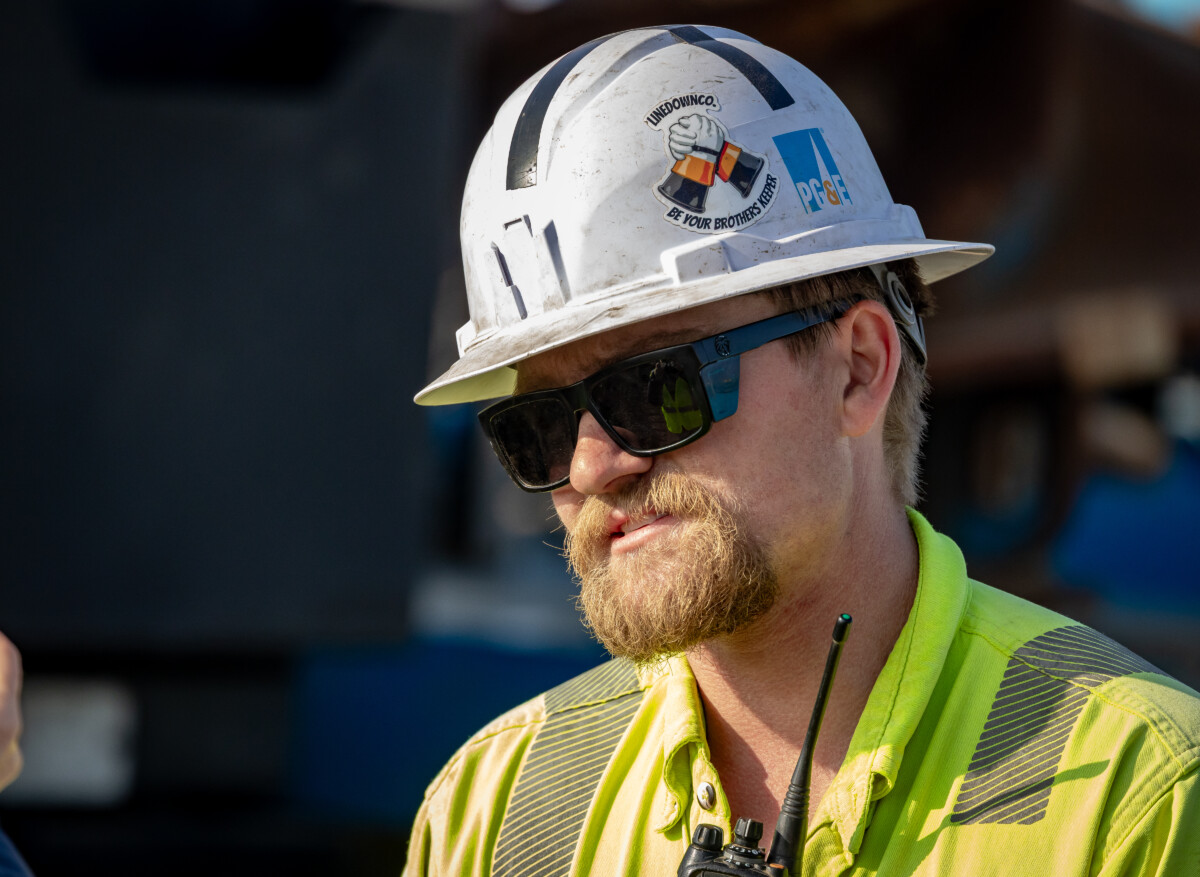
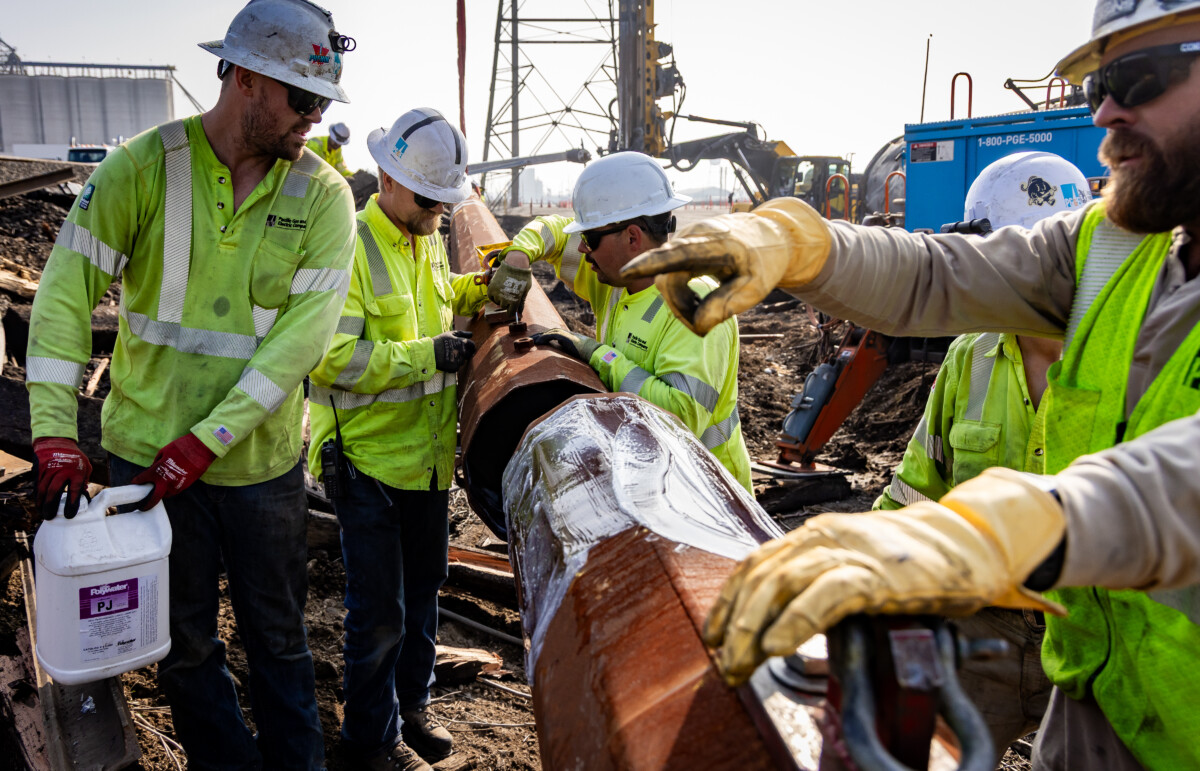
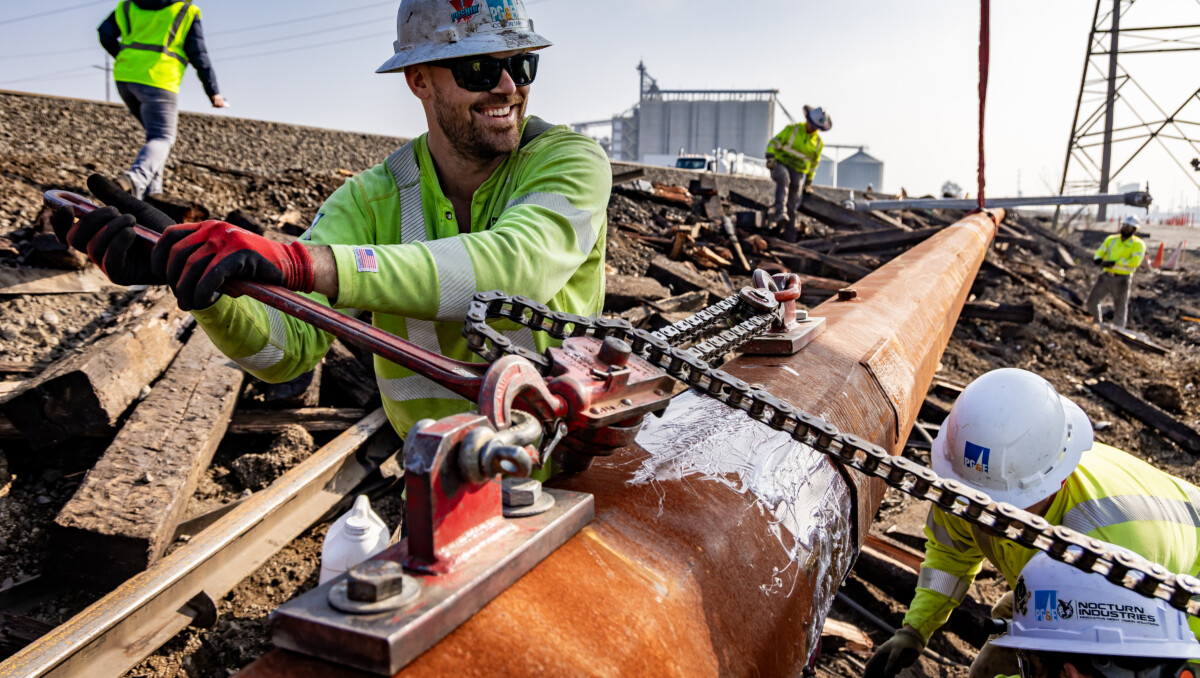
 IBEW 1245 Pacific Gas and Electric Company (PG&E) crews worked around the clock to restore power after a train derailment damaged critical transmission infrastructure in Stockton, initially knocking out electricity to approximately 15,000 customers.
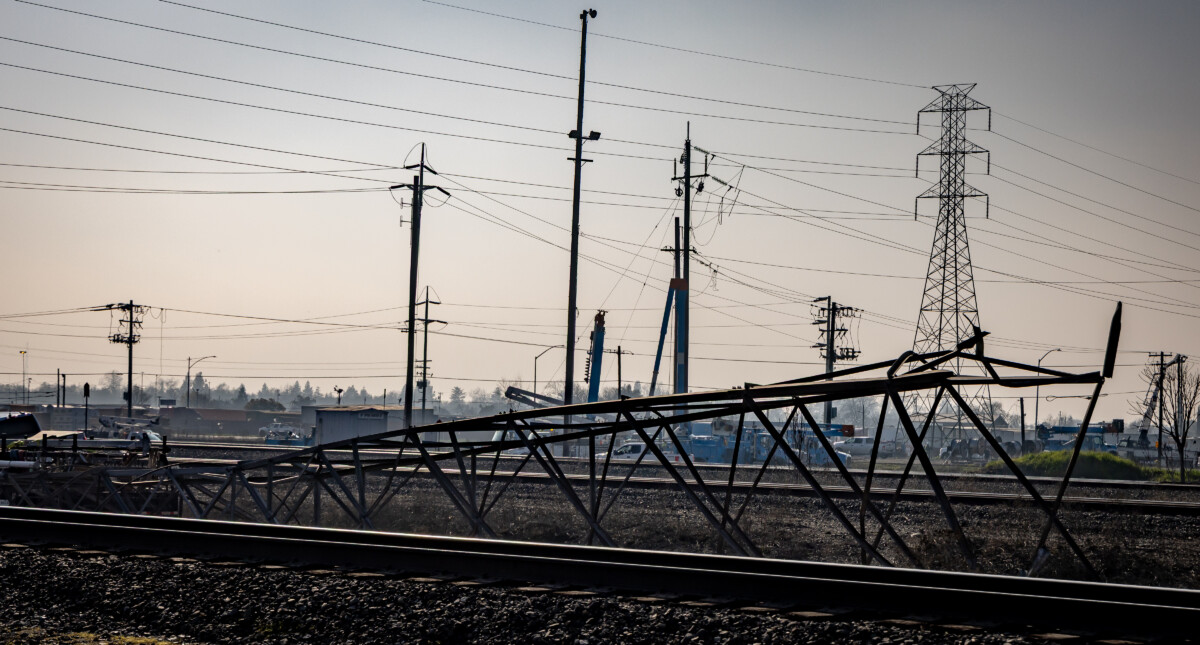
Early on February 2nd, a Union Pacific freight train derailed in Stockton and struck a 115kV transmission tower carrying two 115kV circuits on a common structure. When the tower collapsed, it also took down an adjacent pole supporting a 60kV line with 12kV underbuild. The impact placed severe tension on the surrounding facilities, damaging additional structures and bringing lines down across a nearby street. The effect to the community was comparable to a major transmission-level outage.
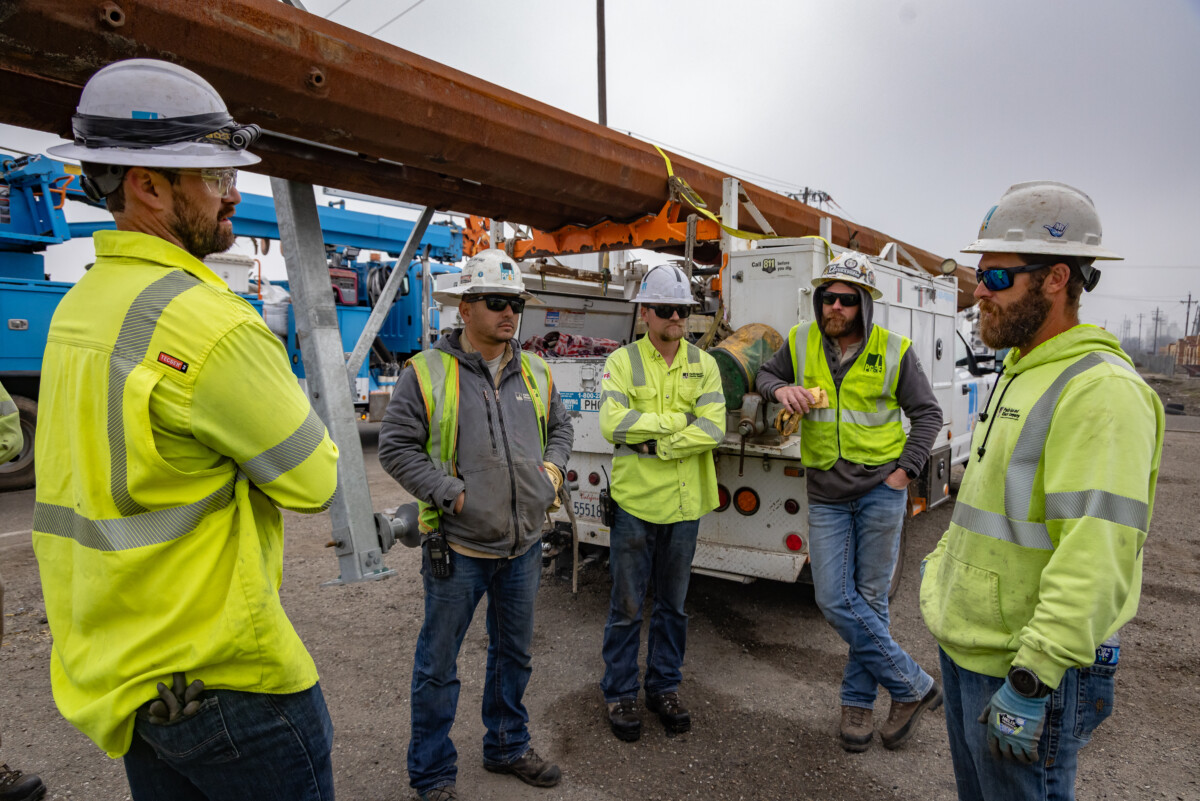
PG&E crews from across the system, including control room operators, substation personnel, line crews and tower crews, mobilized quickly, largely restoring power within hours. Meanwhile, transmission and tower department crews began the complex task of rebuilding the damaged structures the following day, coordinating closely with first responders and Union Pacific due to the significant hazards present at the site.
By Tuesday morning, damaged rail cars and the mangled transmission towers had been moved, allowing crews to work in a narrow corridor surrounded by active rail lines, underground gas lines, and energized transmission lines.
The Utility Reporter caught up with both a line crew and a tower department crew working simultaneously. During our visit, crews erected a steel pole and prepared to string conductor across the railroad tracks, rebuilding a 60-kV line and a double-circuit 115-kV line.
“We respond to emergencies all the time,” said Beau Baiton, a PG&E journeyman lineman based out of the Stockton yard. “But a train taking out a transmission tower is rare, and an outage like this can be catastrophic. We were fortunate the system could be switched quickly, and that we have dedicated people willing to put in 16-hour days rebuilding and putting it back together.”
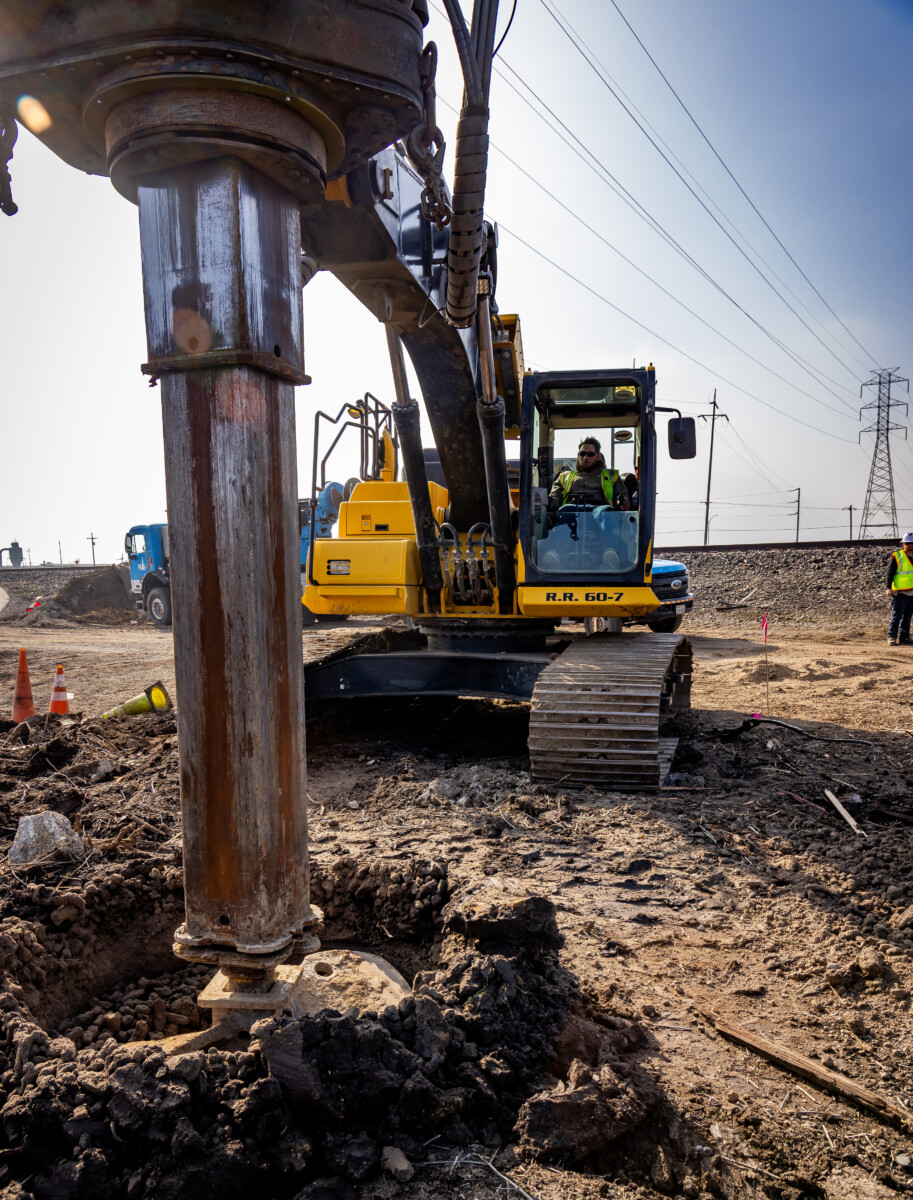
One of the most remarkable parts of the response was how quickly everything came together. PG&E’s Tower Department mobilized fast and worked right alongside the line crews. While poles were going up and lines were being restored, tower crews just feet away were digging and setting new lattice tower foundations at the same time.
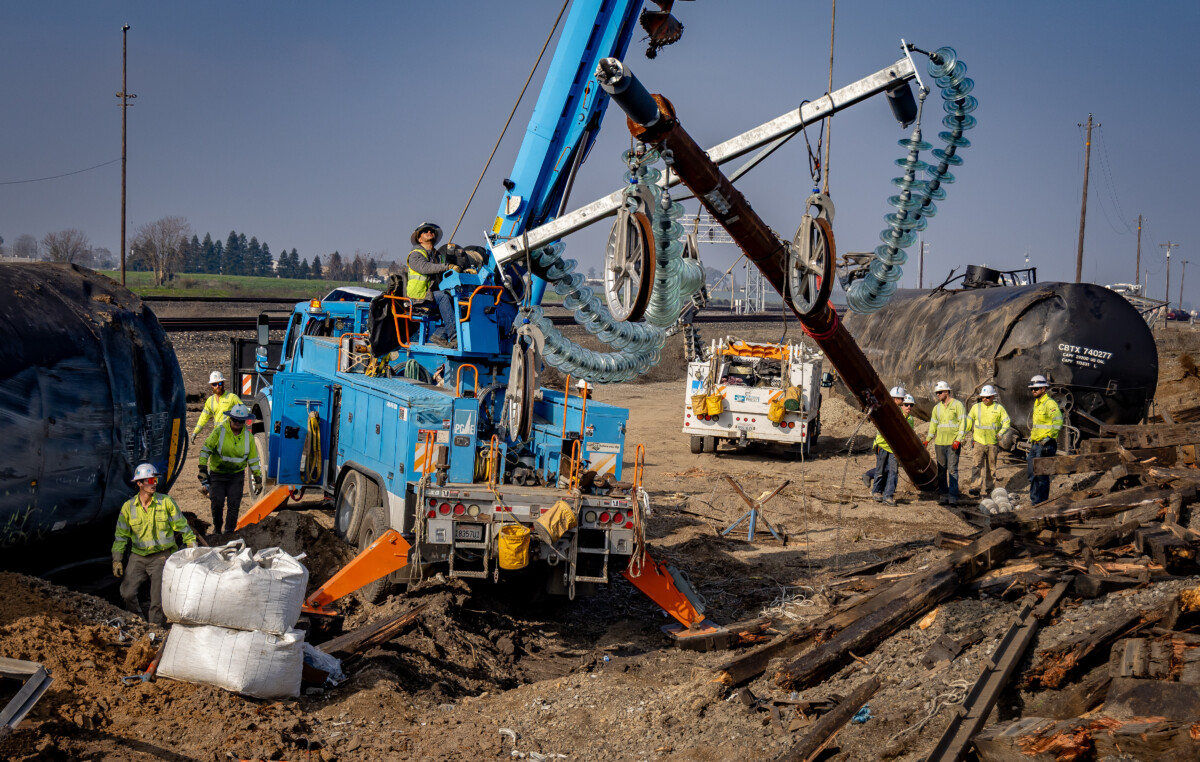
Tower crews began setting new transmission tower footings at 11 a.m. Tuesday — work that typically takes up to three days — and completed it in about seven hours. After the required 24-hour concrete cure, they moved directly into erecting the tower and stringing wire. By 5:30 a.m. Thursday morning, the new transmission structure was standing — less than three days after work began.
“A damaged transmission tower isn’t a small problem,” said Joseph Cortese, Sub-Foreman A with PG&E’s Tower Department. “It’s a major hit to the grid. That’s why we move fast and bring in our experienced crews to rebuild it the right way.” Cortese said his crew finished erecting the massive transmission tower by 5:30 a.m. Thursday morning — completing the work in less than three days.
All responding crews faced significant logistical and safety challenges. Transmission towers are located between active rail lines and heavy equipment had to be carefully maneuvered through narrow access roads while trains resumed operations.
Justin Norwood, a PG&E General Foreman based out of the Stockton yard who was overseeing the restoration effort, emphasized the coordination and danger involved.
“This work takes a lot of planning and communication,” Norwood said. “You’ve got multiple crafts out here, heavy equipment moving, trains running, and energized lines all close together. We take the danger seriously and we look out for each other.”
For many of the workers responding to the derailment, the work is very personal as they live and work in the community.
Albert Jimenez, a IBEW Local 1245 Business Representative who represents the Stockton area and previously spent 12 years working as a PG&E Gas Service Representative, said his grandmother lives just two blocks from where the derailment occurred.
“My grandmother called me as soon as her power went out and told me to come fix it,” Jimenez said. “She doesn’t see everything behind the scenes. She just knows it’s cold and she wants her heat back on,” he added, noting that’s why this work matters so much. These crews live here. This is their community.
“People often don’t realize how much planning, training, and coordination goes into restoring power after a major incident,” said Bob Dean, Business Manager of IBEW Local 1245. “These crews are highly trained professionals responding at a moment’s notice, doing dangerous work with care so their neighbors can turn the lights back on.”