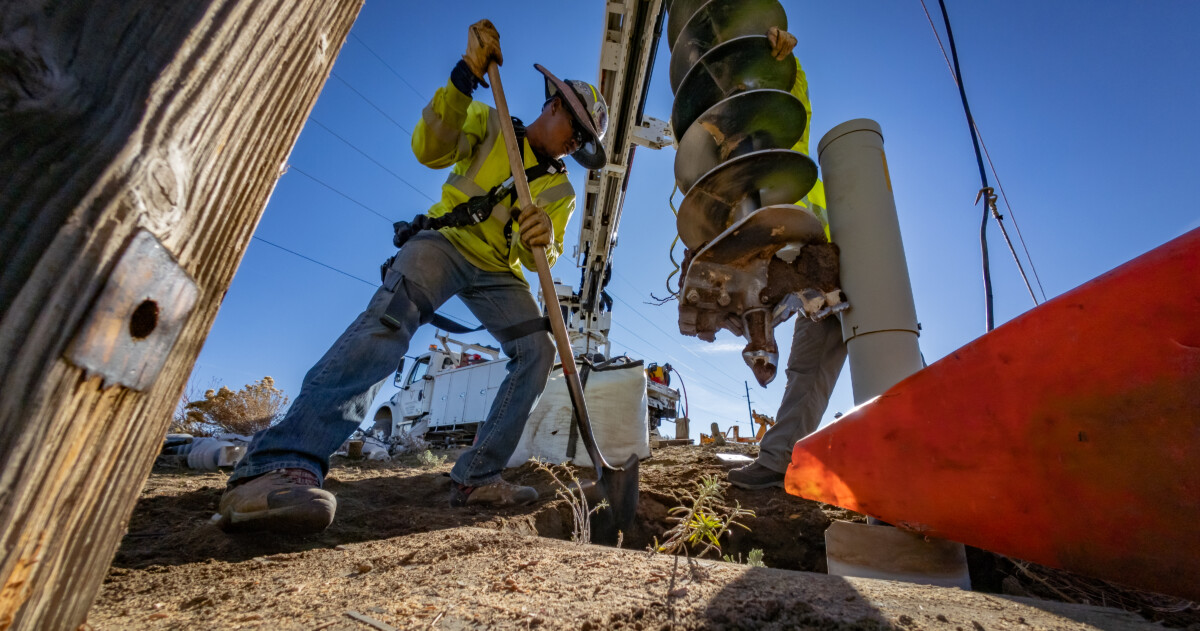
Line crews are bringing modern connectivity to rural communities
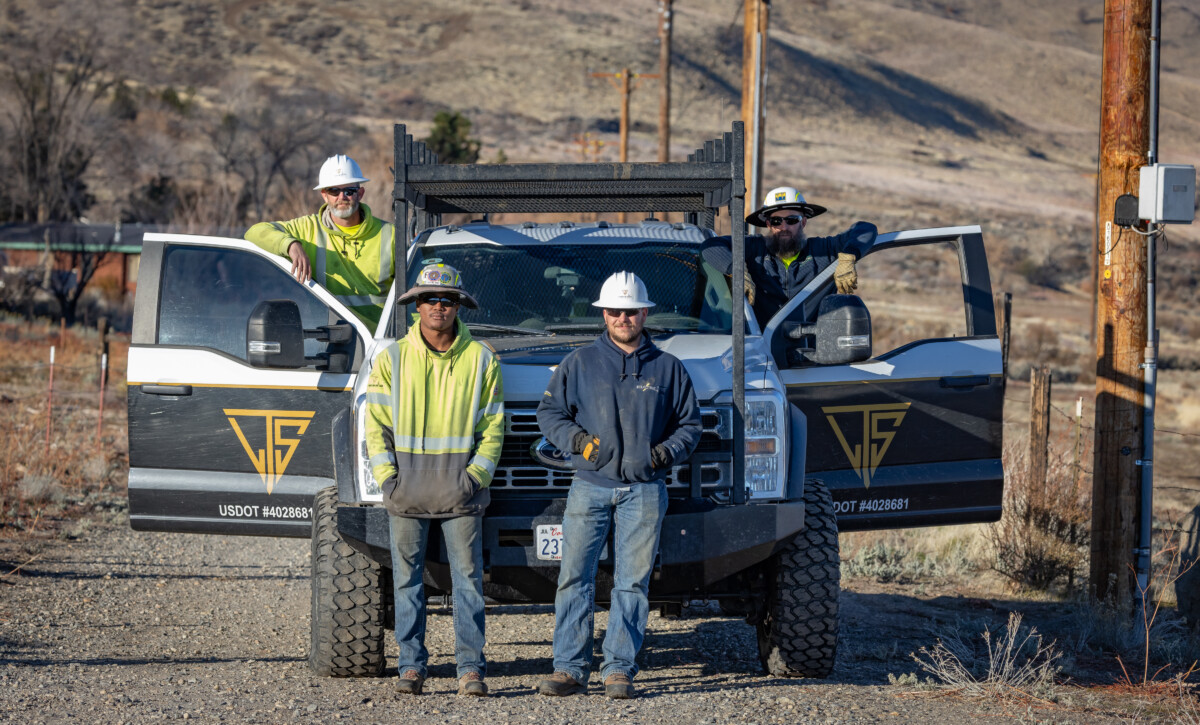
From left to right: Dale Flux, journeyman lineman; Quaylan Jones, lineman apprentice; Cameron Zubiri, line equipment man and Jeremy Smith, line foreman upgrade poles in Doyle, Calif.
Just off US-395, near a substation outside Doyle, California, IBEW 1245 Teichert Line Services crews were at work on infrastructure upgrades that make modern connectivity possible in rural communities.
The project required replacing existing 45-foot distribution poles with taller, 50-foot poles. The additional height and larger diameter are necessary to meet clearance standards when fiber optics are installed alongside existing electrical lines.
“Fiber optics need specific spacing on poles,” explained line foreman Jeremy Smith. “You need proper separation so to make that possible, the poles need to be upgraded.”
While the technical requirements are precise, the job itself depends just as much on coordination and teamwork. Each pole replacement follows a careful sequence: a new pole is set before the old one comes out, lines and equipment are transferred one at a time, and only then is the original pole removed.
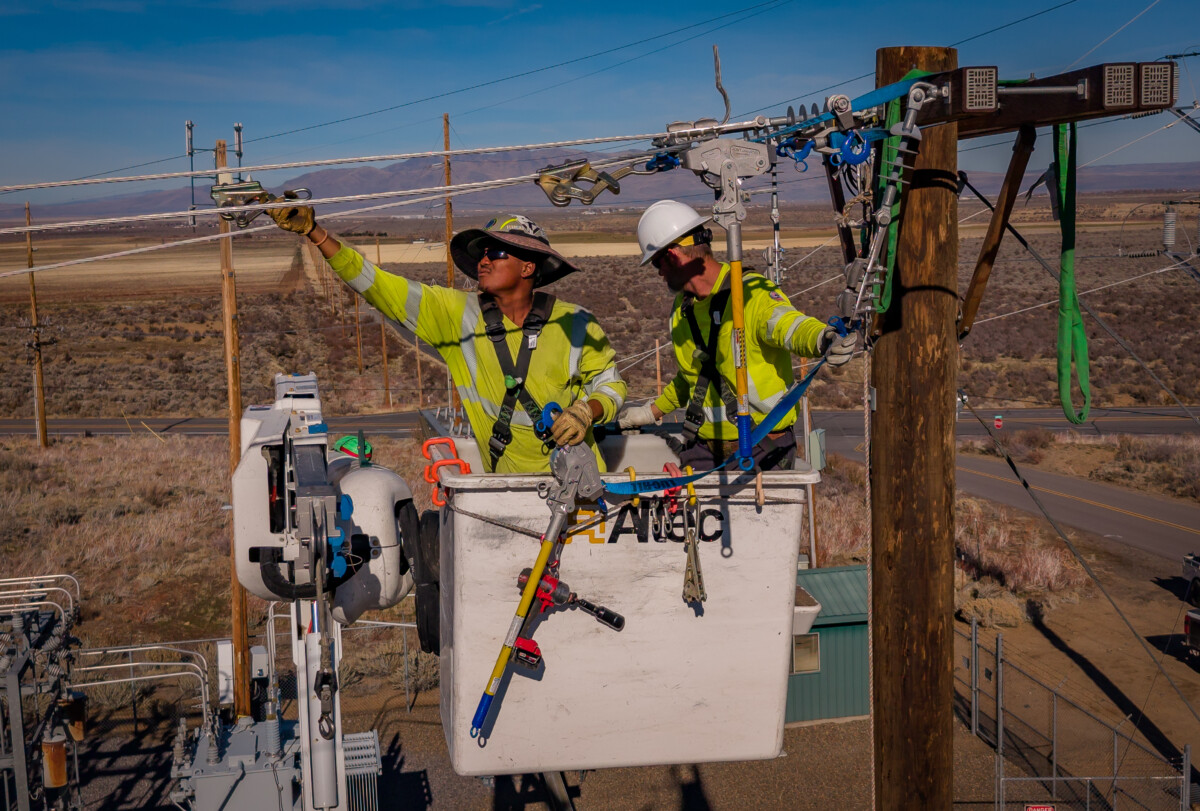
Journeyman lineman Dale Flux and lineman apprentice Quaylan Jones at work on an energized line, showcasing the teamwork, training, and attention to detail that keep communities powered safely.
The work is methodical, demanding, and heavily reliant on constant communication. On this job, the crew included Jeremy Smith, line foreman; Jesse Frieling, general foreman; Cameron Zubiri, line equipment man; Dale Flux, journeyman lineman; and Quaylan Jones, lineman apprentice — a mix of experience levels working together to get the job done safely and efficiently.
“These guys work really well together,” Frieling said. “Everyone is communicating, and they’re in a good mood. That makes the day go by better.”
The extra five feet of height can make all the difference for people when their home, school, or business finally gains reliable internet access. Fiber delivers faster speeds and far greater stability than older copper lines or wireless options, translating into fewer outages, less buffering, and more dependable connections.
Jobs like this often require crews to travel for long stretches, spending weeks away from home. Even so, their love of the trade — and the strong sense of brotherhood among the crew — came through on the jobsite.
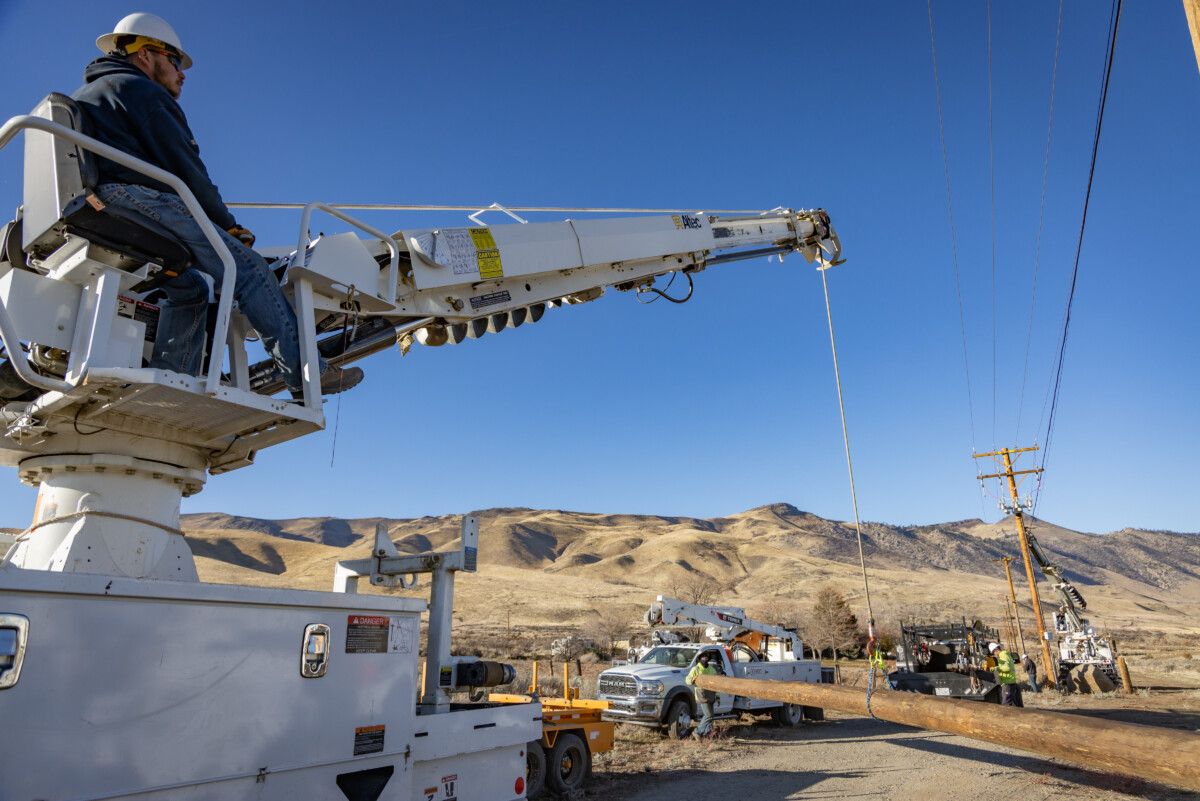
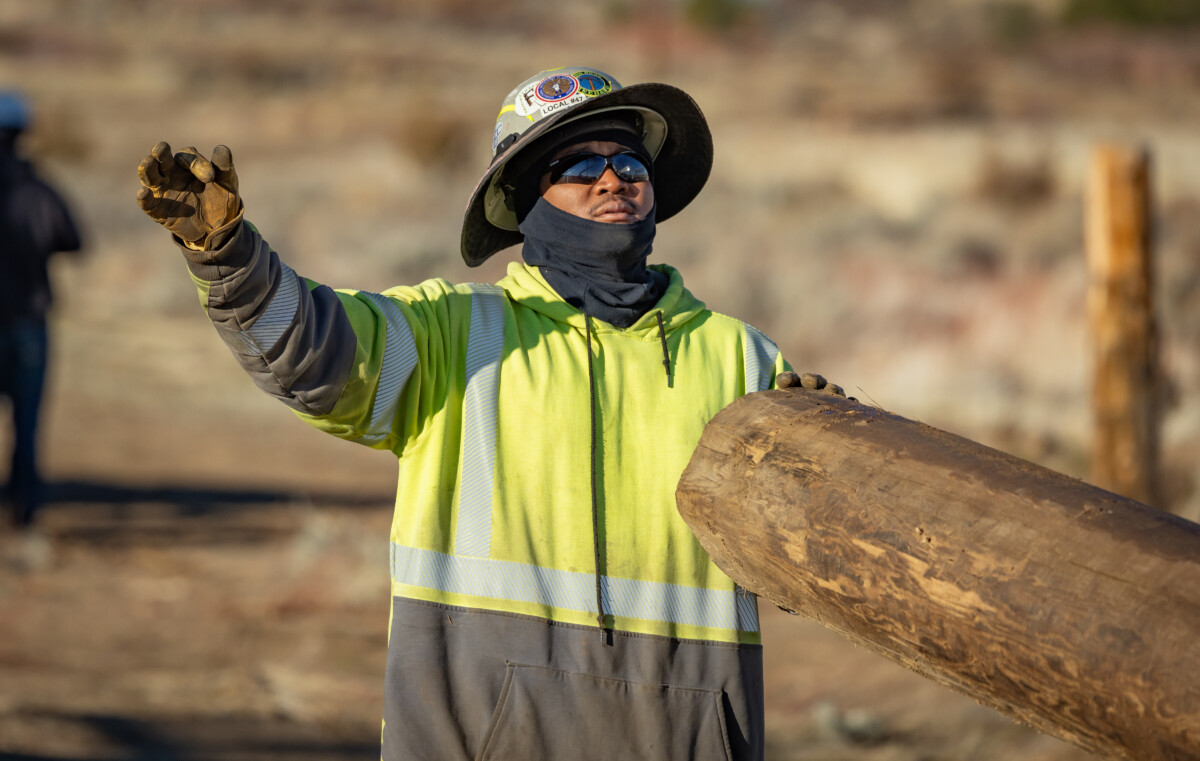
Cameron Zubiri, line equipment man, positions a pole from the operator’s seat as crews coordinate the set below.
“We travel all the time. I’ve got two little boys and a wife at home — that part is hard,” said Cameron Zubiri, Line Equipment Man. When asked what part of the pole change-out he liked the least, he didn’t hesitate. Smiling, he said there wasn’t one. “I enjoy all of it,” he said. “Some parts are harder than others, but it all has to be done, and it’s all fun for me.”
That balance of pride in the work and constant awareness of changing conditions is something Smith reinforces with his crew every day. With 25 years in the trade, Smith emphasizes the fundamentals while reminding workers that no two jobs are ever the same.
“Everything is always changing,” Smith said. “You stick to what you learned, you stick to the rules, and you stay open-minded, because this work is always adapting.”
Most people will never notice the upgraded poles or the careful work behind them. But for communities that rely on power and connectivity, these projects succeed because of both technical skill and the people doing the work — skilled IBEW Local 1245 union crews who make it happen.