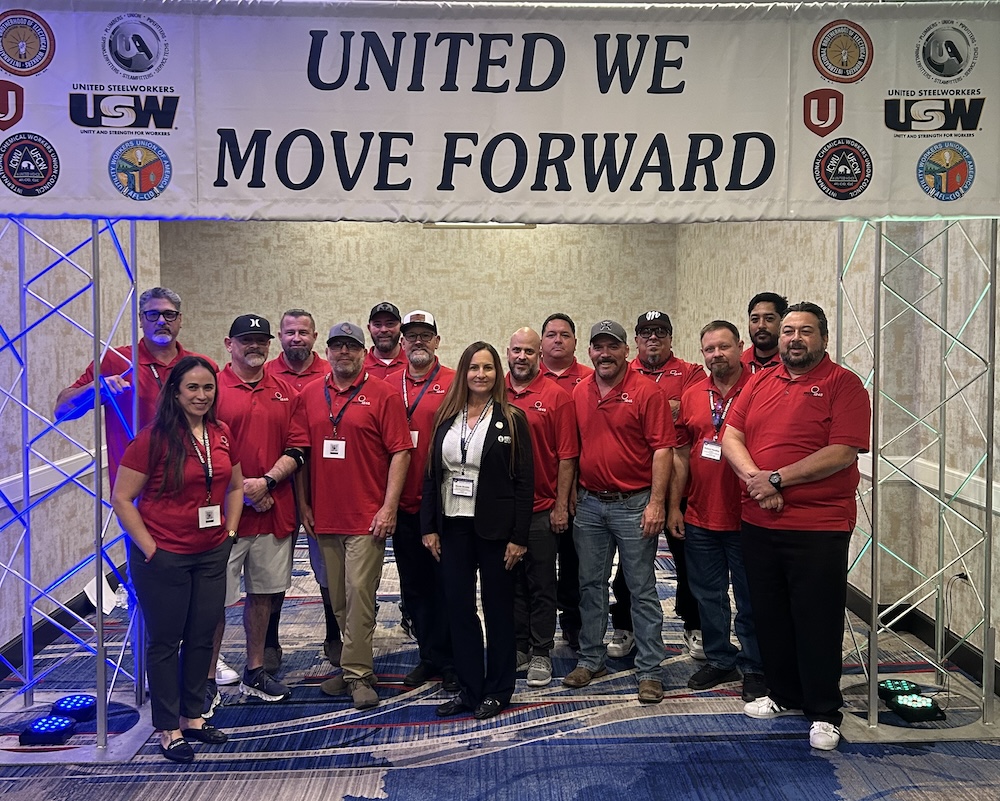
 This Fall, an IBEW 1245 delegation attended the North American Inter Union Gas Conference. The delegation was made up of 15 IBEW 1245 members, from NV Energy, SMUD, and PG&E. The convention is a forum for North American labor unions from the USA and Canada, to share work procedure, contract negotiations, tools, and safety best practices. This is a gas specific conference, and chance for our members to network with others from utilities and labor unions across the nation.
Over two days, more than 450 participants from utilities and trade unions across the country came together to talk about emerging technologies, shifting industry practices, and how unions can protect, strengthen, and expand our work.
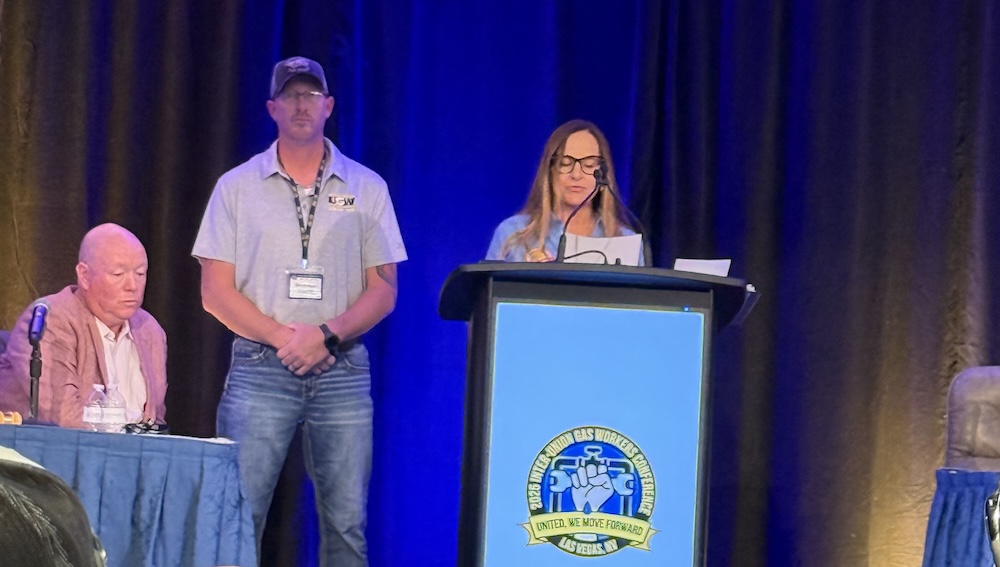
One of the major sessions was the Gas Transmission, Storage, and Field Operations Workshop, which IBEW 1245’s Nicole Brookes facilitated alongside Ben Morgan of USW Local 348 and Josh Cleveland of the United Association. The workshop focused on drones, robotics, hydrogen research, worker protections, and the future of our trade. Here are some key highlights.
Drones, Robotics, and the Importance of Skilled Union Labor
The workshop opened with a discussion on the rapid expansion of drone use in the natural gas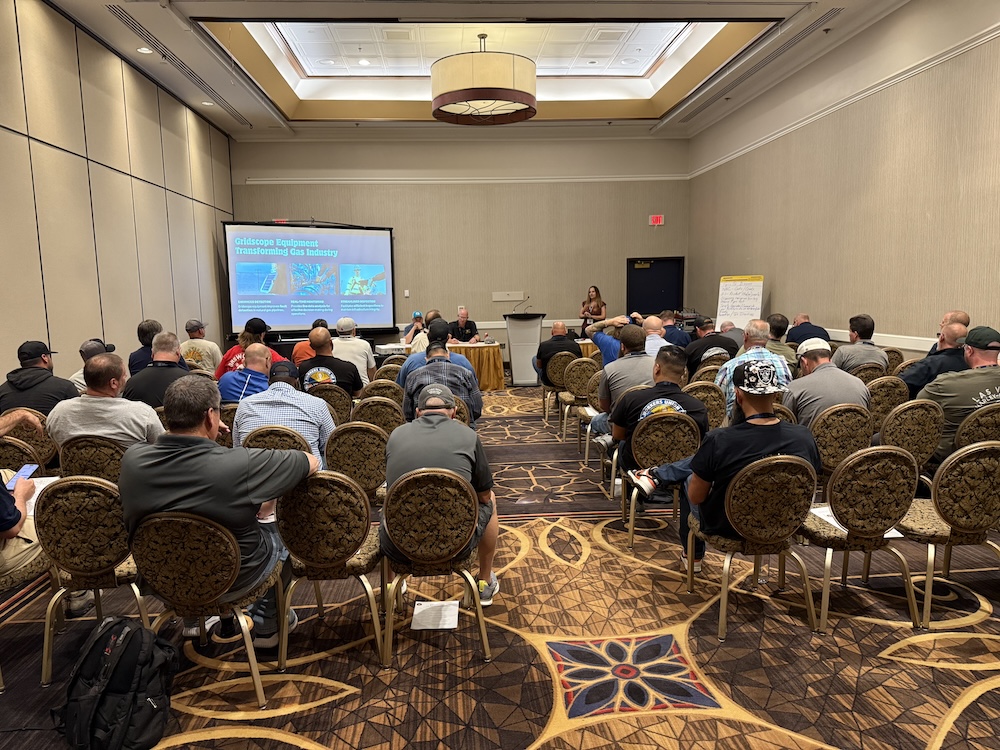 industry. Utilities are increasingly deploying drones in Liquefied Natural Gas (LNG) and Compressed Natural Gas (CNG) facilities for heat-breakthrough detection, bridge and dam leak surveying, thermal imaging, corrosion inspection, and monitoring easement encroachments.
While limitations remain — weather, distance, battery life — drones are advancing fast, and it’s critical that highly skilled union members stay at the center of this work. Field experience prevents safety risks, ensures accuracy, and keeps utilities accountable as new technologies are adopted. Delegates agreed that strong Letters of Agreement are needed to define job scope, equipment classifications, and training requirements, including pathways for aviation licensing.
Robotic inspection dogs and AI-driven pipeline welding are emerging tools that pose real jurisdictional challenges and require proactive action to protect both safety and union work. We must stay unified in our fight to ensure that expertise continues to guide and define this critical work.
Hydrogen Research and the Questions We Must Keep Asking
 The delegation also reviewed work underway at the NCPA Hydrogen Plant in Lodi, a partnership between IBEW 1245 and PG&E. The facility will study hydrogen interactions with different pipeline materials and explore the feasibility of producing up to 24 tons of hydrogen per day. This research will help determine infrastructure compatibility, odorization challenges, and long-term system effects. As states explore hydrogen blending, unions must continue asking the hard questions about long-term costs, how infrastructure retrofits will be funded, and what this means for consumer safety, reliability, and affordability.
Members’ practical knowledge must guide these decisions, not be an afterthought.
Safety, Standards, and the Need for Experienced Leadership
Delegates discussed the use of diesel for transmission pipeline cleaning and the potential downstream impacts it can have on distribution plastic pipe — a reminder of why consistent industry standards and safe in-line inspection practices are essential. Open communication about tapping, plugging, and purging incidents helps the entire industry learn from real-world experience and prevent future issues.
Participants emphasized that a strong safety culture depends on informed decision-making and leadership that understands the work. Hands-on field knowledge remains critical to ensuring safe, reliable operations.
Our Future Depends on Our Involvement
Across all sessions, one message came through loud and clear: technology is changing, but our strength remains our solidarity. We protect our future by organizing the unorganized, strengthening our political power, and standing shoulder-to-shoulder across trades and locals.
IBEW 1245 Assistant Business Manager Michael Adayan emphasized that our future depends on our involvement. As he put it:
“Whether it’s serving on an Organizing Committee, canvassing, phone-banking, or supporting pro-worker candidates, we must stay involved. Solidarity is our foundation, and it’s our responsibility to pass that on to the next generation.”
Member Perspectives from the Inter-Union Gas Conference
From safety culture to new technology and mental health, our delegates brought back powerful lessons from the Inter-Union Gas Conference. Here’s what they had to say.
“After nearly 24 years in oil and gas, it was eye-opening to see how drones and AI are being used for corrosion inspections, from thermal imaging to UT testing and 3D mapping. Learning about this technology now helps us get ahead of it.”
— George Ordonez, Gas Tech, SMUD
“One of the best parts of the conference was reconnecting with union brothers and sisters from across the country and sharing information about the challenges we all face — both in the field and at the bargaining table.”
— Carson McAtee, GC Gas Foreman, Shop Steward and Safety Steward
“Data shared showed a 75% increase in all assaults and a 35% increase in physical assaults since 2020, with incidents occurring not just in large urban areas but nationwide. While some states have enacted laws with harsher penalties for those convicted of such crimes, most do not have specific protections on the books. Speakers stressed the importance of reporting every assault to employers and law enforcement to build data, raise awareness, and accelerate momentum for stronger worker protections.”
— Ross Bradshaw, Shop Steward, GPOM PG&E Eureka
“I’ve always been involved at the local level, so hearing from IBEW leadership at the international level and seeing how they represent workers across the country was both new and inspiring. Connecting with gas workers from different regions really showed how much we share in common, even with the differences in weather, population, and local practices.”
— Jake Bussey, GC Gas Foreman, Fresno
“The safety workshop was a highlight for me. Working through real safety-sensitive situations with groups from different entities brought a lot of valuable perspectives. Talking with other locals about their safety committees was eye-opening too as some don’t have them, or couldn’t keep them going. It made me appreciate how far along we are, and we were able to share ideas and contact information to help others build a strong safety culture.”
— Russell Hires, Gas Operations Equipment Operator, NV Energy
“Connecting with gas workers from across the country made me proud of the work we do, and it reminded me how strongly IBEW 1245 and PG&E lead the industry. A lot of the challenges others are facing, we solved long ago. I left the conference grateful for where we are and committed to supporting my brothers and sisters.”
— Ryan Barramuda, Gas Crew Leader, Eureka
“This was my first year attending the Safety Workshop. What I took away from the workshop was the value of gathering a consensus on the best practices from each delegate’s safety culture and, when applicable, bringing those ideas back to our own operations. Even with a solid foundation, safety is something that always requires fine-tuning and continued attention. A good safety culture can fade quickly if it’s neglected.”
— Troy Callahan, NV Energy